
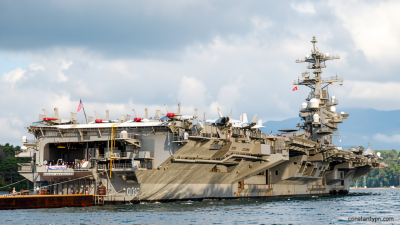
Washington Carrier Set to Replace Lincoln Amid Reports of Strained Conditions
Constantvpn.com – A second American aircraft carrier is making its way toward the Middle East to relieve the USS Abraham Lincoln, which has been operating in the region for an extended period. The Lincoln has been at sea since December 11, originally scheduled for a deployment that would conclude in May. Tracking information indicates the vessel has now been on station for more than 250 days, well beyond the typical six-month rotation for carrier operations.
The USS George Washington departed from a naval base in Yokosuka, Japan back in May to conduct patrols across the Pacific Ocean. According to tracking data compiled by BBC Verify, the vessel was positioned near Malaysia on Thursday and is expected to reach the Duqm port in Oman—located approximately 500 miles from the Iranian coastline—around August 22. Once the Washington arrives, it will become the third American aircraft carrier operating in the Middle Eastern theater, joining the USS George HW Bush that is already stationed in the region. This deployment pattern means no American carrier will remain in the Pacific following the Washington’s departure.
Concerns Emerge About Conditions Aboard the Lincoln
Family members of sailors serving on the Lincoln have voiced significant worries regarding their loved ones’ wellbeing. Multiple relatives have stated that conditions aboard the vessel have deteriorated over time, with some sailors reportedly considering jumping overboard due to the challenging circumstances. The concerns extend beyond physical comfort to include mental health, with families noting observable declines in their relatives’ psychological state.
One family member, speaking anonymously due to fears of potential retaliation, shared that their relative had lost 65 pounds (29 kilograms) since the ship departed for sea. This individual also mentioned that constant aircraft noise and the ship’s vibrations had contributed to severe exhaustion among the crew. The same person confirmed that sailors had made attempts to jump from the vessel during the deployment.
Jefferson Kelly, whose son Jackson serves on the Lincoln, told CBS News that his concern had grown significantly after nearly nine months at sea. Kelly emphasized that the Lincoln is not among the newest vessels in the fleet, noting that older ships require more frequent maintenance and constant attention. “They should not be deployed this long,” Kelly stated. “These are old ships. It’s not like they’re even state-of-the-art. And they take a lot of maintenance, a lot of work. It’s around the clock.” He added that he would board any available aircraft immediately if it meant bringing his son home to his mother, siblings, and extended family.
Official Responses and Regional Context
The US Navy has acknowledged that supply chains have been disrupted, attributing some of the challenges to combat actions during the ongoing conflict with Iran. However, the Navy has denied that a mental health crisis is occurring aboard the Lincoln, which carries approximately 5,000 personnel. The military has also stated that there has been no increase in suicidal behavior among the crew.
Political leaders have begun weighing in on the situation. Connecticut Democratic Senator Richard Blumenthal sent a letter to Defense Secretary Pete Hegseth and Secretary of the Navy Hung Cao on Wednesday, stating that reports of shortages and poor conditions “warrant immediate attention.” Blumenthal went further, questioning whether the Navy can maintain the operational tempo currently being demanded of its carrier force.
President Donald Trump addressed the deployment concerns on Friday, dismissing the notion that the Lincoln’s mission had extended too far. When asked about family members’ worries, Trump responded simply: “Not nearly long enough.” He confirmed that another vessel would replace the Lincoln but did not specify which ship would take on that role. Trump also stated that the government was ensuring “every ship, every crew, every captain has everything we can provide them at every single moment.”
Secretary Hegseth has characterized some media coverage as “completely misrepresented,” suggesting that the situation has been exaggerated in public reporting. The administration’s position appears to be that while challenges exist, they are manageable and do not represent a systemic failure.
Strategic Implications of the Deployment
The presence of three American aircraft carriers in the Middle East represents a significant commitment to regional security. The Lincoln’s extended deployment comes at a time when American naval forces are actively engaged in operations related to the conflict with Iran. The Washington’s arrival will allow the Lincoln to return for maintenance and crew rotation, potentially addressing some of the logistical challenges that have accumulated over the past nine months.
The conditions aboard the Lincoln highlight the demands placed on American naval forces during periods of heightened regional tension. Extended deployments can strain both equipment and personnel, particularly when combined with operational requirements and supply chain disruptions. The Navy’s ability to maintain readiness across multiple theaters while managing these pressures will be closely watched by military analysts and policymakers alike.
As the Washington continues its journey westward, the focus remains on ensuring that the transition between carriers proceeds smoothly and that the Lincoln’s crew receives the relief and support they have been awaiting. The outcome of this deployment may influence future decisions about carrier rotation schedules and the overall structure of American naval operations in the Middle East.
Related Reading
Frequently Asked Questions
What is US aircraft carrier on way to relieve?
US aircraft carrier on way to relieve is the main topic of this guide. The article explains the context, practical details, and next steps readers should understand.
Why does US aircraft carrier on way to relieve matter?
US aircraft carrier on way to relieve matters because readers are looking for a useful answer, not just a short summary. Good content should match search intent and help them decide what to do next.