
Seoul Seeks Diplomatic Path to End Decades-Long Korean Conflict
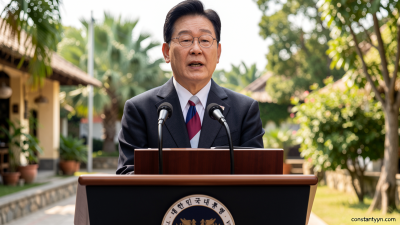
Constantvpn.com – South Korea’s leadership has initiated a fresh diplomatic overture aimed at formally concluding the Korean War, which has lingered in a state of technical hostilities for more than seven decades. President Lee Jae Myung announced that his government is prepared to engage in comprehensive discussions with Pyongyang regarding the official termination of the conflict that began with an armistice rather than a peace treaty in 1953. The proposal represents a significant shift in Seoul’s approach to the divided peninsula, emphasizing dialogue over confrontation. Lee outlined his vision during a ceremony commemorating Liberation Day, which marks the peninsula’s freedom from Japanese colonial rule.
Let us put down our intentions to threaten each other and begin discussions to end the long-running war as the directly involved parties.
The president emphasized that such talks could establish a framework for peaceful coexistence between the two Koreas while addressing critical security concerns. He specifically mentioned that face-to-face negotiations could create opportunities to discuss practical measures for curbing North Korea’s expanding nuclear capabilities.
A Multi-Layered Security Framework
Central to Lee’s proposal is the establishment of what he described as a multi-layered security system designed to prevent incidents along the heavily fortified border. The demilitarized zone, or DMZ, has served as the de facto boundary between the two nations since 1953, stretching approximately 155 miles across the Korean peninsula. Despite the armistice agreement, the two Koreas have never signed a formal peace treaty, leaving them technically at war. Throughout the decades, the border region has witnessed numerous clashes, military provocations, and periods of heightened tension. Both sides have accused each other of various hostile actions, including the controversial practice of launching balloons carrying waste materials and propaganda leaflets across the boundary. The president’s security proposal comes as North Korea continues its regular testing of ballistic missiles capable of delivering nuclear warheads. These tests have been interpreted by Seoul and its ally Japan as deliberate efforts to demonstrate military capability and project regional influence.
North Korea’s Stance on Unification
Pyongyang has yet to issue an official response to Lee’s diplomatic initiative. State media coverage focused primarily on leader Kim Jong Un’s participation in Liberation Day ceremonies, which included wreath-laying and a ceremonial guard of honor. The lack of immediate reaction is not entirely surprising given North Korea’s recent hardening of position regarding the possibility of reunification. In January 2024, Kim Jong Un made a historic declaration that the dream of Korean unification was no longer achievable. The North Korean leader subsequently announced plans to amend the country’s constitution to formally designate South Korea as a “primary foe and invariable principal enemy.” During his January address, Kim outlined a more aggressive posture for potential future conflicts. He stated that should war erupt on the peninsula, North Korea should pursue objectives of “occupying,” “recapturing,” and “incorporating” the South into its territory.
Nuclear Ambitions and Regional Dynamics
North Korea officially declared itself a nuclear power in 2022, vowing never to surrender its arsenal. Current estimates suggest the country possesses dozens of nuclear warheads, with South Korean President Lee noting that Pyongyang produces between 15 and 20 additional warheads each year. The nuclear issue has become increasingly intertwined with broader regional security arrangements. Pyongyang has previously criticized a recent agreement allowing the United States to construct a fleet of nuclear-powered submarines for South Korea. Additionally, North Korean officials have denounced joint military exercises conducted by Washington and Seoul, viewing them as provocative actions designed to contain North Korean influence.
The Trump-Kim Connection
Former United States President Donald Trump holds a unique position in North Korean diplomacy as the only Western leader to have personally met with Kim Jong Un. Their historic encounter occurred during Trump’s first term in office, and he has expressed interest in reestablishing that personal channel of communication. Although Trump has directed his attention toward other global regions since returning to the White House, he indicated last August that he hopes to arrange another meeting with Kim when circumstances prove appropriate. Lee has previously signaled support for a potential agreement between Trump and Kim that would freeze North Korea’s nuclear weapons production.
Recent Military Activity
Tensions remain palpable as North Korea continues its pattern of military demonstrations. On Tuesday, the country fired a ballistic missile into the sea, marking the eleventh suspected test of the year. This latest launch occurred just days before scheduled joint military exercises between the United States and South Korea, suggesting a deliberate timing intended to showcase military readiness.
Thawing Relations Beyond the Peninsula
Lee’s diplomatic outreach extends beyond North Korea to include efforts to improve relations with China, Seoul’s powerful neighbor and North Korea’s closest ally. These ties had deteriorated significantly under the previous administration of Yoon Suk Yeol, who was impeached last year following an attempt to declare martial law. The president’s comprehensive approach seeks to address multiple dimensions of regional security simultaneously. By engaging both Pyongyang and Beijing, Seoul hopes to create a more stable environment that reduces the risk of accidental conflict while opening pathways for long-term cooperation. As the international community watches closely, Lee’s proposal represents an attempt to transform decades of hostility into a more constructive relationship. Whether North Korea will respond positively remains uncertain, but the initiative signals Seoul’s willingness to pursue diplomacy as a primary tool for achieving lasting peace on the Korean peninsula.
Related Reading
Frequently Asked Questions
What is South Korea proposes talks to officially?
South Korea proposes talks to officially is the main topic of this guide. The article explains the context, practical details, and next steps readers should understand.
Why does South Korea proposes talks to officially matter?
South Korea proposes talks to officially matters because readers are looking for a useful answer, not just a short summary. Good content should match search intent and help them decide what to do next.