
Blueprints, Not Bullets: What Ukraine Gains — and Still Lacks — From London’s Missile Gesture
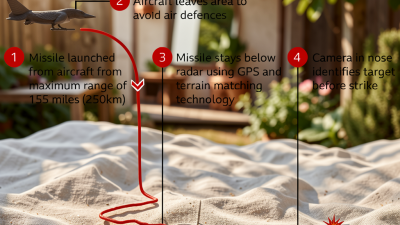
Constantvpn.com – When Prime Minister Andy Burnham sat down with President Volodymyr Zelensky in Kyiv on Monday, the headline announcement was the transfer of classified design documentation for the Storm Shadow cruise missile. France had already made a comparable offer regarding its SCALP variant, so the British move completes a paired gesture: two NATO partners opening their engineering files so that Ukrainian factories can assemble the weapons domestically. The symbolism is unmistakable. Western governments are willing to part with proprietary know-how, not merely finished hardware.
Yet the gesture, however meaningful, does not translate into an immediate shift on the battlefield. Storm Shadow and SCALP are not new systems. They were conceived in the 1990s as joint British-French projects under the MBDA umbrella, and they have already been delivered to Kyiv in meaningful numbers. Ukrainian crews have used them to strike military targets deep inside Russian territory. What changes now is the prospect of local assembly rather than continued dependence on Western production lines.
The Practical Bottleneck
Each Storm Shadow costs roughly £1 million. The missiles depend on intricate global supply chains for components, and they were manufactured during decades of relative peace at modest annual volumes — in the hundreds, not the thousands. Even with full blueprints in hand, Ukrainian engineers face the unglamorous task of sourcing every sub-component, calibrating assembly tolerances, and passing quality-control gates. Months, perhaps years, could elapse before a domestically assembled cruise missile leaves the factory floor.
The lesson is not new. In 2021, General Ben Hodges, then commanding US Army Europe, noted that in a NATO wargame the British force exhausted its key long-range munitions within days. The episode crystallised a uncomfortable truth: small-batch, high-cost precision weapons designed for peacetime deterrence collapse under sustained combat attrition. Copying Western peacetime production methods is, in itself, no pathway to winning a prolonged war.
Project Brakestop: London’s Own Pivot
Tellingly, the British military has stopped purchasing Storm Shadow for its own inventory. Under Project Brakestop, the UK is developing a domestically sourced long-range cruise missile that carries fewer foreign components and costs less than half the price of its predecessor. The programme is being executed at extraordinary speed; London expects a serviceable weapon by the close of this year and has pledged to supply the new system to Ukraine as well. The old missile becomes a bridge; the new one is meant to be the destination.
What Ukraine Has Already Proven
The war has inverted a long-standing assumption about who teaches whom in weapons manufacturing. At the outset, Ukrainian forces leaned heavily on Cold War-era Soviet stockpiles. A slow trickle of Western deliveries helped them adapt. Today, however, Kyiv produces roughly 70 percent of its own munitions. The most visible example is the drone programme: from small first-person-view one-way attack drones saturating the front line to larger long-range platforms that penetrate deeper into Russian territory than a Storm Shadow can reach. Ukraine is on track to build ten million drones by year’s end, and it does so at lower unit cost than Western equivalents by incorporating mass-produced Chinese components — a choice NATO allies, wary of supply-chain exposure, tend to avoid.
NATO’s comparable drones can cost twice as much. The point is not that Western engineering is inferior; it is that wartime economies tolerate different trade-offs than peacetime procurement regimes.
The Gap That Blueprints Cannot Fill
There remain categories of weaponry that Ukraine desperately needs and cannot yet replicate at scale. The most acute shortfall is air-defence interceptors capable of shooting down Russian ballistic missiles. The single most effective tool for that task is the American-made Patriot interceptor. Ukraine has nearly exhausted its Patriot stock, and Russian ballistic missiles now punch through Ukrainian air defences with increasing regularity. The US war in Iran has tightened global Patriot availability further.
Each Patriot interceptor costs approximately £3 million, and production has historically been slow. Washington plans to roughly double annual output from around 600 units to 2,000, but that ramp-up will consume several years. President Donald Trump signalled last month that he would be open to sharing Patriot technology with Ukraine, then walked back the remark. Even had approval been granted, Ukrainian factories would require considerable time before a domestically produced interceptor could enter service.
Expert Perspective
“The decision to share UK classified information on the MBDA SCALP missiles with Ukraine, as France and Ukraine work toward local assembly lines in Ukraine, is notable. Any impact, however, will in part depend on how quickly Ukrainian assembled SCALP cruise missiles can be introduced into service. Given that Ukraine has already operated both Storm Shadow and SCALP, familiarity with the missile may help speed the overall process, but this will also be dependent on the extent and pace at which local assembly can be established.” — Douglas Barrie, Senior Fellow for Military Aerospace, International Institute for Strategic Studies
Barrie’s caution underscores the central tension: the blueprint handover is a necessary step, not a sufficient one. It signals political commitment and opens a path toward industrial self-sufficiency in cruise-missile production. But the war’s most pressing vulnerability — the inability to reliably intercept ballistic missiles raining down on cities and command centres — demands a different solution, one that no amount of Storm Shadow documentation can provide. Until Patriot-level interceptors arrive in volume, or until Ukraine develops a credible domestic equivalent, the air-defence gap will remain the single most consequential constraint on Kyiv’s ability to protect its population and sustain its war effort.
Related Reading
Frequently Asked Questions
What is UK missiles offer may help Ukraine?
UK missiles offer may help Ukraine is the main topic of this guide. The article explains the context, practical details, and next steps readers should understand.
Why does UK missiles offer may help Ukraine matter?
UK missiles offer may help Ukraine matters because readers are looking for a useful answer, not just a short summary. Good content should match search intent and help them decide what to do next.