
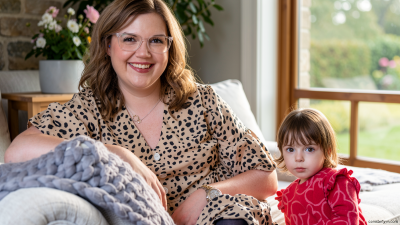
A Rare Genetic Condition and a £600 Window Film: How One Scottish Toddler Gained Back Her Daylight
Constantvpn.com – In Montrose, Scotland, a two-year-old girl named Mollie Murray spends her days doing what most toddlers do — running, drawing, watching the postman arrive from a window. What makes her ordinary afternoon extraordinary is the invisible layer of ultraviolet-blocking film now covering the glass panes of her father’s home. Without that thin sheet of polymer, every ray of sunlight streaming through those windows would pose a genuine threat to her skin.
Mollie carries a specific variant of xeroderma pigmentosum (XP), a group of inherited disorders in which the body’s cells fail to repair DNA damage caused by ultraviolet radiation. She is, as far as medical records show, the only child in the United Kingdom diagnosed with her particular genetic subtype. The condition has no known cure, and it renders her dermis extraordinarily vulnerable to UV exposure — even on grey, overcast days when most people would not think to reach for sunscreen.
The Road to Diagnosis
Mollie’s medical history stretches back to infancy. From her earliest months she cycled repeatedly through hospital admissions, battling seizures and severe gastro-oesophageal reflux. The sun-related danger announced itself in May 2025, when an overcast afternoon produced a blistering burn on her skin. Two months later the episode repeated itself, escalating the family’s alarm. A dermatological workup eventually confirmed the XP diagnosis.
Her mother, Kirsty Campbell, a 35-year-old charge nurse, described the emotional whiplash of that period:
“To go from thinking your child has sunburn to them having an extremely rare genetic disorder is mind-blowing.”
Doctors have advised the family that Mollie faces roughly 10,000 times the baseline risk of developing skin cancer compared with other children her age. They have also warned that neurological impairment and mobility difficulties are likely to emerge in her forties and fifties as the condition progresses. The near-term outlook, however, is more encouraging: specialists believe she can enjoy a comparatively normal childhood if her environment is carefully managed.
Living Under Constant UV Surveillance
Before the window film arrived, Mollie’s indoor play required curtains drawn tight and rooms kept in near-darkness. Her mother now carries a handheld UV monitor, checking readings in every room before allowing Mollie to enter. Outdoors, the toddler must wear full-length protective clothing, and sunscreen is reapplied beneath those garments every two hours. The family learned the hard way that even November daylight can produce a burn.
“The only time it’s safe to go outside is in the dark. I want to keep her inside at all times to keep her safe, but we can’t do that – she needs some sort of normality.”
At her father Ryan’s home — where Mollie spends a substantial portion of her time — the situation had grown particularly acute. Playpark equipment had to be hauled indoors because the garden was simply too hazardous under open sky.
Closing the Funding Gap
The National Health Service covered the cost of installing UV-resistant film at Kirsty’s residence. Because the parents live apart, no equivalent provision existed at Ryan’s house. The Archie Foundation, a charity that supports babies, children, and families during hospital admissions or following a bereavement, stepped in to cover the £600 expense for the second installation. The film was fitted last month.
Kirsty recalled the moment she learned the charity would fund the work:
“I cried for about 20 minutes when I was told the money would come through. Mollie wouldn’t have the same quality of life at her dad’s house without it.”
She added that the change, while modest in scale, has been transformative in daily experience:
“It means she can do simple things like look outside for the postman or draw in daylight. My ex-partner was having to take playpark equipment into his house as it wasn’t safe outside. She’s so happy running around like a normal child.”
Why XP Matters Beyond One Child
Xeroderma pigmentosum affects an estimated one in a million people worldwide, though the precise incidence varies by subtype. Because the disorder is autosomal recessive, most affected children are born to parents who carry the mutation silently and are unaware of it. Early diagnosis is critical: the longer UV damage accumulates unrepaired, the greater the cumulative risk of cutaneous malignancy and progressive neurological decline. For families navigating the condition, small environmental modifications — UV-filtering window films, strict clothing protocols, scheduled sunscreen reapplication — form the backbone of daily management until gene-therapy or pharmacological interventions mature.
The Archie Foundation’s intervention in Mollie’s case illustrates how a relatively modest sum can bridge the gap between a child’s medical safety and her parents’ separated households. Rebecca Duncan, the charity’s business development and fundraising manager in Tayside, commented on the outcome:
“Caring for a child with complex needs can be incredibly challenging and, at times, isolating, so we’re committed to ensuring families never feel they have to face that journey alone. Mollie has shown remarkable resilience, and we’re proud to have played a small part in helping her experience the joy, opportunities and precious moments that every child deserves.”
For now, Mollie’s days are defined less by darkness and more by the small, ordinary pleasures of a toddler’s routine — a drawing session in afternoon light, a glance toward the letterbox, a run across a carpeted floor. The UV film on the glass makes none of that visible. It simply lets the light in, safely.
Related Reading
Frequently Asked Questions
What is Toddler with sun allergy can play?
Toddler with sun allergy can play is the main topic of this guide. The article explains the context, practical details, and next steps readers should understand.
Why does Toddler with sun allergy can play matter?
Toddler with sun allergy can play matters because readers are looking for a useful answer, not just a short summary. Good content should match search intent and help them decide what to do next.