
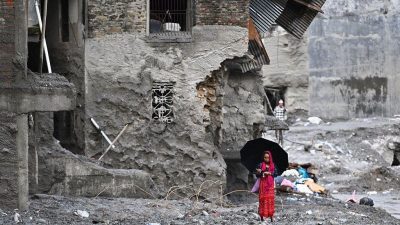
Thousands Still Missing as Nepal Flood Recovery Intensifies
Constantvpn.com – Thousands still missing as Nepal’s disaster response shifts from active search to recovery. One week after a catastrophic glacial outburst flood tore through the Nepal-Tibet border region, the confirmed death toll in Nepal has surpassed 1,114, with roughly 4,000 residents unaccounted for, according to the country’s disaster management agency. On the Tibetan side, Chinese state media reports 16 confirmed fatalities and more than 500 people untraced. Rescuers now face the grim task of digging through collapsed tunnels, silted riverbeds, and buried debris — a process that means the final toll will almost certainly climb.
How the Flood Was Triggered
Scientists attribute the disaster to a sudden collapse of a glacial lake or ice dam high in the Himalayan chain, unleashing a wall of water and rock that raced down a narrow valley faster than anyone downstream could flee. Glacial lake outburst events have grown more frequent across the range as warming destabilizes ice that has dammed meltwater for centuries. The strike came during monsoon season, when rivers already run swollen and soils are saturated, amplifying both the volume of water and the difficulty of any subsequent rescue operation.
Nearly 12,000 people have been pulled to safety since the event, yet hundreds of foreign nationals from India, the United Kingdom, Australia, the United States, Malaysia, and other countries remain untraced. Among them are workers believed trapped inside hydroelectric station tunnels — potentially numbering in the hundreds — where rising water and structural collapse have sealed every escape route.
Access Becomes the Central Problem
The United Nations humanitarian coordination office confirms the response is entering a new phase, intensifying both relief delivery and recovery operations. The principal obstacle is physical access: more than 40 bridges have been destroyed across the affected districts, severing roads that connect remote valleys to supply points. Army helicopters ferry food, medicine, and fuel to communities with no other lifeline, while villages still lack electricity and basic cooking fuel.
Heavy-machinery crews working around the clock have cleared debris from the route to the Gyirong border crossing, the principal overland link between the two sides of the range. Chinese state media confirmed the road’s reopening, noting it will accelerate searches for untraced persons. Engineers from China and India are assisting in temporary bridge construction to reach isolated pockets, and drones scan terrain too dangerous for ground teams.
Displacement, Disease Risk, and the Humanitarian Gap
In Nepal, nearly 3,500 people have been rendered homeless and displaced across 27 temporary sites — predominantly school buildings in the districts of Nuwakot and Rasuwa — a situation that interrupts children’s education and strains already limited shelter capacity. Overcrowding, contaminated water supplies, and damaged health facilities compound the risk of waterborne and respiratory disease at precisely the time monsoon rains make sanitation hardest to maintain.
The UN humanitarian office outlined immediate priorities for affected families:
“Receiving humanitarian assistance, recovering and identifying the remains of loved ones, tracing missing relatives and reunifying separated children, and accessing psychosocial support.”
Nepal’s prime minister, Balendra Shah, has stressed a renewed emphasis on protecting survivors’ lives, ensuring medical treatment, and providing psychological counselling to those who have lost family members or witnessed the destruction of their communities. The government and the United Nations have agreed to launch a four-month humanitarian flash appeal to fund the prolonged recovery effort.
Frequently Asked Questions
How many people are confirmed dead in the Nepal-Tibet flood?
Nepal’s disaster management agency reports more than 1,114 confirmed fatalities within the country. Chinese state media places the confirmed dead on the Tibetan side at 16. Both figures are expected to rise as recovery operations continue.
What caused the flood?
Experts identify a sudden glacial lake or ice-dam collapse high in the Himalaya as the trigger. The resulting outburst flood raced down a valley during monsoon season, when swollen rivers and saturated soils amplified the volume of water and made rescue far more difficult.
What is being done to reach isolated communities?
Army helicopters deliver food, medicine, and fuel where roads are severed. Engineers from China and India are building temporary bridges, drones scan inaccessible terrain, and heavy machinery has reopened the Gyirong border-crossing route to accelerate cross-border searches.
How long will the recovery effort last?
Nepal’s government and the United Nations have agreed on a four-month humanitarian flash appeal to fund ongoing relief, recovery, and psychosocial support. The scale of buried debris and collapsed infrastructure means search and recovery operations will extend well beyond the initial emergency window.