Syria’s president names final 70 lawmakers to new post-Assad parliament
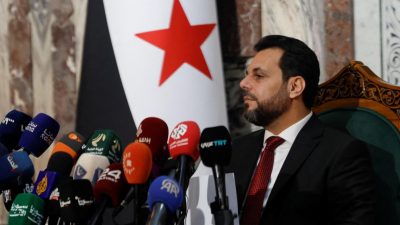
Syria’s Interim President Names Final 70 Lawmakers for Transition Parliament
Constantvpn.com – Following the ousting of Bashar al-Assad in 2024, Syria’s interim president, Ahmed al-Sharaa, has finalized the selection of 70 members for the new parliament, set to convene for its inaugural session in the coming week. This decision marks a pivotal step in the country’s political transformation, as the transitional government seeks to establish a legislative body capable of steering Syria through its uncertain future. The new assembly, comprising 210 seats, will play a critical role in drafting laws, overseeing executive actions, and fostering unity among the nation’s fractured communities.
Among the newly appointed lawmakers, 15 are women—a notable but modest increase compared to previous elections. Additionally, 13 individuals were previously imprisoned under the Assad regime, reflecting an effort to include voices from the opposition and civil society. However, the extent of representation for religious and ethnic minorities remains unclear, raising questions about the inclusivity of the transitional process. The president’s selections aim to balance the composition of the assembly, blending experience with the sacrifices of those who endured years of conflict.
Electoral Process and Criticisms
Last October, regional electoral colleges were tasked with choosing two-thirds of the People’s Assembly, a step intended to establish a framework for governance in the post-Assad era. Despite this, the process faced scrutiny for its lack of diversity. Only six seats were awarded to women, and a mere 10 to minority candidates, prompting officials to acknowledge the need for intervention. Mohammed Taha al-Ahmed, head of the Higher Committee for the Syrian People’s Assembly Elections, emphasized that the president’s appointments would “correct the imbalance” and ensure the assembly reflected the country’s varied social fabric.
“The selections incorporate the voice of sacrifice and the voice of experience,” al-Ahmed stated. “They represent the diverse segments of Syrian society and reinforce national unity.” He highlighted the inclusion of “relatives of martyrs, survivors of detention, and victims of chemical attacks” alongside academics, experts, and community leaders “recognized for their integrity and public service.” This blend, he argued, would create a body that balanced historical grievances with forward-looking reforms.
Yet, the appointment process has drawn criticism from both Kurdish groups and civil society organizations. Over 20 Kurdish parties rejected the lawmakers chosen by electoral colleges in May, calling the process “exclusionary” and “marginalizing” minority communities. Similarly, 14 Syrian civil society groups criticized the electoral system last year for its “deep structural flaws,” noting that the president retained significant influence over the Higher Committee and the colleges. This control, they warned, transformed the elections into a symbolic exercise rather than a genuine reflection of popular will.
Regional Delays and Challenges
While the majority of the assembly has been finalized, certain regions face setbacks. In Suweida, the southern province with a predominantly Druze population, electoral college polls have not yet occurred. The delay stems from the area remaining outside state control since July, when sectarian violence between government forces, Sunni Bedouin tribes, and Druze militias claimed over 1,700 lives. “When conditions become suitable to hold elections in this good and blessed governorate, God willing, we will conduct the elections there,” Ahmed said, underscoring the hope for eventual stability.
Delays also plagued parts of the northern provinces of Raqqa and Hassakeh. The electoral process was postponed by seven months in these regions after government forces reclaimed them from the Kurdish-led Syrian Democratic Forces (SDF) at the start of the year. The integration of SDF brigades into government forces and the release of 1,300 detainees have been seen as progress, but the transition remains fragile. UN deputy special envoy Claudio Cordone warned that the implementation of the ceasefire agreement is advancing, yet critical steps in the Suweida reintegration plan have stalled.
“The transition is at a critical phase, with opportunity and fragility existing side-by-side,” Cordone told the Security Council. “Syria needs the People’s Assembly to begin its work. And it needs all Syrians—particularly women and the country’s diverse components—to feel meaningfully represented.” He emphasized the parliamentary body’s role in addressing “deep challenges,” including the adoption of new laws, review of executive actions, and fostering dialogue among conflicting groups. However, he also noted the urgency of resolving underlying tensions, particularly in Suweida, where calls for secession threaten the nation’s unity.
Symbolism and Power Dynamics
The president’s authority to appoint one-third of the parliament members has sparked concerns about its independence. Critics argue that this power allows him to dominate the legislative body, ensuring alignment with his vision for the transition. The ability to name replacements for any lost seats further consolidates his influence, potentially overshadowing the voices of those elected through regional colleges. This dynamic has led to accusations that the assembly is more a tool for political control than a genuine institution of representation.
Meanwhile, the trial of Assad himself is viewed as a symbolic milestone for his victims. The legal proceedings, which began earlier this year, are seen as the first step toward justice for those who suffered under his rule. However, the broader implications of the transition remain uncertain. While the new parliament may bring a sense of normalcy, the ongoing conflict in Suweida and the delayed elections in Raqqa and Hassakeh highlight the challenges of establishing a unified political framework.
Jeremy Bowen, a BBC correspondent, observed that Syria feels “lighter without the Assads’ crushing weight,” but the transition has introduced new complexities. Women from Syria’s Alawite minority, who have shared harrowing accounts of kidnapping and rape under the regime, now face the task of navigating a political landscape where their representation is still being contested. Their experiences underscore the personal stakes of the transition, as the new assembly seeks to address not only governance but also the legacy of violence and oppression.
As the People’s Assembly prepares to convene, its success will depend on its ability to balance power, address historical grievances, and foster consensus among Syria’s diverse factions. The president’s appointments, while reflecting a mix of experience and sacrifice, have yet to fully resolve the tensions that have plagued the nation for over a decade. With the transition entering a crucial phase, the parliament’s role in shaping Syria’s future will be closely watched, both domestically and internationally.
Path Forward and Remaining Hurdles
Cordone reiterated that the transition’s challenges are “cannot be overstated,” emphasizing the need for the assembly to act as a unifying force. The integration of SDF forces and the release of detainees are positive developments, but they do not fully address the structural issues that led to the conflict. In Suweida, accountability measures for the sectarian violence remain unresolved, and the province’s desire for autonomy could jeopardize national cohesion. The parliament’s ability to navigate these issues will determine whether it can emerge as a credible institution or continue to be seen as a regime-aligned body.
With the new lawmakers now in place, the focus shifts to their first session. The assembly must not only draft laws but also restore public trust in a government that has long been associated with repression. For many Syrians, the hope lies in the inclusion of diverse voices and the promise of a more equitable political system. However, the path to stability is fraught, requiring compromises and commitments to the principles of justice and representation that the transition seeks to embody.
