Scrapping of Franco-German fighter jet leaves allies at odds on defence future
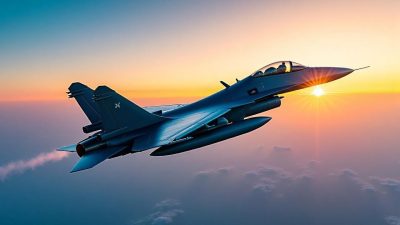
Scrapping of Franco-German Fighter Jet Leaves Allies at Odds on Defence Future
Constantvpn.com – Germany’s decision to end its long-standing collaboration with France on a joint fighter jet program has sent ripples through European defense alliances, highlighting deepening divisions between major nations. The project, once hailed as a symbol of strategic unity, now stands as a cautionary tale of how geopolitical tensions and diverging priorities can unravel even the most ambitious partnerships.
A Strategic Partnership in Peril
The Franco-German fighter jet initiative was launched in 2017 with lofty aspirations, aiming to unite two of Europe’s largest economies under a shared vision for military innovation. At the time, German Chancellor Angela Merkel and newly elected French President Emmanuel Macron framed the project as a way to “reset” bilateral relations and consolidate resources amid economic uncertainties. However, years later, the partnership has collapsed, revealing fundamental disagreements that have left allies questioning the future of collective European defense efforts.
“This is a revolution,” declared Macron during the project’s launch. “But we’re not afraid of revolutions when they are peaceful, well-thought, and meant to last.”
The initiative was part of a broader Future Combat Air System (FCAS) framework, which included components like advanced engines, cutting-edge sensors, and a digital intelligence network called the “combat cloud.” While these elements were critical to the project’s success, the fighter jet itself became the central focus. Now, with the program scrapped, the broader FCAS goals remain uncertain, raising concerns about the coherence of Europe’s defense strategy.
Diverging Visions and Industry Friction
Underlying the decision was a clash over the jet’s design and purpose. France sought a compact, carrier-capable aircraft suited for operations from its Charles de Gaulle naval vessel, while Germany favored a larger, more powerful model designed for air superiority. These contrasting requirements exposed deeper ideological splits: France emphasized agility and maritime flexibility, whereas Germany prioritized dominance in aerial combat.
Industry players also played a pivotal role in the partnership’s unraveling. France’s Dassault Aviation positioned itself as the lead contractor, but German officials accused the firm of pushing for an overly ambitious leadership role. This tension was compounded by the involvement of Airbus, which represented Germany and Spain in the coalition. As Christoph Bergs of the Royal United Services Institute (Rusi) noted, the program’s failure reflects broader challenges in aligning national interests within a shared framework.
“Things go well with other French companies,” said German defense analyst Nico Lange on X. “FCAS is not synonymous with ‘European defence… there will be many other good projects.’”
Germany’s growing confidence in its defense capabilities has further complicated matters. The country’s defense budget has surged in recent years, driven by the Russian invasion of Ukraine and pressure from the United States to increase spending. This financial empowerment has made German industry less willing to compromise, a shift that analysts say has eroded the collaborative spirit of the original agreement.
A Decisive Moment in the Partnership’s Decline
The collapse of the project appears to have been sealed during a recent summit between Germany’s Chancellor Friedrich Merz and Macron. Merz raised doubts about the viability of manned fighter jets in the coming decades, questioning whether the investment was still justified. “Will we still need a manned fighter jet in 20 years’ time?” he pondered on the Machtwechsel podcast. “Do we still need it, given that we will have to develop it at great expense?”
Merz’s comments, combined with Germany’s decision to act first, signaled a definitive break. While France expressed regret in a subsequent statement, the Élysée Palace acknowledged that the industries involved had failed to reach a consensus. “France remains convinced that Franco-German co-operation in defense and security is essential for both countries, as well as for our European partners,” the statement added, though the sentiment now seems tinged with uncertainty.
Technological advancements in recent years have also played a role. Bergs of Rusi pointed out that the timing of the project’s end was “inopportune,” but it has provided a window for nations to reassess their priorities. The failure of the Franco-German jet project underscores a broader trend: as defense needs evolve, so too do the strategies and alliances that shape them. While the loss of this partnership is a setback, it may also pave the way for more flexible, regionally tailored approaches to European security.
Implications for European Defense Unity
Europe has long aimed to reduce its reliance on NATO and U.S. military support by forging independent defense capabilities. The Franco-German fighter jet was a flagship effort in this direction, but its cancellation has dealt a blow to that vision. Analysts warn that the split could lead to fragmentation, with countries pursuing separate projects rather than pooled initiatives. This risk is heightened by the current climate of geopolitical uncertainty, where alliances are often tested by conflicting interests.
Still, the decision to scrap the program does not mark the end of European cooperation entirely. Germany and France may still find ways to collaborate on other defense matters, but the lack of agreement on the jet project has exposed the fragility of their partnership. As Bergs observed, the move reflects a broader shift in how European nations view their role in global security—no longer as a unified bloc, but as individual actors navigating a complex and competitive landscape.
With the project’s demise, the question remains: what comes next? While the immediate focus has been on the fighter jet, the broader implications for European defense strategy are far-reaching. The decision may reshape how nations approach military procurement, with a greater emphasis on domestic priorities and technological innovation. Yet, it also leaves a void in the continent’s ability to project collective power, a challenge that will need to be addressed in the coming years.
