Search for six-year-old Ebola patient after armed men storm DR Congo hospital
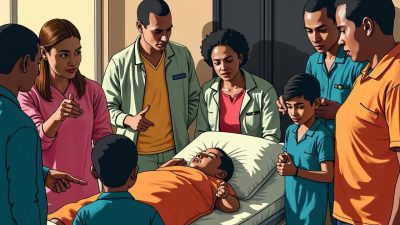
Armed Attack on DR Congo Hospital Sparks Search for Ebola Patient and Her Mother
Constantvpn.com – Following a violent assault on a medical facility in the eastern region of the Democratic Republic of Congo, authorities are actively searching for a six-year-old girl and her mother. The pair were taken from Wanamahika Hospital in Butembo by armed men wielding knives, according to Dr. Lubambo Maboko Gaston, a local health official. The incident has raised concerns about the safety of Ebola treatment centers, which have become targets of hostility in recent weeks.
Escalating Tensions Around Ebola Treatment
The attackers, described as “very angry,” reportedly stormed the hospital without warning, seizing the child and her mother. While it remains uncertain whether the assailants knew the patients, the outbreak has fueled widespread fear and mistrust. Health workers have faced repeated threats, with some communities viewing Ebola as a foreign conspiracy rather than a genuine health crisis.
“People are not properly informed or sensitised about what is happening. For a certain segment of the population, especially in remote areas, Ebola is an invention by outsiders — it does not exist,” said Luc Malembe, a local politician, reflecting growing skepticism toward the disease.
This distrust has led to alarming actions, such as the burning of isolation tents in Rwampara and the attempt to reclaim bodies from hospitals in Mongbwalu. These incidents highlight the challenges health officials face in maintaining public cooperation during the outbreak. The body of an Ebola victim is particularly dangerous, as it can spread the virus when prepared for burial, yet many families still resist quarantine protocols.
The Role of Bundibugyo in the Outbreak
The current surge in cases is attributed to the Bundibugyo strain of the virus, which is less common than other variants. As of now, no vaccine is available for this species, and the World Health Organization (WHO) estimates it could take months to develop an effective jab. The strain’s prevalence has intensified the crisis, with officials warning of its potential to surpass previous outbreaks in scale.
During a recent meeting with African leaders and donors, Jean Kaseya, the head of Africa’s Centres for Disease Control and Prevention (CDC), emphasized the urgency of containment efforts. He warned that the outbreak, if left unchecked, could rival the West African epidemic of a decade ago, which claimed over 11,000 lives in Guinea, Liberia, and Sierra Leone. This projection echoes similar concerns raised by the U.S. CDC earlier this month.
Despite the severity of the situation, contact tracing remains a critical challenge. Kaseya noted that many individuals exposed to infected patients are still not being identified, complicating efforts to halt transmission. The outbreak is occurring in an urban area marked by ongoing insecurity, including mining and trade activities that fuel conflict and make surveillance more difficult.
Global Response and Local Measures
Health authorities in DR Congo have implemented enhanced surveillance and treatment protocols. Dedicated Ebola centers now operate in several affected towns, aiming to improve response times and patient care. The WHO has allocated $3.9 million to support these efforts, while Africa CDC has announced a $319 million budget for the region.
However, the spread of the virus continues to be concentrated in the provinces of Ituri, South Kivu, and North Kivu. Ituri, in particular, remains the epicenter of transmission. Conflict in these areas has further hindered containment, as the M23 rebel group controls significant portions of both North and South Kivu. The instability has made it harder for teams to access communities and conduct thorough investigations.
Impact of Misinformation
Mistrust in the medical system has led to instances where families attempt to take infected bodies home for burial, risking the virus’s spread. In Mongbwalu, police recently used gunfire to disperse crowds trying to reclaim the remains of loved ones who had died at a health facility. Such behavior underscores the need for improved community engagement and education.
Dr. Gaston has called for calm, urging the child and her mother to return to a health center. “They risk worsening their health and infecting their relatives if they stay away,” he warned. His statement aligns with broader concerns about the consequences of delayed treatment, particularly in areas where misinformation persists.
With the outbreak now in its third month, the number of confirmed cases has risen to 840, and deaths have reached 200. The combination of fear, lack of information, and local conflicts has created a volatile environment for health workers. Efforts to educate the public about the disease’s transmission and the importance of quarantine are ongoing, but progress is slow in regions where distrust runs deep.
Looking Ahead
Authorities are working to balance security and public health needs, deploying both medical and law enforcement teams to secure treatment centers. Yet, the situation remains precarious. As Kaseya noted, the success of containment efforts hinges on reaching every individual who has come into contact with infected persons. Without this, the outbreak could escalate beyond control.
The Congolese health ministry has reiterated its commitment to strengthening infrastructure and response mechanisms. However, the scale of the challenge is immense, with thousands of people still at risk. The global community’s financial support, including the WHO and Africa CDC budgets, is a vital component of this fight. Yet, without local cooperation and trust, the battle against Ebola may prove more difficult than anticipated.
As the search for the missing child and her mother continues, the incident serves as a stark reminder of the human toll of the outbreak. Families are caught in the crossfire between public health measures and the fear that drives them to resist treatment. The path to containment requires not only medical intervention but also a deep understanding of the social and political factors fueling the crisis.
For further updates on the situation in DR Congo and other African news, visit BBCAfrica.com. Follow the BBC Africa team on social media at @BBCAfrica on Twitter, BBC Africa on Facebook, and bbcafrica on Instagram.
