Lawyer in high-profile Ugandan treason case charged with related offence
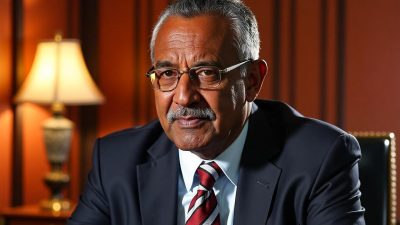
Lawyer in High-Profile Ugandan Treason Case Charged with Related Offence
Constantvpn.com – In a recent development, Erias Lukwago, a former mayor and legal representative of detained opposition figure Kizza Besigye, has been charged with a treason-related offence. Lukwago appeared in court in Kampala, the capital of Uganda, appearing visibly weakened, according to local media reports. His arrest occurred just days after he was taken into custody at his home, sparking immediate attention from both domestic and international observers. The charges against him include failure to report treason, a crime often used in Uganda to target critics of the ruling party. Despite the accusations, Lukwago denied the allegations and was remanded in custody until his next court appearance next week.
A Political Showdown
The arrest of Lukwago has been interpreted as a strategic move within Uganda’s political landscape. Gen Muhoozi Kainerugaba, the country’s military chief and son of President Yoweri Museveni, took to social media to announce the action, showcasing photos of Lukwago in a blindfolded state in an undisclosed location. These posts have intensified speculation about the motivations behind the charge, with some suggesting it is part of a broader effort to silence dissent. Kainerugaba’s comments, including his declaration of pride in the “hurt and pain” inflicted on Lukwago, have drawn sharp criticism from opposition leaders and human rights advocates.
“I call upon all of us to reject and resist this brazen impunity,” posted Bobi Wine, a prominent Ugandan opposition politician, on X. Wine, who fled the country fearing for his life after contesting the January presidential election, claimed that Lukwago’s arrest was ordered by Kainerugaba as he prepared to serve a court summons. This assertion has fueled accusations that the military chief is leveraging his authority to suppress political rivals and intimidate legal professionals who challenge the government’s narrative.
Lukwago’s family has taken legal action to demand clarity over his whereabouts, arguing that security officers responsible for his abduction have been withholding information. They have sought a court order compelling the officers to disclose his location and release him “dead or alive,” highlighting the urgency of their concern. The family’s claims align with reports that Kainerugaba has publicly boasted about mistreating Lukwago, further reinforcing the perception of targeted political persecution.
Opposition Figure’s Journey
Kizza Besigye, the opposition figure represented by Lukwago, has been in custody since his abduction in neighboring Kenya and forced return to Uganda in late 2024. Besigye, a longstanding political opponent of President Museveni, has been a vocal critic of the government’s policies and electoral practices. His journey from serving as Museveni’s personal doctor to becoming a key figure in the opposition underscores the shifting dynamics within Uganda’s political sphere. Besigye has contested multiple presidential elections, often facing detention for challenging the ruling party’s dominance.
The treason charges against Besigye have been a central point of contention. Critics argue that the charges are politically motivated, aimed at curtailing dissent and consolidating power. Besigye’s imprisonment has drawn international condemnation, with human rights organizations raising concerns about the use of the law to silence critics. His legal team, including Lukwago, has been working to secure his release, emphasizing the importance of due process in the judicial system.
Patterns of Control
Kainerugaba’s actions are not isolated; they reflect a pattern of using his position to intimidate opposition figures. The military chief has a history of making controversial social media posts, some of which have been deleted after backlash. These posts often highlight his role in abducting and torturing political opponents, illustrating a culture of impunity within Uganda’s security apparatus. The current charges against Lukwago fit into this trend, with analysts suggesting that the government is broadening its legal tools to target not only public figures but also their allies in the legal field.
Local media have reported that Lukwago’s arrest followed a series of high-profile detentions, indicating a coordinated effort to weaken the opposition’s legal capacity. His role as a defense lawyer for Besigye has made him a symbol of resistance, and his prosecution has been seen as a warning to others who challenge the regime. The case has also raised questions about the independence of Uganda’s judiciary, with critics pointing to the influence of military and political elites on legal proceedings.
Broader Implications
As the treason-related charges against Lukwago proceed, they are likely to fuel ongoing debates about freedom of speech and political rights in Uganda. The government has defended the move as necessary to maintain national security and uphold the rule of law. However, opponents argue that the charges are being used to eliminate dissent and control the narrative around the January election. The imprisonment of Besigye, who was a key figure in the opposition, has been cited as evidence of this strategy.
Meanwhile, the public’s reaction to Lukwago’s arrest has been mixed. While some support the government’s stance, others have rallied behind the lawyer, viewing him as a victim of political retaliation. Social media platforms have become a battleground for these views, with opposition supporters condemning the arrest and government supporters praising it as a necessary step. The case has also sparked discussions about the role of the military in Ugandan politics, with many questioning the extent of Kainerugaba’s influence over the legal system.
As the legal proceedings continue, the outcome of Lukwago’s case could have far-reaching implications for Uganda’s political landscape. If he is convicted, it may embolden the government to target other opposition figures with similar charges. Conversely, a acquittal could signal a shift in the administration’s approach to handling dissent. For now, the focus remains on the court’s decision, with the opposition and international community closely monitoring the developments.
For more updates on news from the African continent, visit BBCAfrica.com. Follow us on Twitter @BBCAfrica, on Facebook at BBC Africa, or on Instagram at bbcafrica.
