
Over 80 Migrants Believed Dead After 27 Days Adrift in the Atlantic
Constantvpn.com – A small vessel that had been drifting across the open Atlantic for nearly four weeks was pulled from the sea off the coast of Gran Canaria on Wednesday, carrying 44 living passengers and five bodies. Authorities and aid workers believe at least 83 people — including an infant — perished during the ordeal, making it one of the deadliest single-boat disasters recorded on the West African migration corridor in recent years.
The boat, which Spanish Maritime Rescue crews located roughly 65 nautical miles southwest of the Gran Canaria coastal town of Arguineguín, is understood to have left The Gambia in early August with 127 people aboard. That means more than half the original complement never made it to shore.
The Rescue and Its Limits
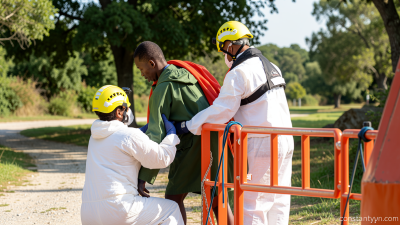
Maritime Rescue teams reached the vessel after a prolonged search. Of the 127 who set out, only 44 were alive when rescuers boarded. All 44 survivors are men from sub-Saharan Africa, according to the organisation’s statement. Five bodies were already on deck when the crew arrived, but the team was unable to bring them aboard a rescue vessel because of the conditions at sea.
“Once the rescue was complete, adverse weather conditions in the area — featuring 20-knot winds and 2.5m waves — made it impossible to recover the five bodies found on board the vessel,” Maritime Rescue explained. The organisation also noted that it could not independently confirm the exact number of people who had originally boarded the craft in The Gambia.
Three of the survivors were in critical condition and were airlifted directly to hospital. The remaining 41 were carried by sea to Gran Canaria, where they stepped ashore in the small hours of Thursday morning, exhausted and dehydrated after weeks without reliable food, water, or shelter.
Counting the Dead
Helena Maleno Garzón, founder of the Spanish human-rights charity Caminando Fronteras, put the death toll at 83. Her figure accounts for the five bodies recovered on the vessel plus the estimated number of passengers who are missing and presumed lost over the 27 days the boat spent adrift. The inclusion of a baby among the dead has drawn particular attention to the scale of the tragedy.
Maritime Rescue stressed that it was unable to verify the original headcount of 127, meaning the true number of fatalities could be higher once further information emerges from families, departure-point contacts, and any subsequent investigations.
A Route Defined by Danger
The stretch of ocean between West Africa’s coast and the Canary Islands is widely regarded as one of the most lethal migration passages on Earth. Each year, thousands of people — many from Senegal, Guinea, The Gambia, Mali, and other Sahelian and West African states — attempt the crossing in overcrowded fishing boats, rubber dinghies, or converted cargo vessels. The journey spans several hundred nautical miles of open Atlantic, where strong currents, sudden squalls, and limited navigation equipment combine to create conditions that routinely overwhelm small craft.
Spain’s Canary Islands, an autonomous community roughly 100 kilometres off the Moroccan coast, serve as the primary gateway for migrants seeking entry into European territory. Because the islands are Spanish soil, reaching them means reaching the European Union’s external border. That reality makes the route a magnet for departure despite the well-documented mortality rate.
Political Reaction
Fernando Clavijo, president of the Canary Islands regional government, took to the social platform X to condemn the latest loss of life.
“It is intolerable that lives continue to be lost. The Canaries cannot get used to or accept as normal the fact that the Atlantic continues to be a death trap.”
His remarks echo a recurring refrain from island officials and civil-society groups who argue that rescue capacity, search-and-rescue coordination, and EU-level policy on migration routes have not kept pace with the volume of departures from West Africa’s coast.
What Happens Next
The 44 survivors will receive medical assessment, hydration, and shelter in Gran Canaria before any further administrative steps. Spanish authorities will open an inquiry into the vessel’s departure, its condition, and the circumstances of the 27-day drift. Families of the missing and dead in The Gambia and other departure countries will face the long, painful process of confirmation.
For the families still waiting on the West African shore, the arithmetic is already clear: 127 set out, 44 returned. The gap between those two numbers is the human cost of a crossing that, for many, remains the only affordable path toward a life beyond the continent.
Related Reading
Frequently Asked Questions
What is More than 80 migrants feared dead?
More than 80 migrants feared dead is the main topic of this guide. The article explains the context, practical details, and next steps readers should understand.
Why does More than 80 migrants feared dead matter?
More than 80 migrants feared dead matters because readers are looking for a useful answer, not just a short summary. Good content should match search intent and help them decide what to do next.