
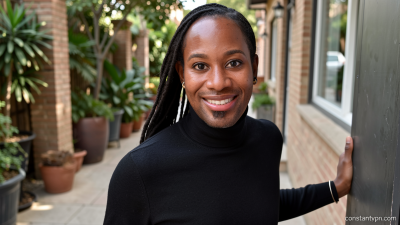
Academic Community Mourns Jason Arday Following Sudden Death
Constantvpn.com – The British academic world has been plunged into grief following the passing of Jason Arday, a distinguished professor whose life was cut short amid intense public scrutiny. Prime Minister Andy Burnham characterized the loss as “a tragedy on so many levels,” urging the nation to pause and reflect rather than rush toward conclusions. Arday, aged 41, was discovered deceased at his residence in Battersea, south London, on Friday afternoon. His death has sent ripples through educational institutions and beyond, prompting widespread tributes from colleagues, politicians, and community leaders who recognized both his professional contributions and the personal hardships he endured.
A Life Cut Short Amid Controversy
The former Cambridge professor had stepped down from his position as professor of sociology of education just days before his death. His resignation followed mounting allegations concerning plagiarism and concerns regarding certain academic achievements. Throughout these proceedings, Arday maintained his innocence, firmly denying the accusations leveled against him. Those closest to him described a man who felt overwhelmed by circumstances. A friend relayed to the BBC that Arday had expressed feeling “destroyed” by the situation, revealing that his authorization to travel to the United States had been withdrawn. Eamonn McCrystal, who developed a friendship with Arday during their time at St Mary’s University in Twickenham, attempted to comfort his colleague. McCrystal believed the turmoil would eventually subside, yet Arday responded that it did not feel as though relief was forthcoming.
Family and Friends Respond
In a statement released through his publisher, Simon & Schuster UK, Arday’s family conveyed their profound shock at losing someone they described as an “amazing father, partner, brother, uncle and son.” They noted that what they termed a “campaign of misinformation” had become too burdensome for him to bear. McCrystal shared additional memories with the BBC, describing Arday as “the nicest person” with “such a gentle soul.” The two had shared an office at the university, and McCrystal recalled how Arday frequently contributed to the student radio station when he established it. “I’m in shock, I can’t believe it,” McCrystal remarked.
Widespread Tributes Pour In
Leaders across the academic and political landscape have offered their condolences. Professor Deborah Prentice, vice-chancellor of the University of Cambridge, expressed that the faculty was “desperately saddened” by the news. She extended heartfelt sympathies to Arday’s family and friends during this “incredibly difficult time.” Education Secretary Lucy Powell described herself as “deeply shocked and saddened,” emphasizing the importance of remembering that behind headlines are real individuals with loved ones. Mayor of London Sir Sadiq Khan highlighted that Arday had endured unrelenting media attention, characterizing it as “an unacceptable public hounding and campaign of abuse.” He added that the professor had been the victim of “a pernicious public shaming” and called for this tragedy to serve as a wake-up call.
Racism and Harassment in Academia
Several commentators have pointed to racial dimensions in the treatment of Arday. Jo Grady, general secretary of the University and College Union, stated that “the level of harassment he suffered and the racism he was subjected to has been sickening” and insisted it “must be investigated.” Lord Paul Boateng, who made history as the UK’s first black cabinet minister in 2002, told BBC Newsnight he was “horrified, shocked and deeply saddened.” He emphasized that “racism in academia is a fact of life and needs to be addressed.” Daniel Kebede, general secretary of the National Education Union, described in a Saturday statement how Arday had faced “a public and brutal takedown that unleashed a tirade of racism.” He warned that the effect was “chilling,” sending a message to black people and others from underrepresented backgrounds that prominent public positions could make one a target.
Personal Accounts of Final Days
Professor Simon Baron-Cohen, director of the Autism Research Centre at Cambridge, shared with the Today programme that Arday had been “bombarded by every media outlet to paint him as a fraud.” Baron-Cohen spoke with Arday on the morning of his death and noted that the academic had felt unable to leave his home. He recalled Arday describing a “campaign against him” that had persisted for three years, adding that personal attacks had been “so immense.” Kehinde Andrews, a Professor of Black Studies and friend of Arday, told BBC Newsnight that the academic had been “very down” following his resignation from Cambridge. “He was very upset. He felt that there was no way out. He effectively wasn’t leaving the house. He had lost a lot of weight,” Andrews observed. He called for a “wakeup call to just how bad black academics actually have it in academia.” Labour MP Bell Ribeiro-Addy also contributed to the conversation, noting that “the idea that an academic would be dragged through this amount of media scrutiny is unheard of.” As the community processes this loss, many are calling for deeper reflection on how public figures are treated, particularly those from marginalized backgrounds, and whether the current climate of scrutiny serves justice or inflicts unnecessary harm.
Related Reading
Frequently Asked Questions
What is Jason Arday death tragedy on so many?
Jason Arday death tragedy on so many is the main topic of this guide. The article explains the context, practical details, and next steps readers should understand.
Why does Jason Arday death tragedy on so many matter?
Jason Arday death tragedy on so many matters because readers are looking for a useful answer, not just a short summary. Good content should match search intent and help them decide what to do next.