‘Controversial’ North Korean invasion setting for next Call of Duty game
Controversial North Korean Invasion Setting for Next Call of Duty Game
Constantvpn.com – The upcoming Call of Duty title has unveiled its narrative, sparking widespread discussion about the fictional renewed conflict on the Korean Peninsula. Set to launch on 23 October, the game, titled Modern Warfare 4, centers on South Korean soldiers confronting a full-scale invasion by North Korea. This storyline has drawn mixed reactions, with some expressing concern over its portrayal of a still-unfinished war, while others view it as a significant cultural milestone.
Historical Context and Narrative Focus
The Korean War, which concluded in 1953 with an armistice rather than a formal peace treaty, remains a defining event in the region’s history. As a result, the fictional conflict in Modern Warfare 4 carries weight, given the unresolved tensions between the two Koreas. Dr. Sarah Son, a Senior Lecturer in Korean Studies at the University of Sheffield, noted that the inclusion of North Korea as a central antagonist could be seen as controversial. “Turning an ongoing conflict into a game’s narrative might challenge perceptions of the war’s legacy,” she remarked, highlighting the potential for debate.
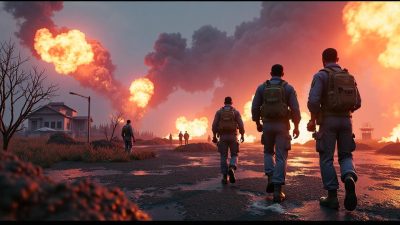
The game’s trailer, which has garnered nearly 22 million views in a single day, opens with a group of young South Korean conscripts on a routine patrol. A sudden missile strike disrupts their mission, thrusting them into a war that mirrors real-world fears. Developer Infinity Ward emphasized the game’s commitment to military authenticity, stating that the storyline is “grounded in the realism that defines Modern Warfare.” However, the choice to center the conflict on the Korean Peninsula has raised questions about its cultural and political implications.
Reactions from Koreans and Critics
Despite the controversy, some Koreans have embraced the setting. One fan expressed enthusiasm, calling the inclusion of the ROK Army in the franchise a “symbolic moment.” “The soldiers’ faces and the atmosphere of the locations all have that familiar Korean feel, so I’m genuinely excited,” they shared. Another remarked, “When I heard the rumour that the ROK Army would be in it, my immediate reaction was ‘obviously just an extra…,’ but now they’re not just present—they’re one of the playable protagonists. That’s what gets me.”
Dr. Son pointed out that while renewed inter-Korean conflict is a common theme in Korean media, it has traditionally been framed from a South Korean viewpoint. “A global gaming franchise might face different expectations,” she added, suggesting the decision could invite scrutiny. George Osborn, author of “Power Play: Video Games, Politics and the Battle for Global Influence,” echoed this sentiment, noting that the setting is “likely to attract criticism” in South Korea. He referenced earlier games like Homefront, which depicted a unified Korea under northern control and faced bans in the region.
The potential for backlash has prompted Infinity Ward to stress its attention to detail. The studio aims to depict the conflict with “military authenticity,” ensuring the portrayal of South Korean soldiers feels genuine. This approach is intended to foster a deeper connection with players, while also addressing concerns about the game’s impact on regional perceptions. However, the challenge lies in balancing entertainment with historical sensitivity, especially given the emotionally charged nature of the Korean War.
Gameplay Evolution and New Features
Beyond the narrative, Infinity Ward has introduced several gameplay innovations. The studio revamped movement mechanics to enhance player immersion and added more interactive environments, allowing for dynamic interactions during combat. A major overhaul of DMZ, its extraction-style multiplayer mode, now offers a more fluid and engaging experience. Additionally, the game features a new ‘Frontlines’ system, designed to make battles more responsive and strategic.
These changes reflect a broader effort to modernize the Call of Duty formula. The new title will launch on current-generation consoles, PC, and the Nintendo Switch 2, marking the first time a mainline entry has excluded PlayStation 4 and Xbox One. This shift underscores the evolving landscape of gaming platforms and the studio’s focus on accessibility. The inclusion of Captain Price, a beloved character from previous installments, further bridges the gap between the game’s fictional setting and its long-standing fanbase.
Cultural Impact and Global Reactions
The release of any Call of Duty game is a global phenomenon, with social media buzzing within hours of the announcement. Posts about Modern Warfare 4 have generated over three million interactions across Instagram, TikTok, X, and Facebook, showcasing its widespread appeal. Yet, the Korean setting has sparked unique conversations, with players and critics alike analyzing its implications.
Some view the game as a natural progression, given the frequent references to Korean conflicts in popular culture. Others, however, worry about the portrayal of North Korea as an aggressor, potentially reinforcing stereotypes or oversimplifying the region’s complex history. The game’s ability to capture the essence of Korean identity through its visuals and storylines has been praised, but it also invites scrutiny over how accurately it represents the country’s current situation.
Infinity Ward’s decision to feature ordinary South Korean soldiers rather than elite forces has been particularly notable. This approach aims to humanize the conflict, emphasizing the personal stakes faced by everyday citizens. The narrative challenges the notion of a “renewed” war by highlighting the immediacy of its impact, even as it draws from historical events. The studio’s creative choices underscore a shift toward more relatable storytelling, while still maintaining the high-stakes intensity that defines the franchise.
As the game approaches its release, the focus remains on how it will be received in South Korea. The developers have a clear responsibility to navigate the region’s sensitivities, ensuring the portrayal of the conflict is both engaging and respectful. The success of the game may depend on its ability to balance entertainment with cultural nuance, a task that will be closely watched by critics and fans alike.
Modern Warfare has a history of generating controversy through its depictions of real-world events. Missions like “No Russian,” which allowed players to assassinate civilians in Moscow, and later scenes showing war crimes and terrorism, have sparked debates about the boundaries of realistic warfare in games. The Korean Peninsula, with its deep historical roots and political significance, is now at the center of this discussion, adding a new layer of complexity to the franchise’s storytelling.
The inclusion of North Korea in Modern Warfare 4 represents a bold move for Infinity Ward, blending global appeal with local relevance. While the game’s release has already generated immense buzz, the long-term success of this setting will hinge on its ability to resonate with players worldwide, particularly in South Korea. As the world awaits its launch, the narrative of a fictional war may offer insights into the real tensions that continue to shape the region today.
Sign up for our Tech Decoded newsletter to follow the world’s top tech stories and trends. Outside the UK? Sign up here.
