Can China target critics abroad with its new ‘ethnic unity’ law?
China’s New Ethnic Unity Law and the Global Reach of Dissent
Constantvpn.com – The recent passage of China’s Ethnic Unity Law has sparked international debate about its potential to extend the reach of the government’s influence beyond its borders. Critics residing overseas are now anxious about the implications of this legislative measure, which could empower Beijing to pursue individuals who challenge its narrative on ethnic identity and national cohesion. Among those affected is Zhang Yadi, a 23-year-old who goes by the name Tara, once expected to study at a top UK university. Instead, she is reportedly in detention in China, her fate linked to her support for the Dalai Lama and her involvement in promoting Tibetan rights.
A Case of Dissent and Detention
Tara’s arrest in Shangri-La, Yunnan province, in July of last year marks a turning point in her life. At the time, she was visiting China and had recently posted a message on the social media platform X wishing the Dalai Lama a happy 90th birthday. This act, along with her contributions to editing a Chinese-language platform that highlighted Tibetan causes during her studies in France, is believed to have drawn the attention of Chinese authorities. The charges against her, including “inciting others to split the country and undermine national unity,” illustrate how the law might be used to target those who advocate for minority groups outside China.
Beijing views the Dalai Lama as a separatist figure and considers the Tibet Autonomous Region, which it annexed in 1950, as an inseparable part of its territory. This mindset underpins the law’s core objective: to eliminate dissent and reinforce a unified national identity. The new legislation, effective this week, is seen as a tool to silence critics who question China’s policies, whether they are based in the country or abroad. For many, it represents a significant shift in how the government handles dissent, expanding its legal arsenal to include those who operate from distant shores.
Global Image and Domestic Control
As China strengthens its position as a global power, it has been actively cultivating its international image. High-profile visits from foreign leaders, such as former US President Donald Trump and current UK Prime Minister Sir Keir Starmer, have underscored this effort. Meanwhile, relaxed visa rules and extensive online campaigns have encouraged millions from 77 countries, including much of Europe, to travel to China. These initiatives highlight a dual strategy: enhancing China’s appeal to the world while tightening its grip on internal dissent.
Social media influencers, often invited to showcase the nation’s diversity, have played a key role in this campaign. Their posts highlight the country’s breathtaking landscapes and vibrant cultures, especially in regions like Tibet and Xinjiang, which are tightly controlled. However, these efforts may now serve a deeper purpose. The Ethnic Unity Law, with its broad language, could be used to monitor and regulate narratives that challenge Beijing’s portrayal of ethnic harmony. For instance, any mention of the Dalai Lama or discussions about minority rights might now be scrutinized under this framework.
Legal Authority and International Concerns
Article 63 of the law grants Chinese authorities the power to act against groups and individuals outside the country that “undermine ethnic unity and progress or create ethnic division.” This provision is particularly alarming, as it allows the government to target advocates of minority rights who reside abroad. For example, if a European citizen criticizes China’s treatment of Uyghurs or Tibetans, they could now face legal consequences under this law.
“Rather than protecting diversity and equality, the law requires conformity,” says Sarah Brooks, Deputy Regional Director at Amnesty International. “Peaceful advocacy for minority rights in China by anyone, anywhere could be characterised as undermining ‘ethnic unity.’ This law puts a national legal framework behind policies that have already devastated the rights of Uyghurs, Tibetans, and other non-Han ethnic groups.”
The law’s implementation has raised fears about its impact on international relations. Members of the European Parliament have warned that if it applies to European citizens, it could strain EU-China ties. Extradition treaties might be reconsidered, and diplomatic tensions could rise as the law provides a legal rationale for targeting critics. While the law is framed as a means to promote unity, some argue it could be weaponized to suppress voices that challenge China’s narrative.
Global Implications and Domestic Impact
Experts suggest the law’s primary aim is to discourage debate rather than enforce strict compliance. Its provisions, though broad, may be difficult to apply universally, but they offer a symbolic tool to assert control. For activists with family in China, this is a clear warning: their words, even from afar, could have repercussions for loved ones. The law also threatens to make it harder for critics to return to the country, as they may fear detention or surveillance.
Historically, Beijing has targeted dissidents overseas, pressuring Uyghur activists and offering bounties to pro-democracy campaigners in Hong Kong. The Ethnic Unity Law now formalizes this practice, giving it a legal foundation. This move aligns with China’s broader strategy to project stability and authority globally while managing internal dissent. The law may also be used to justify actions against foreign journalists or academics who critique the government’s policies.
Broader Concerns and Ongoing Challenges
The law’s scope extends to all 56 ethnic groups within China, including Tibetans, Uyghurs, and Mongolians, who have historically faced restrictions on their cultural and political freedoms. Critics argue that the legislation risks further eroding these rights by framing any criticism as a threat to ethnic unity. This could lead to increased surveillance and censorship, not only in China but also in communities abroad where Chinese citizens or allies reside.
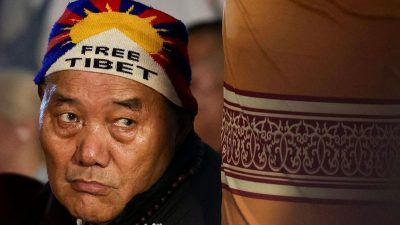
Protesters in London’s Piccadilly Circus have gathered to support Tibet, a reminder of the global resonance of the issue. These demonstrations reflect growing international awareness of China’s policies, which the new law may now seek to counteract. By giving the government the authority to target critics abroad, the law could limit the space for open dialogue on ethnic issues, potentially shaping public opinion in favor of Beijing’s narrative.
As the law takes effect, its long-term impact remains to be seen. While it may help consolidate control over dissent both inside and outside China, it also carries the risk of alienating international partners. The balance between promoting unity and suppressing diversity will be crucial in determining its success. For now, Tara’s story serves as a poignant example of how the law might be used to silence those who advocate for minority rights, even from afar.
