Can China repeat its EV success with robotaxis?
Can China Repeat Its EV Success with Robotaxis?
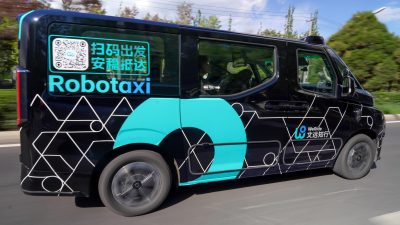
Constantvpn.com – Across multiple urban centers in China, robotaxis are undergoing real-world trials. In Beijing’s Yizhuang district, driverless vehicles have become a common sight, with autonomous delivery vans gliding along the inside lane as they transport packages to designated drop-off points. The area has emerged as a key hub for testing autonomous driving technology, hosting services operated by companies such as Baidu, WeRide, and Pony.ai. These firms have established commercial robotaxi operations within specific zones, where users can summon a ride through a mobile application. Within minutes, a vehicle arrives without a human driver at the helm, and after confirming the route on a touchscreen interface, it seamlessly integrates into Beijing’s bustling traffic, maneuvering past buses, cyclists, scooters, and pedestrians with minimal hesitation.
China’s dominance in the electric vehicle (EV) market has created a foundation for its current ambitions in autonomous driving. The country’s industrial ecosystem, which has enabled it to become the world’s largest EV market, now serves as a catalyst for innovation in robotaxis. Unlike Tesla, which develops much of its technology internally, China’s autonomous driving sector relies on a collaborative network of firms. Established automakers like BYD, Chery, Geely, and SAIC manufacture the hardware, while specialized software developers refine the algorithms that power the vehicles. This division of labor allows for rapid iteration and cost efficiency, as supply chains for batteries, sensors, chips, and onboard computers are already well-established.
The synergy between EV infrastructure and autonomous systems is a strategic advantage. Autonomous vehicles depend on many of the same components as electric cars, including high-capacity batteries and advanced sensors. This overlap has accelerated development, enabling companies to scale production and testing more quickly. “What you see is a pace of innovation and adaptation in the Chinese EV industry that I don’t think is matched anywhere else around the world,” notes Kyle Chan, a foreign policy fellow at the Brookings Institution. Chan emphasizes that China’s EV ecosystem doesn’t stop at the vehicle itself—it extends into related industries, creating an interconnected web of technological capabilities.
Government Support and Real-World Challenges
Government policies have played a critical role in fostering this growth. Pilot programs in cities like Beijing allow companies to test their technology on public roads, providing valuable real-world data. However, these programs also expose the complexities of Chinese traffic environments. “The traffic environment here in China is very complex,” says Maeve Zhang, chief marketing officer at WeRide. She highlights the diversity of road users, from cyclists to scooters, which challenges autonomous systems to process vast amounts of information in real time. This data-driven approach is essential for refining the software that governs robotaxis, making them more reliable in dense urban settings.
Despite these advantages, scaling robotaxis globally presents hurdles. While China’s domestic environment is ideal for testing, overseas markets introduce variables like extreme weather conditions. For instance, high temperatures in the Middle East, heavy rainfall in Southeast Asia, and freezing winters in Switzerland can all impact performance. “Extreme temperatures can reduce battery efficiency, while heavy rain, snow, and fog interfere with the cameras and sensors that autonomous vehicles rely on,” adds Zhang. These factors may slow progress in international markets, but they also highlight the adaptability required for successful expansion.
The Road Ahead for Autonomous Driving
Robotaxis are just one part of China’s broader autonomous driving strategy. QCraft, a leading firm in the field, has extended its autonomous software to passenger cars, buses, and delivery vehicles. Its buses already operate in over 20 cities, and the company is expanding its footprint beyond China. “It’s very promising on the technology side that maybe the next five, seven, at most 10 years, it will get into everybody’s life,” says James Yu, chairman and CEO of QCraft. This optimism reflects the confidence in China’s ability to replicate its EV success across sectors.
Chinese firms are not only focused on domestic growth but also on global competition. Their main rivals in the autonomous driving space include Waymo, the robotaxi arm of Alphabet, which remains the commercial leader, offering paid services in several U.S. cities. Amazon-owned Zoox and Tesla are pursuing more cautious strategies, while Uber has shifted focus after a fatal accident in 2018 involving its autonomous vehicles. Now, Uber and its ride-hailing rival Lyft are partnering with Chinese companies to leverage their expertise. “This gives them automatic access to millions of customers that they wouldn’t have if they created their own app,” explains Tu Le, founder of consultancy Sino Auto Insights. Such collaborations allow international firms to commercialize autonomous technology more efficiently, using China’s established infrastructure as a springboard.
While the road to global dominance is not without obstacles, China’s approach to robotaxis demonstrates a blend of technological agility and strategic collaboration. The country’s ability to manufacture at scale and adapt to varied conditions positions it as a formidable player in the autonomous driving race. As the technology matures, the question remains: can China transform robotaxis into another global industry where it holds significant influence? The answer may lie in its continued investment in innovation and its ability to integrate EV expertise into the broader landscape of smart transportation.
Strategic Partnerships and Market Expansion
Strategic alliances are key to China’s international ambitions. By partnering with foreign companies, Chinese firms can share their technological advancements while accessing new markets. For example, Uber’s collaboration with WeRide and other local players allows it to bypass the challenges of developing its own autonomous systems from scratch. These partnerships are not just about data sharing—they also enable the exchange of expertise, with Chinese firms offering insights into scalable solutions and rapid deployment.
China’s success with EVs has set a precedent for its autonomous driving industry. The same supply chains that enabled mass production of electric cars are now being utilized for robotaxis, reducing costs and increasing efficiency. This interconnected ecosystem allows companies to focus on specific innovations, such as improving navigation algorithms or enhancing sensor technology, without having to rebuild entire systems. As a result, the industry is evolving rapidly, with robotaxis becoming an increasingly viable alternative to traditional taxis.
The integration of autonomous technology into everyday transportation is still in its early stages, but China’s progress is undeniable. With continued investment, regulatory support, and a culture of rapid adaptation, the country is well-positioned to lead in this new frontier. However, the path to global leadership will require overcoming challenges such as varying environmental conditions and differing consumer preferences. For now, the focus remains on refining the technology, ensuring safety, and proving that the same success that propelled China’s EV industry can be replicated in the world of driverless vehicles.
