
Algeria’s Forest Fires Claim at Least 12 Lives as President Pushes for Capital Punishment Against Arsonists
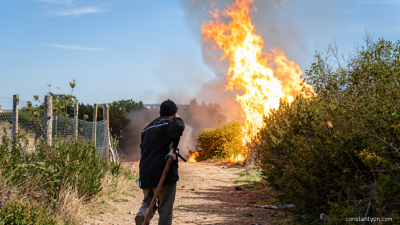
Constantvpn.com – A scorched landscape stretches across the north-eastern provinces of Algeria, where more than 100 separate wildfires tore through woodland and scrubland over the course of several days last week. At least 12 people have died, dozens more were injured, and thousands of residents were forced from their homes as flames consumed large tracts of forested terrain. The devastation unfolded against the backdrop of a punishing heatwave that has gripped northern Africa, with Algeria and Tunisia bearing the brunt of temperatures that pushed ecosystems and infrastructure to their limits.
In response to the carnage, President Abdelmadjid Tebboune has moved to impose the death penalty on anyone convicted of deliberately igniting fires in forested areas. On Sunday, he directed the justice ministry to draft amendments to the criminal code by 15 September, a deadline that would make intentional forest arson a capital offence. Under the existing legal framework, a person found guilty of starting a forest fire on purpose faces a maximum sentence of 30 years behind bars, or life imprisonment in aggravated circumstances.
“I did not rule out foul play,” Tebboune said on Saturday, adding that thorough investigations would be conducted given the unusual intensity of the blazes.
A Penal Code With a Long-Dormant Death Sentence
The president’s directive is not an introduction of a wholly new punishment. Capital punishment already appears in Algeria’s penal code for a narrow set of offences, yet no execution has actually been carried out in the country since 1993. In practice, the death penalty has functioned as a suspended threat for over three decades. By extending it to arson, Tebboune would be reviving a sentence that has lain dormant for more than thirty years and applying it to a crime that, while devastating, has historically been treated as a serious but non-capital offence.
Legal analysts note that the move signals a hardline posture by the executive branch. Algeria’s constitution and criminal procedure require parliamentary ratification of any amendment to the penal code, meaning the 15 September deadline sets the stage for a swift legislative session. Whether lawmakers will rubber-stamp the change or debate its proportionality remains to be seen, but the president’s framing — linking the fires to possible deliberate sabotage — suggests he intends to leave little room for hesitation.
The Fires Themselves: Scale and Aftermath
The blazes erupted across the north-eastern region in rapid succession during a period of extreme heat. By Sunday afternoon, Algerian civil authorities were still engaged in suppression operations, though the Algerian Press Service reported that 18 of the 19 fires that had broken out in the preceding 24 hours had been brought under control. The vast majority of the more than 100 incidents logged over the preceding days had already been extinguished.
The human toll extended well beyond fatalities. Dozens of residents sustained burns and smoke-related injuries, while thousands were displaced from villages and towns adjacent to the burn zones. Homes, agricultural land, and critical infrastructure — including power lines and water systems — suffered extensive damage. Tebboune ordered that compensation be paid to affected families and that repairs to damaged dwellings and essential services begin without delay. He also directed that independent investigations quantify the full extent of property loss and economic damage.
Climate Context: A Pattern Growing Worse
Algeria is no stranger to summer wildfires. The country’s Mediterranean coastline and semi-arid interior have long been prone to seasonal blazes, particularly during the hot, dry months of July and August. What distinguishes the current episode, however, is its scale and ferocity. Climate scientists point to a combination of rising baseline temperatures, prolonged drought cycles, and increased humidity variability as factors that have intensified wildfire behaviour across North Africa over the past decade.
The heatwave that triggered this week’s conflagration was not confined to Algeria. Tunisia, Libya, and parts of the western Mediterranean experienced simultaneous temperature spikes, straining firefighting resources and prompting emergency alerts across the region. For a country whose northern forests already face pressure from urban encroachment and limited water infrastructure, each successive heat event narrows the margin between a manageable brush fire and a catastrophic landscape-scale blaze.
Political and Social Implications
The president’s insistence on investigating whether human agency — beyond mere negligence — played a role in the fires introduces a layer of political sensitivity. In a country where public trust in institutional accountability has been tested by past disasters, the suggestion of deliberate arson can quickly become a rallying point for opposition voices demanding transparency. Conversely, if investigations confirm natural causes, the death-penalty amendment may be read by critics as a symbolic gesture rather than a substantive deterrent.
Regardless of the final findings, the episode underscores a structural vulnerability: Algeria’s northern forests, which provide ecological services, tourism revenue, and cultural identity for millions of residents, remain exposed to a climate trajectory that makes each summer’s fire season more dangerous than the last. The question now is whether the political response — swift, punitive, and top-down — will be matched by longer-term investment in early-warning systems, rural firefighting capacity, and land-use planning that addresses the root conditions allowing small ignitions to become regional catastrophes.
Related Reading
Frequently Asked Questions
What is Algeria president seeks death penalty for arsonists?
Algeria president seeks death penalty for arsonists is the main topic of this guide. The article explains the context, practical details, and next steps readers should understand.
Why does Algeria president seeks death penalty for arsonists matter?
Algeria president seeks death penalty for arsonists matters because readers are looking for a useful answer, not just a short summary. Good content should match search intent and help them decide what to do next.