From Empty Towers to Criminal Hubs: Forest City’s Unexpected Transformation
Constantvpn.com – What began as a gleaming vision of modern urban living has become an unlikely headquarters for international fraud syndicates. Malaysia’s Forest City, once celebrated as a futuristic residential paradise, now stands as a symbol of both architectural ambition and criminal opportunism. The artificial island, situated just off Singapore’s coast, has evolved from a nearly deserted development into a bustling center for cryptocurrency and romance scams.
A Raid on the Ghost City
Law enforcement officials conducted a sweeping operation in mid-July that exposed the scale of fraudulent activities hidden within Forest City’s residential towers. Malaysian police targeted two major call center operations across thirty-two separate locations, resulting in the arrest of three hundred and thirty-five individuals. Authorities confiscated approximately one million ringgit in assets, alongside substantial technological equipment including three hundred and thirteen computers, one thousand five hundred and fifty-seven mobile phones, seventeen laptops, and ten modems.
The criminal operations were centered in two primary locations. One hub occupied twenty-seven apartments spanning five floors of a residential tower, while the second operation distributed itself across five separate bungalows. These facilities served as command centers for cryptocurrency investment schemes and love scams that targeted victims across international borders.
The arrested individuals represented multiple nationalities. Three hundred and nine were Chinese nationals, nineteen came from Indonesia, three were Malaysian citizens, and four originated from Myanmar. Johor police chief Ab Rahaman Arsad confirmed that authorities are collaborating with Interpol to identify and apprehend the masterminds orchestrating these operations from within Forest City’s residential landscape.
The Rise and Fall of a Dream City
Forest City’s story began with extraordinary promise. Chinese developers unveiled the project in 2016 as a hundred billion dollar mega-development designed to accommodate seven hundred thousand residents. The artificial island, covering fourteen square kilometers or three thousand four hundred acres, was marketed as a special financial zone and described as a paradise for humanity. Its distinctive appearance, characterized by identical white residential blocks rising from an otherwise ordinary coastline, gave it a futuristic quality that attracted international attention.
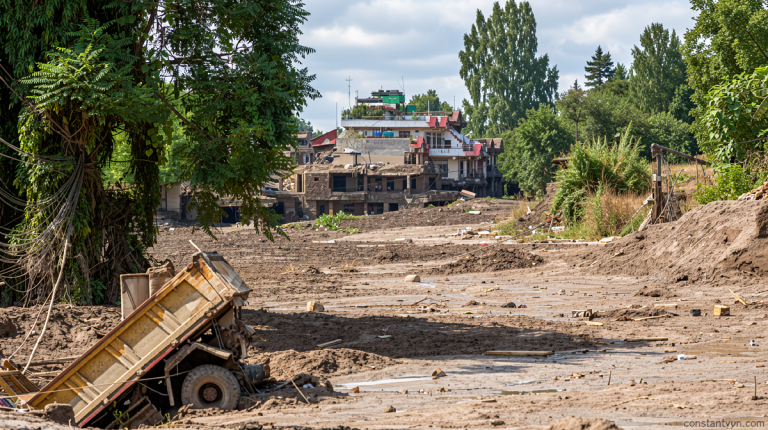
However, the reality has fallen dramatically short of expectations. A decade after its launch, the island is believed to house fewer than one percent of its intended population. Kevin, a tenant who works in property sales for the development, revealed that while the company promotes the figure of twenty-three thousand residents to clients, the actual number remains below five thousand. This discrepancy has contributed to Forest City’s reputation as a semi-abandoned ghost city, with rows of vacant skyscrapers casting shadows over quiet streets and dust settling on empty benchtops and windows.
Scammers Find a New Home
The very emptiness that defined Forest City’s decline has made it an attractive location for criminal enterprises. Experts suggest that the operations discovered in Forest City represent only a fraction of the broader scam industry that has expanded across Southeast Asia. John Wojcik, an analyst at TRM Labs specializing in cryptocurrency-related crime, noted that these organizations now function more like multinational corporations than traditional criminal gangs. They maintain dedicated recruitment teams, information technology departments, money-laundering specialists, and extensive infrastructure.
Many of the criminals operating in Forest City were displaced from Cambodia, which had become a global hub for transnational fraud operations. Over the past five years, this criminal sector has grown into a multi-billion dollar industry, relying heavily on trafficked victims who work under constant threat of torture and abuse. The Cambodian government intensified its crackdown starting late last year, with authorities estimating that three hundred thousand people departed the country within several months as raids on large-scale compounds intensified.
A Different Kind of Scam Operation
Unlike the notorious walled compounds found in Sihanoukville or along the Myanmar border, Forest City’s scam operations have taken on a more conventional appearance. The facilities are reportedly staffed by local residents and positioned directly alongside the homes of unsuspecting neighbors. This white-collar character distinguishes them from the more brutal environments that have become synonymous with Southeast Asian scam operations.
Kevin believes that fraudulent activities continue to operate within the complex’s condominiums and serviced apartments. He expressed concern about potential repercussions, requesting that his identity remain confidential. The situation, he explained, reflects a broader pattern seen in Johor city and Kuala Lumpur, but Forest City presents unique circumstances due to its distinctive status as a ghost city.
Investors Left Behind
While scammers have found opportunity in Forest City’s emptiness, early investors have faced disappointment. Jason Deng, a fifty-six-year-old investor who purchased five properties in the development during its initial phase, described paying substantial sums for what he believed would be a valuable investment. He recalled how the development was presented as a golden city, exceptionally beautiful and promising. Now, he acknowledges that had he understood the reality, he would have purchased far fewer apartments. His experience reflects the broader sentiment among those who invested in Forest City during its promotional peak.
Looking Ahead
The Forest City operations have drawn attention to the evolving nature of Southeast Asia’s criminal landscape. As Cambodian authorities continue their crackdown, fraud syndicates are relocating to new locations, with Malaysia emerging as a potential destination. The professionalization of these operations, combined with their integration into residential communities, presents ongoing challenges for law enforcement and local residents alike. The situation in Forest City serves as a microcosm of a global phenomenon, where the boundaries between legitimate residential development and criminal enterprise continue to blur.
Related Reading
Frequently Asked Questions
What is These seaside apartments were a ghost?
These seaside apartments were a ghost is the main topic of this guide. The article explains the context, practical details, and next steps readers should understand.
Why does These seaside apartments were a ghost matter?
These seaside apartments were a ghost matters because readers are looking for a useful answer, not just a short summary. Good content should match search intent and help them decide what to do next.