Author: William Taylor – constantvpn.com

  • These bookshops let Chinese readers question their country – now the doors are closing

    These bookshops let Chinese readers question their country – now the doors are closing

    These Bookshops Let Chinese Readers Question – Now Closing

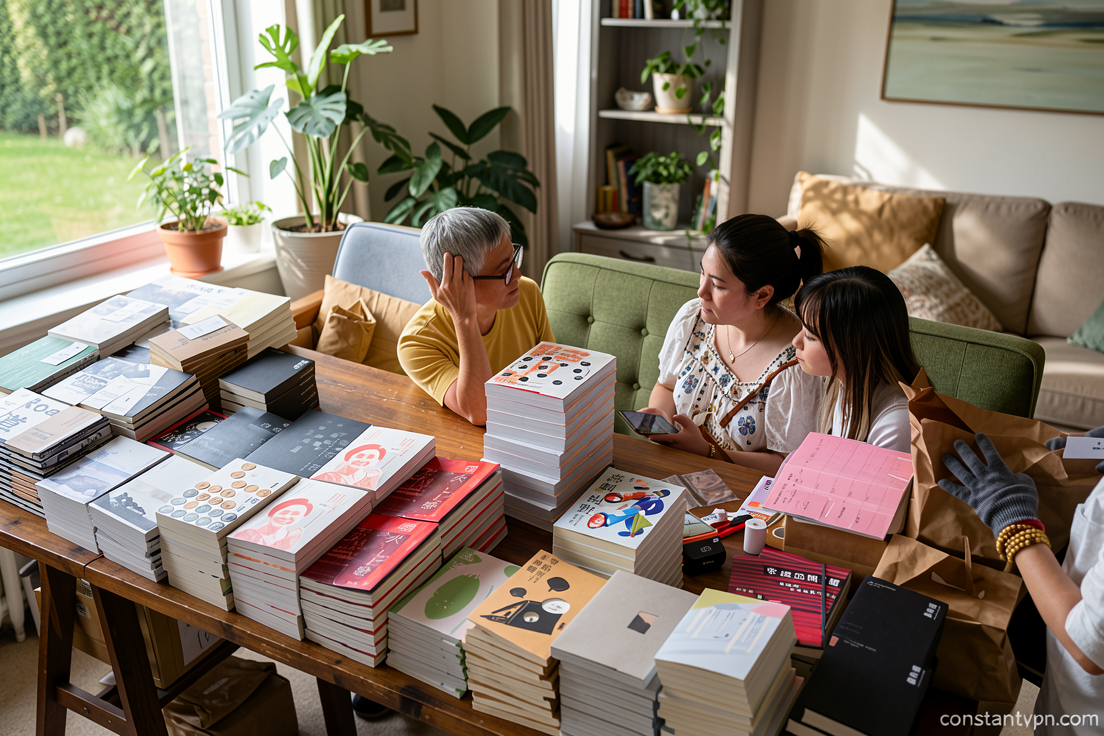
    Constantvpn.com – These bookshops let Chinese readers question their country in ways that mainland bookstores simply do not permit. For four years, a cramped storefront in Sham Shui Po — squeezed between textile wholesalers, auto-repair garages, and specialty coffee bars — has functioned as a quiet gateway for mainland visitors hunting titles that rarely make it across the border. Hunter Bookstore, founded by a former district councillor, built its shelves around works Beijing’s censorship machinery would flag: memoirs by pro-democracy figures, George Orwell’s Animal Farm, and Hajime Isayama’s manga saga Attack on Titan. After a police raid in late June and a wave of arrests sweeping the city’s small independent bookshop scene, that gateway is shutting its doors.

    The closures sit within a wider contraction of civil liberties in Hong Kong since the National Security Law took effect in 2020. Beijing presents the statute as essential for restoring order after the 2019 pro-democracy upheaval; rights groups and many residents argue it has effectively muzzled dissent. Thousands of locals — activists, journalists, former legislators — have emigrated in recent years as prosecutions under the new statutes produced convictions and lengthy detentions.

    A Monthly Pilgrimage from Guangzhou

    Chen Zhu, 23, lives in Guangzhou on China’s southern coast. Every month she crosses into Hong Kong with a single destination in mind: Hunter. The trip is geographically brief, yet for Zhu it marks a threshold into a space where questions left unanswered back home can finally find their answers. These bookshops let Chinese readers access histories and perspectives that the mainland’s tightly managed information environment does not surface.

    When word reached Zhu in late June that police had raided the shop, her reaction was immediate and visceral.

    “I was devastated.”

    Zhu’s curiosity about chapters of Chinese history that remain officially suppressed — most notably the 1989 Tiananmen Square crackdown — deepened after she enrolled at university in 2021. The student-led demonstrations of that year ended in a military suppression whose death toll remains fiercely contested. Beijing’s official figure at the time was 200 civilian deaths; declassified British diplomatic cables, however, indicate at least 10,000 people were killed. Zhu tried to fill the gap through cinema, watching both the epic romance Summer Palace and the clandestinely shot gay drama Lan Yu, but neither satisfied her hunger for a more direct account.

    She fixated on The Unburned Book, a bittersweet verse collection by Taiwanese poet Yang Du that reflects on protesters who later lived in exile. In 2023, the moment the China–Hong Kong land border reopened after pandemic-era closures, Zhu made the journey specifically to locate that volume. She arrived just as the city’s independent bookshop scene was surging in popularity, with readers sharing walking routes, neighbourhood guides, and curated shelf recommendations across social platforms.

    A Month of Raids and Arrests

    The enforcement pattern accelerated sharply in spring and summer 2025. In March, police detained the owner of Book Punch together with three staff members, charging all four with sedition and money laundering under the NSL. Officers reportedly confiscated copies of a biography of Jimmy Lai, the billionaire newspaper founder and jailed democracy campaigner.

    On 24 June, officers entered Hunter Bookstore and took owner Letitia Wong, 33, and a 32-year-old associate into custody on identical charges. Both deny the allegations and have since been granted bail.

    Then, on 15 July — the opening day of the annual Hong Kong Book Fair — national security police swept through two additional independent shops, Greenfield Bookstore and Have a Nice Stay, arresting five individuals for sedition. Those detainees, too, were later released on bail.

    By month’s end, Greenfield posted a farewell message on social media:

    “Our store will be closing after our lease expires. We thank you for walking with us, through wind and rain, for 50 years since our opening.”

    It marked the third independent bookshop to shutter within a single calendar month. For readers who travel specifically to browse these shelves, the losses are acute. These bookshops let Chinese readers encounter ideas, histories, and voices that would be unavailable or suppressed on the mainland, and their disappearance narrows an already constrained intellectual landscape.

    What the Closures Mean for Readers

    The targeted shops have long attracted loyal followings not only within Hong Kong but among mainland readers who make the trip expressly to browse their shelves. For 19-year-old Li, a Shanghai resident who declined to give her first name, these spaces represent something harder to quantify:

    “I can see so many possibilities, and where existing ideas can be challenged.”

    Others value them as rare enclaves of intellectual freedom and communal belonging that they feel are absent from the mainland’s tightly managed information environment. Now, watching the doors close one by one, many of those readers face a future in which the questions they once carried across the border will find fewer and fewer places to be asked aloud.

    Frequently Asked Questions

    Why are independent bookshops in Hong Kong closing? Following the imposition of the National Security Law in 2020, police raids and sedition charges have targeted several small independent bookshops. Raids in March, June, and July 2025 led to arrests at Hunter Bookstore, Book Punch, Greenfield Bookstore, and Have a Nice Stay, prompting at least three shops to announce closures within a single month.

    Can mainland readers still access these titles elsewhere? With the physical shelves closing, readers who previously travelled to Hong Kong to browse independent shelves now have fewer options. Online platforms and mainland bookstores generally stock only titles that pass state censorship, so works flagged as sensitive remain difficult to obtain.

    What happened to the people arrested in the raids? Owners and staff at Hunter Bookstore, Book Punch, Greenfield Bookstore, and Have a Nice Stay were charged with sedition and, in one case, money laundering. All detainees reported in these incidents have been granted bail and deny the allegations.

    How long had Greenfield Bookstore been operating? Greenfield’s farewell message referenced 50 years in business since its opening, making it one of the longest-running independent bookshops in Hong Kong before its closure.

  • Meghan in talks for role in Netflix series The Gentlemen, BBC understands

    Meghan in talks for role in Netflix series The Gentlemen, BBC understands

    Meghan Markle Weighs Acting Comeback as Family Relocation to Cotswolds Takes Shape

    Constantvpn.com – The Cotswolds, a patchwork of limestone villages and rolling farmland in south-west England, may soon host an unusual dual residency: a royal-adjacent household and a Netflix production crew. Meghan Markle, Duchess of Sussex, is reportedly in early-stage negotiations to take on a role in the streaming platform’s comedy series The Gentlemen, a development that would mark her first substantial return to acting since she stepped away from the profession following her 2018 marriage into the British royal family.

    The timing is not coincidental. Prince Harry and Meghan are understood to be preparing to relocate from their American base to a private, non-royal residence outside London later this month, with the Cotswolds specifically cited as the area where they intend to settle. Much of the filming for the two completed seasons of The Gentlemen has already taken place across that same stretch of countryside, meaning the production’s logistical infrastructure and local familiarity with the area are well established.

    The Gentlemen: Ritchie’s Duke-Turned-Drug-Baron Comedy

    Created by filmmaker Guy Ritchie, The Gentlemen is a darkly comic series centred on a duke who finds himself entangled in the world of narcotics. Theo James headlines the cast, while veteran British actors Hugh Bonneville and Vinnie Jones have featured in earlier seasons. The show’s tone blends period-adjacent aristocratic satire with genre thrills, and its production footprint in the Cotswolds has made the region a recurring backdrop for the narrative.

    Details surrounding Meghan’s potential involvement — the nature of the role, the extent of her screen time, and the contractual terms — have not been made public. The discussions remain in their earliest phase, and no confirmation of a casting decision has been issued by the production or by the Duchess’s representatives.

    From Suits to a Decade-Long Pause

    Before entering the royal household, Meghan built a seven-season career on the American legal drama Suits, portraying junior lawyer Rachel Zane. Her final episode aired in 2018, the same year she married Prince Harry in May. At the time of her departure from the show, she framed the decision not as a sacrifice but as a transition:

    “I did not view quitting acting as giving anything up, but rather as a new chapter.”

    That chapter lasted nearly a decade. In recent months, however, she made a brief on-screen reappearance with a cameo as herself in the upcoming comedy Close Personal Friends, a project starring Lily Collins and Brie Larson. A full role in The Gentlemen would represent a considerably deeper re-engagement with the craft.

    Business Ambitions and the As Ever Brand

    A renewed acting career could also serve a commercial purpose. While based in the UK, Meghan is understood to want to broaden the international audience for As Ever, her US-based lifestyle and cooking brand. Screen visibility in a globally distributed Netflix title would provide a platform that purely domestic marketing channels cannot match, potentially accelerating the brand’s reach beyond North American consumers.

    The Move Back: Logistics, Schooling, and Royal Status

    The couple’s planned relocation later this month has been confirmed through multiple channels. They intend to occupy a private residence outside London — explicitly not a royal palace or official property — and their two children, Prince Archie (seven) and Princess Lilibet (five), are enrolled to begin at a British school in September. Neither Harry nor Meghan currently has plans to resume formal duties as working members of the royal family, a status they relinquished in 2020.

    The decision follows a July visit during which Harry, Meghan, and their children travelled to Highgrove House in Gloucestershire to see King Charles III. It was the first occasion in more than four years that the King had met his grandchildren face to face, and the couple’s first joint trip to Britain since 2022. The visit appeared to ease long-standing tensions and set the stage for a more permanent presence in the country.

    Security Reassessment Underway

    A longer-term UK residence immediately raises questions about publicly funded protection. When the Sussexes ceased being working royals in 2020 and moved to the United States, their British security arrangements were downgraded, and they have since financed their own protective details abroad. Now that a permanent UK base is being established, the Royal and VIP Executive Committee (Ravec) — an independent body overseen by the Home Office — must revisit its earlier determinations. Previous security frameworks were predicated on the assumption that the couple would not reside in Britain on a permanent basis, meaning a fresh assessment of threat levels, resource allocation, and cost-sharing is required before any new arrangements can be formalised.

    What Comes Next

    For now, the acting negotiations remain unconfirmed, the relocation date is set for later this month, and the children’s school term begins in September. Whether Meghan steps in front of a camera in the Cotswolds — the same landscape where her family will soon live — or whether the discussions stall, will become clear in the coming weeks. What is already settled is that the couple’s centre of gravity is shifting back to Britain, and with it, a constellation of practical, financial, and constitutional questions that have been deferred for five years.

    Frequently Asked Questions

    What is Meghan in talks for role in Netflix?

    Meghan in talks for role in Netflix is the main topic of this guide. The article explains the context, practical details, and next steps readers should understand.

    Why does Meghan in talks for role in Netflix matter?

    Meghan in talks for role in Netflix matters because readers are looking for a useful answer, not just a short summary. Good content should match search intent and help them decide what to do next.

  • Russian double-tap drone strike kills 16 in Ukrainian mall, officials say

    Russian double-tap drone strike kills 16 in Ukrainian mall, officials say

    Double-Tap Drone Strike on Kryvyi Rih Mall Leaves at Least 16 Dead, Dozens More Missing

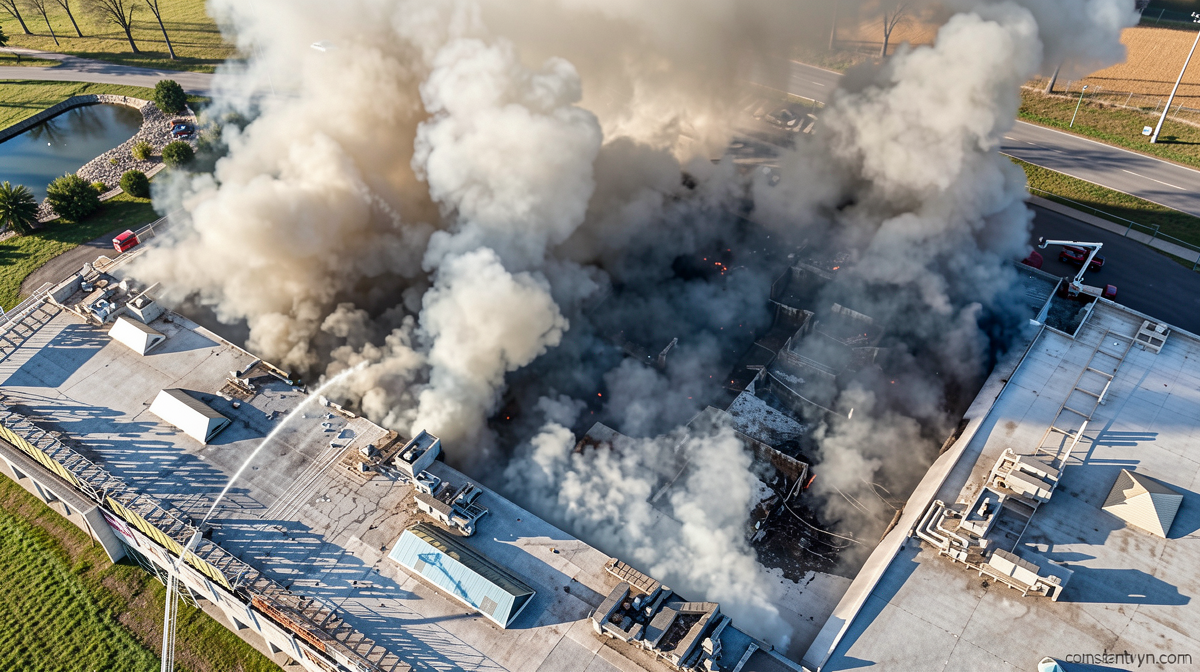
    Constantvpn.com – A shopping centre in the industrial city of Kryvyi Rih, located in Ukraine’s Dnipropetrovsk region, was hit by two successive Russian drone strikes on Friday, killing at least 16 people and wounding roughly 130 others. The attack, which struck during daylight hours, targeted the city’s largest retail complex and left large sections of the building collapsed into rubble. Authorities confirmed that additional victims remained trapped beneath the debris as rescue crews worked through the evening.

    Kryvyi Rih, a city of approximately 600,000 residents built around iron-ore mining and steel production, holds particular personal significance for Ukrainian President Volodymyr Zelensky, who was born there. He addressed the nation after the strike, describing the assault as a calculated act of terror aimed not only at civilians but at the first responders rushing to save them.

    The Two-Wave Attack

    The strike unfolded in two distinct phases. The first drone struck the mall, igniting fires and causing structural collapse. Before emergency services could fully reach the scene, a second drone arrived and hit the same structure while it was already ablaze and while rescue workers were on site. Footage verified by independent fact-checkers captured the moment the second drone impacted the burning building.

    This “double-tap” tactic — delivering a follow-up strike while rescuers and bystanders gather at the initial impact site — has become a recurring feature of Russian aerial campaigns against Ukrainian cities. Critics of the approach argue that it converts a single bombing into a compound catastrophe, multiplying casualties among both civilians and the very personnel tasked with saving them.

    “Absolutely cynical and despicable,” Zelensky said of the daytime attack in his hometown, adding that it was carried out in “two waves,” with the second strike deliberately aimed at emergency workers at the scene.

    The Russian Ministry of Defence had not issued a statement commenting on the strike as of Friday evening.

    Rescue Efforts and Rising Toll

    Oleksandr Hanzha, head of the Dnipropetrovsk regional administration, first reported 15 confirmed deaths on Friday evening, noting that two of the victims had died later in hospital after initial injuries. As search-and-rescue operations continued into the night, Hanzha confirmed that emergency workers had pulled one additional body from the rubble, bringing the verified death count to 16.

    He said nine people — including two children — remained unaccounted for inside the collapsed structure. Of the approximately 130 injured, 29 were listed in serious condition. Rescue teams from four other Ukrainian regions were rushed to Kryvyi Rih to assist with excavation and survivor searches. Specially trained psychologists were also dispatched to provide immediate mental-health support to survivors and their families.

    Oleksandr Vilkul, mayor of Kryvyi Rih, described the conditions under which the drones approached the city.

    “There are missing people who are not responding to calls,” the mayor said, adding that the Russian drones had been flying at “extremely low altitudes” and describing the attackers as “animals.”

    Local officials cautioned that the final death toll could climb further as debris is cleared and buried victims are recovered.

    Wider Strikes Across Ukraine

    The Kryvyi Rih mall was not the only target hit on Friday. In the southern Mykolaiv region, four people — three of them children — were killed in separate Russian strikes. Two more deaths were confirmed in the north-eastern Kharkiv region. In the southern city of Zaporizhzhia, a drone detonated near a taxi, injuring three people, according to the regional governor.

    The day before, Kyiv endured one of the heaviest combined missile-and-drone barrages of the war. Seventeen people were killed and more than 40 injured when Russian projectiles struck residential apartment blocks, warehouses, a children’s hospital, and a school across the capital overnight.

    Ukrainian Counterstrikes and the Broader War

    Earlier on Friday, Ukraine’s General Staff announced that it had struck an oil refinery and a military airfield deep inside Russian territory. These operations are part of a sustained Ukrainian campaign, intensified over recent months, aimed at Russian energy infrastructure and at warehouses belonging to Wildberries, the country’s largest online retailer. Kyiv maintains that such facilities are legitimate military-economic targets because they generate revenue that finances Moscow’s war effort.

    The broader conflict traces back to February 2022, when Russian President Vladimir Putin ordered a full-scale invasion of Ukraine. As of the current phase of the war, Moscow controls roughly one-fifth of Ukrainian territory, concentrated in the south-east. The repeated targeting of civilian infrastructure — shopping centres, hospitals, schools, residential towers — has drawn international condemnation and renewed calls for expanded air-defence support to Ukrainian cities.

    For the residents of Kryvyi Rih, the Friday strike compounded a year of nightly air-raid alerts with a daytime catastrophe in the heart of their commercial district. The question of how many more victims remain beneath the rubble, and whether the death toll will continue to rise, remained unanswered as Friday turned to Saturday.

    Frequently Asked Questions

    What is Russian double tap drone strike kills 16?

    Russian double tap drone strike kills 16 is the main topic of this guide. The article explains the context, practical details, and next steps readers should understand.

    Why does Russian double tap drone strike kills 16 matter?

    Russian double tap drone strike kills 16 matters because readers are looking for a useful answer, not just a short summary. Good content should match search intent and help them decide what to do next.

  • More students planning to live at home for university over ‘insane’ living costs

    More students planning to live at home for university over ‘insane’ living costs

    Living at Home for University: A Nine-Year Record as Costs Outpace Student Budgets

    Constantvpn.com – For the first time in nearly a decade, more than one in three UK 18-year-olds accepted into higher education have told admissions officials they intend to remain at their family home throughout their degree. The Universities and Colleges Admissions Service (Ucas) recorded over 81,000 such declarations this cycle — a figure that marks a sharp departure from 2017, when roughly one in five applicants in the same age bracket made the same choice. The upward trajectory is not confined to a single region: Scotland reports 48% of its applicants opting to stay put, while Wales sits at 20%, yet every part of the UK shows the same directional shift.

    The driver, by the students’ own accounts, is straightforward arithmetic. Accommodation prices have climbed steeply in recent years, and the gap between what a maintenance loan covers and what a room actually costs has widened to the point where commuting — or forgoing campus life altogether — becomes the rational financial decision.

    Two Friends, Two Commutes, One Calculation

    Beatrice and Amelia, both from St Helens in Merseyside, made the decision independently but arrived at the same conclusion: they will not move into halls this September. Beatrice has secured a place at the University of Manchester to study mathematics and plans to travel by train, a round-trip journey totalling around 50 minutes. Amelia will attend Liverpool John Moores University, roughly 20 minutes away by rail.

    “My first choice was Manchester and then my second was Liverpool, so I knew I could commute,” Beatrice explains, noting that the accommodation she researched would have cost “a few grand a year.”

    Amelia’s numbers were even starker. The rooms she identified in Liverpool ranged from £300 to £400 per week — a weekly outlay that, over a typical academic year, dwarfs the cost of a season of train tickets. Neither friend is enthusiastic about the daily commute, yet both say they intend to participate fully in lectures, societies, and social events while sleeping in their childhood bedrooms.

    The Human Cost of “Insane” Prices

    Jessica, another incoming student at Liverpool John Moores University, frames the choice less as a budgeting exercise and more as a small grief. She had wanted to live on campus, to inhabit the full texture of student life, but found the rental market what she calls “ridiculous” and “insane.”

    “I have a part-time job as everything is so expensive, and then commuting is going to kill a lot of my free time as well. It is a bit sad really when you think about it.”

    What does console her, she admits, is the prospect of her parents’ cooked dinners at the end of each day — a small domestic comfort that no campus kitchen replicates.

    The scale of savings can be substantial. Earlier this year, a first-year student documented her daily 90-minute commute into Manchester and calculated that she was saving more than £7,000 on accommodation over the course of the year. For a household already stretched by inflation, that figure is not marginal; it is the difference between financial stability and precarity.

    The Broader Cost Picture

    The Higher Education Policy Institute (Hepi) estimated last year that a student needs approximately £61,000 over a three-year degree to maintain what it terms a “minimum socially acceptable standard of living” — a figure that excludes tuition fees entirely. In 2024, the weekly cost of renting in university-owned accommodation spanned from £108 (for 40- to 44-week contracts in Northern Ireland) to £338 (for the shortest contracts in London). In the capital, rent alone accounts for nearly half — 46% — of a student’s total living costs. Across most other regions, weekly rents cluster between £140 and £180, with privately run halls typically priced above the university-run average.

    Maintenance loans, available to most full-time undergraduates, were designed to bridge the gap between income and expenditure. Yet student unions report that the average annual price of a campus room is rising far faster than the loan amount, leaving a widening shortfall. Hepi’s data indicate that the majority of young full-time students now hold paid employment during term time specifically to close that gap.

    A Shift in How Young People Define University

    The financial pressure is reshaping not just where students sleep but what form their education takes. The Open University, long associated with mature learners balancing work and study from home, reports that almost 3,400 18- and 19-year-olds enrolled last year. They constituted 9.5% of all new starters — up from 5.7% six years earlier. Vice-chancellor Prof Dave Phoenix describes the trend as evidence of a fundamental rethinking among younger people about what university should look like.

    “It means they can avoid moving costs and high accommodation bills and, for others, it means keeping a job,” Phoenix says of online study.

    Yet the question of whether distance learning or home-based commuting can replicate the formative value of on-campus life remains contested. A recent report by Prof William Whyte of the University of Oxford argues that the communal, immersive character of residential university extends well beyond academics — shaping social networks, professional identity, and civic engagement in ways that a bedroom commute cannot fully substitute.

    What is clear, however, is that the economic calculus has tipped. With a record number of UK 18-year-olds accepted into university this year and rents continuing to outpace loan adjustments, the home-based student is no longer an exception. It is becoming the default assumption, and institutions — from commuter-friendly timetabling to flexible online delivery — will increasingly be judged by how well they accommodate it.

    Frequently Asked Questions

    What is More students planning to live at home?

    More students planning to live at home is the main topic of this guide. The article explains the context, practical details, and next steps readers should understand.

    Why does More students planning to live at home matter?

    More students planning to live at home matters because readers are looking for a useful answer, not just a short summary. Good content should match search intent and help them decide what to do next.

  • French becoming more effective in stopping small boat crossings, UK says

    French becoming more effective in stopping small boat crossings, UK says

    Channel crossings fall sharply as French interception tactics tighten

    Constantvpn.com – The English Channel has long served as the most visible gateway for people seeking to reach Britain without formal permission, and since 2020 small-boat arrivals from northern France have constituted the single largest category of undetected entry into the country. Now, a sustained shift in French policing strategy appears to be bending that trend. The Home Office announced that French authorities intercepted 185 potential crossings carrying roughly 4,300 migrants across four separate weeks this summer, while also halting 12 vessels at sea through methods neither government has publicly detailed.

    A new operational posture on the French coast

    For years, French coastguards largely permitted inflatable dinghies to depart once launched, reasoning that attempting to board a crowded craft in open water posed unacceptable danger to passengers. That calculus has changed. Footage released by French police shows officers sprinting across a beach in jeeps to reach a launch before it gains momentum. In one striking sequence, an officer slashes the abandoned hull lengthways with a knife, effectively rendering it unserviceable. Migrants can be seen hurling objects at the responding officers, one of whom appears to deploy pepper spray.

    Charlie Eastaugh, director of maritime and small boats at the Border Security Command, described a particularly decisive day to the BBC while speaking at the Western Jetfoil processing facility in Dover:

    “Last Thursday alone, the French prevented all three of the boats that tried to cross. Two of those they prevented at sea, and one they prevented on land.”

    Of the twelve dinghies stopped at sea to date, three interceptions occurred within the final fortnight, suggesting the at-sea component of the operation is still maturing. Neither London nor Paris has disclosed the specific techniques employed.

    Political reaction splits

    Home Secretary Shabana Mahmood framed the results as evidence that the bilateral arrangement is delivering tangible outcomes:

    “The UK-France deal is already having a real impact.”

    The Conservatives, however, dismissed the announcement as a “joke,” arguing that Channel crossing preventions were “down by half over the past year” and implying the government was claiming credit for seasonal weather patterns rather than operational success. Some officials pointed to calmer seas and reduced wind as the primary driver of lower crossing numbers this year. The Home Office response, partially captured in reporting, countered that weather alone could not explain the pattern, insisting the French were being effective.

    The deal behind the numbers

    The UK-France Border Security deal, concluded in April under the Starmer government, allocates £501 million over three years to strengthen operations in northern France, alongside a further £161 million earmarked for new approaches to interception and processing. The Home Office, drawing on French police figures, stated that since the agreement took effect three months ago, 61 per cent of small boats attempting to cross have been intercepted — a five-percentage-point improvement over the equivalent period last year.

    Scale of the problem in context

    Between 1 January and 19 August 2026, a total of 15,897 people crossed the Channel by small boat from France, a figure down 43 per cent on the same window the previous year. Despite that decline, thousands continue to arrive; 250 reached British shores on a single Monday in recent weeks. In late July, a record 165 migrants arrived in one vessel. Border Security Command was photographed towing a mega dinghy — estimated at 13 metres (42 feet), roughly the length of a standard bus — when it reached Dover on 23 July.

    Small-boat arrivals now account for 42 per cent of all asylum applications filed between April 2025 and March 2026. Nearly every person arriving by sea claims asylum, and under international law they are entitled to remain in the country while their application is adjudicated. Boats arriving between 20 August 2025 and 19 August 2026 carried an average of 68 people each, more than double the average recorded in 2021. Maritime safety experts caution that such overcrowding dramatically elevates the risk of capsizing, hypothermia, and drowning.

    The human toll remains severe. At least 84 people died attempting the Channel crossing in 2024, according to United Nations data. In the latest annual figures covering January to December 2025, the Home Office identified at least 2,000 small-boat arrivals as potential victims of human trafficking or other forms of modern slavery.

    Broader migration picture

    Set against total immigration into the United Kingdom between January and December 2025, small-boat arrivals represent approximately five per cent of the overall flow. Separately, 4,535 additional people were detected entering without permission through other routes — hiding in vehicles, travelling aboard ferries, or passing through airports — between April 2025 and March 2026, a figure down 22 per cent year on year. A further, unquantified cohort arrives legally on work or study visas and then overstays their permitted period; the total number of such individuals residing in the country illegally is not publicly known.

    Nationality data shows that people from Eritrea accounted for 18 per cent of all small-boat arrivals between April 2025 and March 2026. The government has pledged to “smash the gangs” it believes organise and profit from these crossings, though the precise structure and reach of those networks remain subjects of ongoing investigation.

    Whether the French interception model can be sustained at scale — balancing operational cost, crew safety, and the political appetite on both sides of the Channel — will be tested over the coming months as autumn weather returns and the seasonal pressure on the coast intensifies.

    Frequently Asked Questions

    What is French becoming more effective in stopping?

    French becoming more effective in stopping is the main topic of this guide. The article explains the context, practical details, and next steps readers should understand.

    Why does French becoming more effective in stopping matter?

    French becoming more effective in stopping matters because readers are looking for a useful answer, not just a short summary. Good content should match search intent and help them decide what to do next.

  • US national debt passes $40tn after doubling in a decade

    US national debt passes $40tn after doubling in a decade

    America’s Debt Clock Hits a Landmark Nobody Wanted

    Constantvpn.com – The United States federal government now owes more than $40 trillion — a figure that, as of 18 August, stood at precisely $40.05 trillion (roughly £29.4 trillion) across all outstanding Treasury bonds, bills, and notes. The milestone marks a more-than-doubling of the national debt in a single decade, a trajectory that has outpaced even the most pessimistic forecasts and is now reshaping conversations about fiscal sustainability, consumer borrowing costs, and the structural limits of American monetary policy.

    In 2016, the total stood at just under $20 trillion. The Congressional Budget Office (CBO) had projected that overall borrowing would reach $39.6 trillion by the close of fiscal year 2026. The actual pace of accumulation has run ahead of that estimate, sharpening anxieties among policymakers and market participants about how rapidly the government’s borrowing appetite is expanding and what the compounding interest burden will mean for future budgets.

    What Drives the Acceleration

    Two consecutive administrations — first under President Trump, then under President Biden — presided over sustained periods of elevated federal spending, from pandemic-era stimulus packages to infrastructure outlays and defense commitments. Layered atop that spending base is a second, self-reinforcing factor: interest payments themselves. As the debt stock grows, the cost of servicing it grows with it, meaning each new dollar borrowed carries a heavier interest tag than the last. The CBO now indicates the United States is approaching its $41.1 trillion statutory debt ceiling, with projections placing the total near $64 trillion by 2036 if current trajectories hold.

    For households, the transmission mechanism is direct. Higher federal borrowing competes with private credit for available capital, pushing up the rates consumers face on mortgages, auto loans, and credit cards. The 30-year Treasury bond yield — a benchmark that anchors long-term fixed-rate mortgage pricing — climbed to 5.34% on Tuesday, the highest reading in nearly two decades. That spike was fueled by surging oil prices tied to the US-Iran conflict, which stoked inflation fears among investors, and by broader unease over the sheer volume of cash being raised by technology firms to fund artificial-intelligence infrastructure, where investment timelines and return profiles remain deeply uncertain.

    Expert Voices on the Escalating Risk

    David Jacks, an economics professor at the National University of Singapore, warned that while ordinary Americans are unlikely to feel immediate disruption, the compounding dynamics could eventually produce a shock comparable in scale to the 2008 financial crisis.

    “The pace of America’s growing debt was accelerating, and at some point, the bills will come due.”

    The comment underscores a structural point: debt itself is not inherently destabilizing, but the velocity at which it accumulates relative to economic output determines whether markets continue to absorb new issuance at manageable rates or begin demanding steep risk premiums.

    Treasury Steps In to Cool the Curve

    On Wednesday, the Treasury Department announced it would expand its bond-buyback programme by “at least double,” scaling operations from $2 billion to $4 billion over the window from 9 September through 4 November. The department framed the intervention as a “desire to provide greater liquidity support” for longer-dated securities. The immediate market effect was visible: the 30-year yield eased from its Tuesday peak to 5.18% following the announcement.

    John Canavan, lead analyst at Oxford Economics, characterised the move as an “attempt to provide relief” on long-term borrowing costs that had been under “significant pressure from rising oil prices, inflation risks and heavy supply due to global sovereign and corporate borrowing needs.” Yet he cautioned that, given the sheer magnitude of outstanding Treasury debt, a modest increase in buyback volume was “unlikely to provide meaningful long-term relief.”

    Rene Albrecht, senior analyst at DZ Bank in Germany, offered a more politically charged reading. In his view, the administration feared the “pain of 5% or higher yields” over the long term — not merely because it inflates government borrowing costs but because it ripples through the private sector, raising the cost of corporate investment and household credit.

    “It’s only three months until the midterm elections. They [the Treasury] have had to grab into the toolkit in order to get a hand on the recent rise in yields.”

    Mohamed A El-Erian, the economist and former IMF chief economist, suggested the episode may signal something more ambitious than a one-off liquidity operation. Beyond the immediate bond-market reaction, he argued the Trump administration’s action could represent the opening move in a broader strategy to maintain control over the shape of the yield curve — a policy framework known as “yield curve control.” While such measures can compress longer-end yields in the near term and thereby ease mortgage and other borrowing costs, El-Erian warned they “risk collateral damage and unintended consequences,” including distortions in capital allocation and reduced price discovery in fixed-income markets.

    Global Context: Where America Sits in the Debt Landscape

    The International Monetary Fund places the US debt-to-GDP ratio at 125.8 percent — among the highest of the world’s largest economies. For comparison, the IMF records the United Kingdom at 103.6 percent and China at 106.9 percent. Japan remains the outlier, carrying a debt-to-GDP ratio exceeding 200 percent, though its domestic savings structure and central-bank ownership of government bonds give it a different risk profile than the United States.

    One structural distinction matters for American households: the US mortgage market relies heavily on long-term fixed-rate products, unlike the UK, where variable-rate lending predominates. That means a sustained elevation in long-end Treasury yields translates more directly into higher monthly mortgage payments for American borrowers, amplifying the consumer-facing impact of every basis-point move in the 30-year bond.

    As the debt ceiling looms and the next round of Treasury auctions approaches, markets will be watching not just the headline number but the slope of the yield curve, the pace of new issuance, and whether the administration’s toolkit expands beyond the current buyback window. The $40 trillion mark is not a policy endpoint; it is a threshold beyond which the cost of inaction becomes visible to every borrower, from the first-time homebuyer to the sovereign treasury itself.

    Frequently Asked Questions

    What is US national debt passes 40tn after?

    US national debt passes 40tn after is the main topic of this guide. The article explains the context, practical details, and next steps readers should understand.

    Why does US national debt passes 40tn after matter?

    US national debt passes 40tn after matters because readers are looking for a useful answer, not just a short summary. Good content should match search intent and help them decide what to do next.

  • Prince Harry and Meghan moving back to UK

    Prince Harry and Meghan moving back to UK

    Sussexes Set to Relocate to London Suburbs After Five Years in California

    Constantvpn.com – Prince Harry and Meghan Markle are preparing to end their half-decade residency in the United States and return to British soil later this month. The couple will take up residence in a privately held home outside London — a dwelling that carries no royal designation and no official palace affiliation. Their two young children, Prince Archie (now seven) and Princess Lilibet (five), are already registered to begin at a British school when the autumn term opens in September.

    The decision marks a significant shift in a family saga that has dominated tabloid headlines since the Sussexes stepped away from royal duties in early 2020 and subsequently established themselves in California by March of that year. Five years of transatlantic distance, public feuding, and legal wrangling will now give way to a far more proximate — and potentially more complicated — chapter.

    A Private Return, Not a Royal One

    Crucially, neither Harry nor Meghan intends to resume any formal role within the working monarchy. Their official status remains unchanged: they are private individuals, not members of the royal household in any operational sense. King Charles was briefed on the relocation plan on Sunday, and the Palace confirmed that no alteration to their constitutional position is anticipated. The Prince and Princess of Wales, William and Catherine, were likewise informed of the couple’s intentions.

    The King, according to those close to the matter, welcomed the prospect of seeing his grandchildren and their parents more frequently, though strictly in a personal and familial capacity rather than an official one. The move was not raised during the Sussexes’ July visit to Highgrove, the King’s private estate in Gloucestershire, meaning the monarch learned of the plans only in the preceding weekend.

    Rebuilding Fractured Family Ties

    Relations between Harry and the wider royal family had grown markedly strained over the years since the departure. The July visit to Highgrove — described by the Palace as a “private family occasion” — represented a meaningful thaw. It was the first occasion in more than four years that the King had seen his grandchildren face to face. Before that, the last time Harry and Meghan had set foot in Britain together was at the state funeral of Queen Elizabeth II in September 2022.

    That July gathering, however, was not without friction. The duke’s request for police protection during the visit was turned down, a decision that reportedly prompted the Palace to reconsider the logistics of the trip. The episode underscored a recurring source of tension: the question of what level of state-funded security the Sussexes are entitled to while on British territory.

    The Security Dispute and Its Legal Aftermath

    In the preceding year, Prince Harry mounted a legal challenge seeking to overturn a decision that had downgraded his protective security rating following his departure from working-royal status. He lost that challenge. A Home Office spokesperson, speaking after the relocation news emerged, reiterated that decisions regarding royal protection are made by the Executive Committee for the Protection of Royalty and Public Figures (Ravec), and characterised the UK government’s protective security framework as “rigorous and proportionate.”

    Harry himself has spoken publicly about how anxieties over personal safety had deterred him from travelling to Britain with his wife and children. The prospect of daily life in a London suburb — where the couple will be far more visible to the public and the press than in their Californian enclave — makes the security question not merely academic but immediate.

    Invictus Games: A Practical Anchor for the Return

    One concrete reason the timing of the move may suit the duke’s charitable agenda is the Invictus Games, the annual sporting event for injured service personnel that Harry founded. The next edition is scheduled to be hosted in Birmingham next year. During his July visit, the duke actively promoted the event to British audiences.

    David Wiseman, chief programmes and strategy officer at the Invictus Games Foundation, reacted to the relocation news with evident relief:

    “I will be really pleased to have him back in the country. Moving is stressful for anyone so I hope it all goes well and the children settle well at school.”

    Having the duke physically present in Britain ahead of the Birmingham event removes the logistical complications of transatlantic travel and allows him to engage directly with veterans, sponsors, and broadcasters in the months before the competition.

    Press Hostilities and the Privacy Litigation

    The July visit was also clouded by a High Court defeat in a long-running privacy action brought by Harry and several other public figures against Associated Newspapers, the publisher of the Daily Mail and Mail on Sunday. The claimants alleged that the newspaper group had employed unlawful methods to obtain information for its stories; Associated Newspapers strenuously denied the allegations. The judgment, delivered while Harry was physically present in Britain, cast a shadow over what had otherwise been a conciliatory family gathering.

    The duke has spoken candidly about the toll of sustained press intrusion on his marriage. In January testimony he told the court:

    “They’ve made my wife’s life an absolute misery.”

    A return to British soil, where the tabloid ecosystem operates with particular intensity around royal-adjacent figures, will test whether the couple can maintain the privacy they have struggled to protect from across the Atlantic.

    What Comes Next

    Harry has previously expressed a desire for “reconciliation” with the Royal Family, and the July visit at Highgrove was widely read as a step in that direction. Whether proximity will sustain that thaw — or whether the daily friction of shared geography, media scrutiny, and competing loyalties will reignite old wounds — remains to be seen. What is certain is that from September onward, Archie and Lilibet will be walking into a British classroom, and their parents will be living within sight of the institutions that shaped their childhoods. The transatlantic buffer that allowed both sides to manage distance is, by design, about to disappear.

    Frequently Asked Questions

    What is Prince Harry and Meghan moving back?

    Prince Harry and Meghan moving back is the main topic of this guide. The article explains the context, practical details, and next steps readers should understand.

    Why does Prince Harry and Meghan moving back matter?

    Prince Harry and Meghan moving back matters because readers are looking for a useful answer, not just a short summary. Good content should match search intent and help them decide what to do next.

  • ‘Look at my husband’ and ‘Vlad plots revenge’

    ‘Look at my husband’ and ‘Vlad plots revenge’

    Queen Camilla Breaks Silence on King Charles’s Cancer Battle

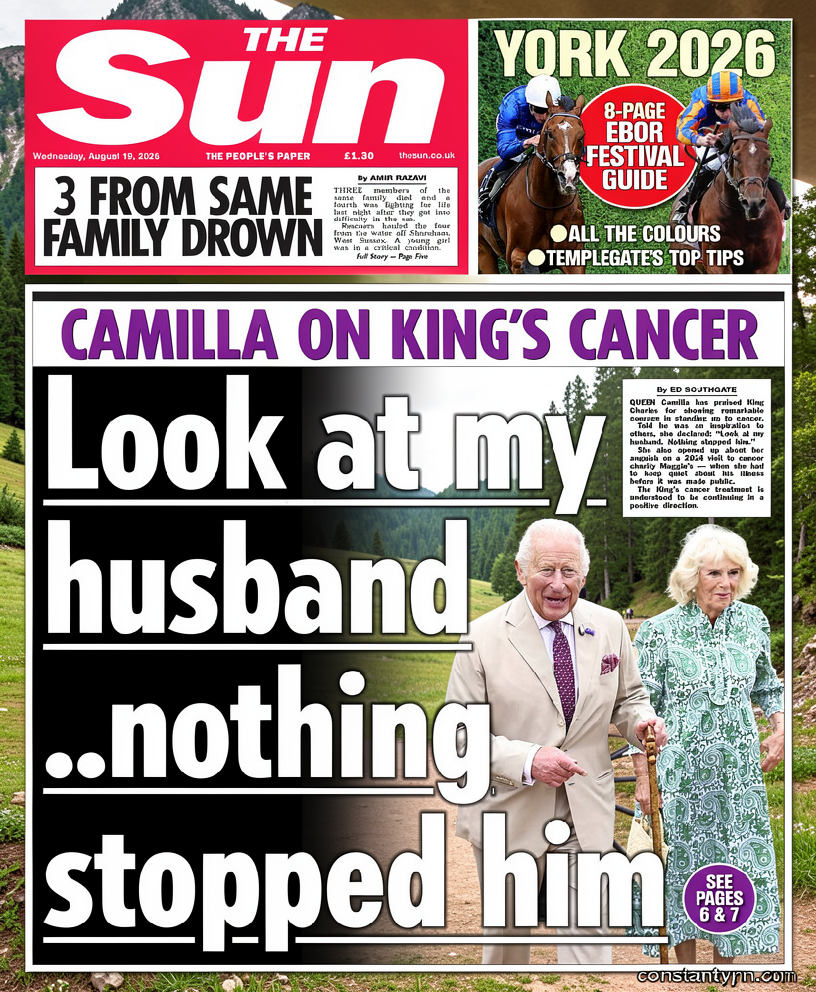
    Constantvpn.com – For the first time since the royal family announced King Charles III’s prostate cancer diagnosis, Queen Camilla has spoken publicly about what it means to stand beside a spouse navigating a life-threatening illness. Her words, captured in a short film released on Wednesday, carry the weight of a woman who has spent decades championing cancer patients and now finds herself living the very experience she has long campaigned to ease.

    “Look at my husband, nothing stopped him.”

    The Queen’s statement, which dominated the front pages of British newspapers across the political spectrum on Wednesday, frames her husband’s diagnosis not as a defeat but as a testament to his determination. She described herself as having been “longing” to share what she had learned from her own decades of work with cancer charities, a sentiment that lands with particular force given she was launching a new cancer support centre just days after receiving the news about Charles.

    The Maggie’s Legacy and a New Chapter

    The remarks were embedded within a film marking the 30th anniversary of Maggie’s, the cancer support charity founded by Princess Diana in 1992. The timing is not coincidental: the Queen has long been associated with the organisation, and Wednesday’s release positions her personal experience as the latest chapter in a three-decade institutional effort to reduce the isolation felt by patients and their families. The film’s release on the anniversary date underscores how the charity’s mission has evolved from a single royal patron’s initiative into a broad-based support network spanning the UK.

    Meanwhile, the King himself offered a more pragmatic note in the same footage. He stated plainly that he would “cope” with the diagnosis and remained committed to continuing his official duties. For a monarch whose role is inseparable from public visibility, that declaration carries constitutional as well as personal significance — it signals an intention to maintain the machinery of state even while undergoing treatment.

    Burnham’s Triple Front: Ukraine, Homelessness, and Whitehall Power

    Prime Minister Andy Burnham faced a packed agenda of his own across Wednesday’s press, spanning foreign policy, domestic welfare, and a structural reshuffle of government departments.

    Ukraine and the Drone Question

    Following strikes against Russian territory in which UK-manufactured drones played a role, Moscow issued veiled threats of “revenge.” Burnham responded without equivocation, declaring that Britain would continue to “support Ukraine 100%.” The Russian embassy in London went further, accusing the British government of “deliberately opting for an escalation of the Ukraine crisis” — language that frames the drone question not as a tactical detail but as a deliberate choice to widen the conflict’s geography.

    The stakes are considerable. Ukraine’s war effort has depended heavily on Western-supplied munitions, and any perception that British-made systems are being used on Russian soil could complicate future supply negotiations. Burnham’s firmness is designed to foreclose that line of argument before it hardens into diplomatic friction.

    £100m Homelessness Pledge

    In a separate announcement, Burnham committed an additional £100 million to ending street homelessness in England. He urged local authorities to provide every rough sleeper with a clear pathway off the streets and pledged to run a coordinated, nationwide campaign this winter — explicitly comparing its scale and urgency to the public-health mobilisation mounted during the pandemic.

    Housing Secretary Angela Rayner added a specific deadline: every homeless person across England will be offered a bed by Christmas. Analysts will watch whether that timeline survives contact with local council budgets, housing stock constraints, and the administrative capacity required to identify and house thousands of rough sleepers within weeks. The pledge, if delivered, would represent the most aggressive single-year intervention in the history of English homelessness policy.

    Shifting Economic Power to No 10 North

    In an interview published on Wednesday, Burnham revealed his intention to transfer responsibility for economic growth from the Treasury to a new unit at Number 10 North. He characterised the move as part of a “huge transfer of power” away from the traditional Whitehall bureaucracy. The restructuring would place growth strategy directly under the Prime Minister’s office, reducing the Treasury’s historic monopoly over macroeconomic policy and signalling a more interventionist approach to industrial and trade questions.

    Other Headlines: Tragedy, Markets, and a Lawn

    Three members of a family drowned off the West Sussex coast on Tuesday after four people were spotted struggling in the water near Shoreham. Emergency services responded to the scene, but only one person was pulled from the sea alive. The incident adds to a pattern of coastal fatalities that has prompted renewed calls for improved lifeguard coverage along England’s south coast during the summer months.

    In financial markets, long-term government borrowing costs reached multi-decade highs on Tuesday. Investors are pricing in persistent inflation risk alongside widening fiscal deficits, a combination that is pushing sovereign debt yields upward across multiple economies simultaneously. For the UK, where the gilt market already carries elevated issuance needs, sustained pressure on long-dated rates would raise the cost of servicing existing debt and constrain fiscal headroom for the very programmes Burnham is announcing.

    On a lighter note, one tabloid devoted its splash page to a photograph of Jeremy Clarkson’s garden — still vividly green while millions of households navigate hosepipe restrictions. The explanation offered was a borehole water supply, a private well that draws directly from the water table and therefore falls outside the usual metering and ban regimes. The image struck a chord with readers facing their own water-use limitations, turning a celebrity’s garden into an accidental commentary on infrastructure inequality.

    Elsewhere, two British honeymooners were killed in a helicopter crash in Greece on Monday. The couple had been celebrating their wedding when the aircraft went down, and both were pronounced dead at the scene. Families in the UK were notified within hours, and the Greek aviation authority opened an investigation into the cause of the accident.

    Frequently Asked Questions

    What is Look at my husband and Vlad?

    Look at my husband and Vlad is the main topic of this guide. The article explains the context, practical details, and next steps readers should understand.

    Why does Look at my husband and Vlad matter?

    Look at my husband and Vlad matters because readers are looking for a useful answer, not just a short summary. Good content should match search intent and help them decide what to do next.

  • French civil servant drugged us to make us urinate on ourselves, say accusers

    French civil servant drugged us to make us urinate on ourselves, say accusers

    French Civil Servant Drugged Us, Say 250 Women

    Constantvpn.com – Nearly 250 women now allege that a French civil servant drugged us during employment interviews at France’s Ministry of Culture between 2009 and 2018. The accused, Christian Nègre, allegedly slipped diuretics into coffee served to candidates, then walked them through Parisian streets until they lost bladder control. The allegations, long whispered in private, surfaced publicly after police opened a formal investigation and contacted individual women by letter.

    The wave of disclosures gained momentum in 2024, when the trial surrounding Gisele Pelicot’s husband exposed how one person can pharmacologically dominate another over years. That case gave French women a vocabulary — chemical submission — for experiences they had struggled to name, and it emboldened former interviewees to come forward.

    One Coffee, One Walk, One Loss of Control

    Anaïs de Vos, then 27, accepted a cup of coffee from her interviewer in the summer of 2011. She did not normally drink the beverage, but politeness won out. She recalls consuming roughly half the cup before setting it aside.

    “It tasted bad… so I drank about half.”

    Nègre then suggested they continue the conversation on foot. Within minutes, Anaïs felt an overwhelming, involuntary need to urinate. He looked at her, she says, and asked with what she describes as a gleeful expression whether she needed “a wee.” He pointed toward a storage cupboard beneath a bridge over the Seine and told her to use it. Panic seized her.

    “I started to panic. I had visions of him pushing me into the room and closing the door behind me.”

    She insisted they keep walking. They reached the Louvre, where public toilets cost one euro. Anaïs had left her purse at the ministry; Nègre claimed he carried no cash. Desperate and in pain, she eventually found a café willing to let her use its facilities. By the time she reached the door, control was gone.

    “I was really weak. I couldn’t really feel my legs any more. I was scared. I didn’t know what was happening.”

    She was wearing a dress, which she later said made concealment easier. She also took small comfort in the fact that Nègre was not present at the moment it happened.

    The Spreadsheet and the Police Letter

    For eight years Anaïs carried a vague conviction that something had been done to her, but she could not identify what. She did not receive the position. The episode, she says, eroded her confidence and pushed her toward a less ambitious career path than she had originally planned.

    In 2019 a police letter arrived. Officers told her they suspected she was among almost 200 women the French civil servant had drugged during interviews; the figure has since climbed to nearly 250. Investigators located a spreadsheet on Nègre’s computer titled “Experiments P,” which logged each woman’s arrival time, the moment the diuretic was administered, the interval before urination, and the type of underwear worn. It was through that file that police identified Anaïs as a likely victim.

    “I was shocked. But I was happy to know I wasn’t crazy. Something had happened that day.”

    Looking back, Anaïs is now convinced the odd taste in that coffee was the diuretic itself. On the day of the interview she had a fleeting thought that something might have been slipped into her drink, but she dismissed it. As she put it at the time: “It’s the Ministry of Culture. It’s not possible.”

    FAQ

    What medication was allegedly used? Investigators determined that diuretics — drugs commonly prescribed for conditions such as high blood pressure — were administered. These substances cause the kidneys to produce excess urine, producing an urgent and often uncontrollable need to urinate within a short window.

    How many women have come forward? The number has grown from roughly 200 at the time of initial police contact in 2019 to nearly 250 as of the most recent reporting.

    When did the alleged drugging take place? Interviews at the Ministry of Culture between 2009 and 2018 are covered by the investigation.

    What triggered the public conversation in France? The 2024 trial connected to the Gisele Pelicot case opened a national discussion about prolonged pharmacological control and gave former victims language to describe their experiences.

  • Kyrgios suspended after positive cocaine test

    Kyrgios suspended after positive cocaine test

    Former Top-15 Star Nick Kyrgios Halted by Cocaine-Linked Suspension

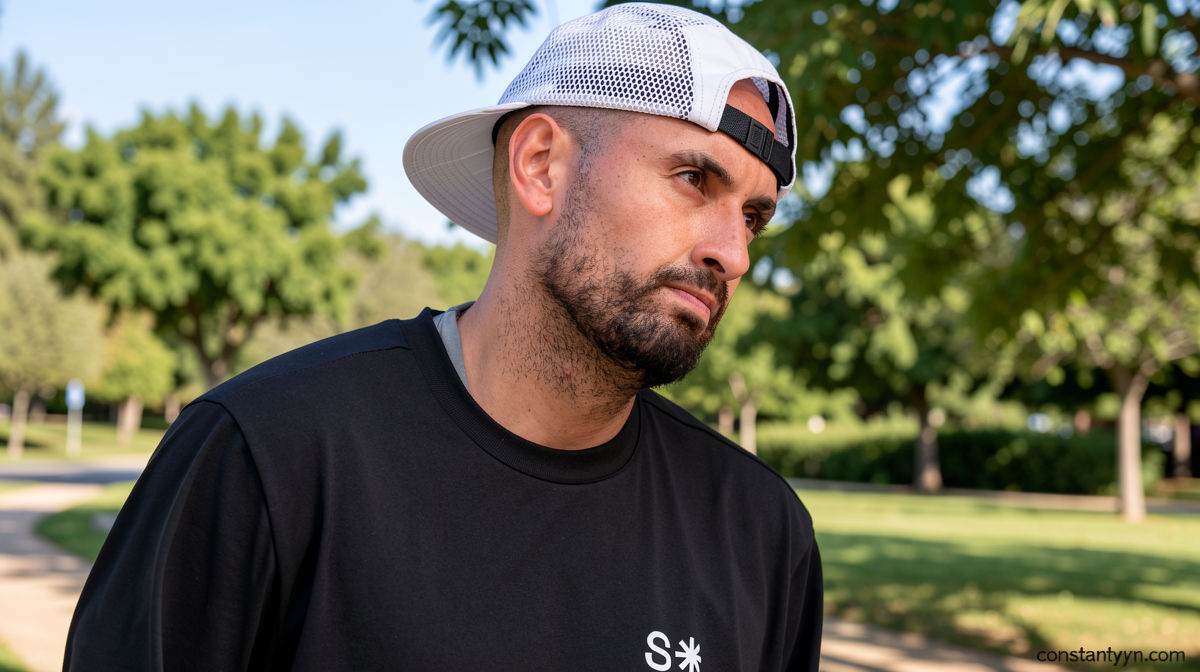
    Constantvpn.com – The Australian tennis world is reeling after Nick Kyrgios, once ranked as high as world number 13, was placed under a provisional ban following a positive test for cocaine. The suspension, effective since 4 August, bars the 31-year-old from competing, coaching, or even attending any Grand Slam or tour-sanctioned event until a tribunal reaches its verdict. The International Tennis Integrity Agency confirmed that Kyrgios retains the right to contest the provisional measure but noted he has not filed an appeal as of the latest update.

    How the Positive Came to Light

    The triggering sample was collected during the Mallorca Open on 22 June. Laboratory analysis subsequently identified benzoylecgonine, the primary metabolite produced when the body breaks down cocaine. Because the specimen was drawn while Kyrgios was actively competing in singles at that tournament — where he was eliminated in the opening round by Adam Walton — the case falls under in-competition rules rather than the reduced-sanction framework that applies to out-of-competition findings. Cocaine sits on the World Anti-Doping Agency’s prohibited list, categorised as both a stimulant and a substance of abuse, meaning the regulatory pathway for his case carries particular weight.

    Kyrgios Takes Ownership in a Lengthy Public Statement

    On Instagram, the former top-15 player issued a detailed written response in which he described the episode as “a huge mistake” and accepted “full responsibility” without qualification. He went further, acknowledging that a string of physical setbacks had left him in a fragile state.

    “The last few years of injuries had taken a huge toll on me, both mentally and physically. My body hasn’t been able to do what my mind expects it to do. Coming to terms with being near the end of my career has been harder than I ever imagined. None of that excuses what I did.”

    He announced he would withdraw from social media and public appearances for the next 28 days, describing the period as time to “focus on getting myself right.” Addressing his audience directly, he added:

    “I’m sorry to my fans, my family, my sponsors and everyone close to me. Above all, I’m sorry to the kids who follow me. I know the example this sets and I’m deeply disappointed in myself.”

    A Season Already Defined by Injury

    The suspension lands on a campaign that had already been curtailed by physical problems. Kyrgios entered the 2025 season dealing with recurring knee and wrist ailments, and he managed only four singles appearances — winning one and dropping three. His most recent competitive outing came in the men’s doubles draw at Wimbledon, where he teamed with Alexander Bublik before falling in the first round. The timing of the ban, therefore, removes any remaining competitive window for the year and raises questions about whether he will return to professional tennis at all.

    A Career Marked by On-Court Turbulence

    Kyrgios has never been a conventional figure in the sport. Over the years he has accumulated substantial fines for smashing rackets, audible expletives directed at opponents or officials, and heated exchanges with chair umpires. In 2023 he publicly acknowledged that he had assaulted an ex-girlfriend roughly two years earlier; the matter was resolved without a criminal conviction. A series of remarks widely characterised as misogynistic drew additional scrutiny, and in 2024 he drew fresh criticism after sharing a social-media post by influencer Andrew Tate. Kyrgios subsequently stated he had gone “to all lengths” to distance himself from the self-described misogynist.

    He also inserted himself into the broader anti-doping debate, publicly labelling the handling of two high-profile cases involving Jannik Sinner and Iga Swiatek as “disgusting” for the sport — a stance that complicated his own credibility when his own sample came back positive.

    What the Record Still Shows

    Beneath the controversy, Kyrgios’s competitive résumé remains substantial. He has claimed seven ATP Tour singles titles and reached the Wimbledon men’s singles final in 2022, where he fell in four sets to Novak Djokovic. That same year he and compatriot Thanasi Kokkinakis captured the Australian Open men’s doubles championship. His talent and big-match nerve earned him a devoted following even among fans who found his temperament difficult to watch.

    Mental-Health Struggles in the Background

    Kyrgios has spoken openly about periods of severe psychological distress. After his 2019 Wimbledon defeat, he disclosed that he had “genuinely contemplated” suicide and spent time in a psychiatric hospital in London. Those disclosures, made at the time with considerable courage, add another layer to the current episode: a player already navigating the psychological weight of a fading career, compounded by chronic pain, now faces a regulatory process that will determine whether he can ever step back onto a professional court.

    The tribunal outcome, whenever it arrives, will shape not only Kyrgios’s personal future but also the perception of how consistently the sport’s integrity bodies apply their rules across the player population. Until that verdict is delivered, the Australian remains sidelined — unable to play, coach, or even be present at the events he once helped define.

    Frequently Asked Questions

    What is Kyrgios suspended after positive cocaine test?

    Kyrgios suspended after positive cocaine test is the main topic of this guide. The article explains the context, practical details, and next steps readers should understand.

    Why does Kyrgios suspended after positive cocaine test matter?

    Kyrgios suspended after positive cocaine test matters because readers are looking for a useful answer, not just a short summary. Good content should match search intent and help them decide what to do next.