Author: Susan Martinez – constantvpn.com

  • How this 1960s ex-council house is managing to stay cool without air con

    How this 1960s ex-council house is managing to stay cool without air con

    A South London Home That Beats the Heat Without a Single Air-Conditioning Unit

    Constantvpn.com – The UK is bracing for what forecasters expect to be its hottest summer on record, and with five heatwaves already logged this year, millions of households are scrambling for ways to keep interiors bearable. The problem is structural: more than half of all UK homes are already vulnerable to overheating, and modelling suggests that figure will climb to 92 per cent by 2050 unless buildings are adapted. Yet in a modest south London street, a 1960s ex-council house is holding a steady, comfortable temperature on a 35-degree day — with no compressor humming in the background.

    The homeowner, Marion Baeli, is also an architect and a non-executive director of the Passivhaus Trust. Over more than a decade she has systematically rebuilt her four-bedroom, three-storey home to what she describes as a sealed thermal envelope. On the hottest afternoon of the summer’s fourth heatwave, when outside thermometers read 35 C, the interior sat at roughly 25 C — a ten-degree differential that, in her words, mimics the sensation of air-conditioning without any mechanical cooling at all.

    “It feels like you have air-conditioning [inside the house] but you haven’t. This is the beauty of the Passivhaus standard.”

    The Passivhaus Principle, Applied to a British Terrace

    Passivhaus is an international building standard originating in Germany roughly 35 years ago. Its core premise is straightforward: design a dwelling so tightly sealed against wind, solar gain, and conductive heat transfer that the internal temperature remains nearly constant year-round. Buildings certified to the standard are estimated to consume up to 90 per cent less energy than conventional houses for heating and cooling.

    Baeli’s house did not begin life as a thermal fortress. When the family moved in ten years ago, the property featured draughty PVC double-glazed windows and minimal insulation. Winters were difficult to warm; summers turned into ovens. The retrofit was therefore conceived as a multi-year programme, phased to spread the financial burden.

    Phase One: Sealing the Envelope

    The most disruptive interventions came first. Shared-party walls, the floor structure, and the roof were all insulated. Particular attention went to eliminating “thermal bridges” — points in the building fabric where heat exchanges rapidly, such as gaps between rafters where insulation continuity breaks down. This phase alone transformed the house’s thermal behaviour.

    Phase Two: Walls, Glazing, and Ventilation

    Approximately two years later, the second stage replaced sections of cavity brickwork with thinner, super-insulated timber-framed walls. New triple-glazed windows were fitted to dramatically slow conductive and radiative heat transfer from the exterior. With the envelope now effectively airtight, a mechanical ventilation system was installed to guarantee a continuous supply of fresh air without sacrificing the thermal seal.

    The combined effect is a building that resists temperature fluctuation in both directions. In winter, a single radiator now suffices to heat the entire four-bedroom home across three floors, because heat simply does not escape. Baeli estimates her household energy demand has fallen by 88 per cent, translating into an annual saving of nearly £750 on utility bills.

    The Cost of Doing It Properly

    The Passivhaus Trust, of which Baeli serves as a non-executive director, concedes that retrofitting an existing home to the standard is expensive. The total outlay on Baeli’s property came to around £80,000, before any additional architectural design fees. The single largest line item was the window package at £30,000. At the other end of the spectrum, achieving whole-house airtightness cost roughly £5,000 — one of the cheapest measures in the programme.

    Baeli, like most homeowners, could not front the full sum in one go. She spread the work across ten years, completing phases as finances allowed. That staged approach, while slower, kept the project within reach of a household budget.

    What Still Gets Through

    Even a perfectly sealed envelope cannot manufacture cool air from nothing. During the day, Baeli closes windows and curtains, and she hangs dust sheets over glazing to prevent direct solar radiation from creating a greenhouse effect inside. The strategy works well when overnight temperatures drop sufficiently to allow the house to “flush” its stored heat.

    But on at least one evening during the June heatwave, nighttime temperatures held at 27 C. With no cooler air available to ventilate into the structure, the interior plateaued at that same 27 C — the highest temperature Baeli has ever recorded inside the home. For such tropical nights, she acknowledges she may need to run air-conditioning briefly to pull the temperature down, after which the Passivhaus measures can maintain that lower set-point without ongoing mechanical input.

    Why This Matters for UK Housing

    The UK housing stock is overwhelmingly pre-1980, built to an era when keeping heat in was the primary design goal. As summers lengthen and intensify, that same thermal mass that once provided welcome warmth in January now traps oppressive heat in July. Baeli’s decade-long experiment demonstrates that even a modest ex-council property can be transformed into a climate-resilient dwelling — but the cost, the disruption, and the need for specialist architectural knowledge remain significant barriers for the average household. With projections pointing toward 92 per cent of UK homes facing overheating risk by mid-century, the question is no longer whether adaptation is necessary, but whether the policy and financing frameworks will scale fast enough to meet the need.

    Frequently Asked Questions

    What is How this 1960s ex council house?

    How this 1960s ex council house is the main topic of this guide. The article explains the context, practical details, and next steps readers should understand.

    Why does How this 1960s ex council house matter?

    How this 1960s ex council house matters because readers are looking for a useful answer, not just a short summary. Good content should match search intent and help them decide what to do next.


  • GTA 6 leaks – a nightmare or a blip for the biggest video game of the year?

    GTA 6 leaks – a nightmare or a blip for the biggest video game of the year?

    Constantvpn.com – Grand Theft Auto 6 follows the story of couple Lucia and Jason It's been more than 18 months since the last trailer for Grand Theft Auto 6 was released. A few weeks ago, developer Rockstar announced it would break its long silence with a special "extended look" at the highly anticipated video game in a 30-minute special on Netflix. But the run-up to the splashy preview has been potentially overshadowed by a string of apparent leaks which appear to show footage of GTA 6 in action.

    Rockstar has not publicly acknowledged the clips, nor replied to any requests for comment, since the first leaks appeared on Wednesday. But there's plenty to suggest the material that's been posted online is genuine. The developer's parent company, Take Two Interactive, launched legal proceedings regarding the leaks in a New York court on Friday.

    BBC Newsbeat has obtained the filings, first reported by video game website Kotaku , external , demanding Microsoft-owned site GitHub and chat app Discord turn over the user details of accounts thought to be sharing "copyrighted material". Copies of clips are being quickly removed due to copyright claims, and multiple accounts claiming to belong to the group behind the hacks have also disappeared. Many fans have described this as a "nightmare scenario" for the company, but BBC Newsbeat has spoken to experts and a former Rockstar developer who say the reality is a little more nuanced.

    GTA 6 returns to Vice City and the Florida-inspired state of Leonida Obbe Vermeij is a game developer who worked as a technical director on major GTA titles including GTA 3, GTA Vice City and GTA San Andreas until he left Rockstar in 2009. The company's games have grown bigger and more complex since, with thousands of staff worldwide working on each one. "To be honest, it's amazing that they can keep things under wraps as well as they do," says Vermeij.

    Rockstar is renowned for being tight-lipped about its projects, and Vermeij says this has long been the company's culture. "We always wanted to keep things a secret," he says. "And the reason was that it makes launch day so much more fun.

    "People would just go home with their disc and they were just excited about the game that they knew very little about." Rockstar's games are renowed for their attention to detail and vast worlds packed with activities Video game journalist Wesley Yin-Poole, director of news at IGN, says the apparent leaks will be tough for the game's developers. "GTA 6 is an enormous endeavour," says Yin-Poole. "It's being built over the course a decade, essentially, with thousands of people involved.

    "To have the game exposed in this way will have been devastating to many people who worked on it." The group behind the apparent leaks claims to be acting in the interests of players, accusing Rockstar of engaging in anti-consumer practices, such as its decision not to release a disc version of GTA 6 at launch. Not everyone is convinced about the group's intentions, as each release of new material has invited viewers to send cryptocurrency "donations" to the user uploading them. Stop Killing Games, which campaigns against all-digital distribution models, criticised the alleged leaks as "destructive" and urged people not to send money to those claiming responsibility.

    Yin-Poole says there's "a huge amount of scepticism" about the stated motivation. "Most people believe this is about money," he says, "it feels like, honestly, the whole 'we're doing this for the gamers' angle is nonsense, and I suspect most people have dismissed it." Vermeij believes it's possible to overstate the significance of the leaks. "I think the vast majority of gamers aren't really on the internet, hunting down these clips," he says.

    However, Vermeij accepts there is a "very small subset" of hardcore fans desperate for any new information they can get their hands on. So far, two official trailers for GTA 6 have been released, the most recent in May 2025. Since then, ardent fans have leapt on any rumours or apparent clues in official Rockstar posts.

    Some famously came up with an elaborate theory , external suggesting an image of the moon included in a promotional post for GTA Online held clues to the release date of GTA 6's first trailer. "To a certain extent, Rockstar has themselves to blame," says Vermeij. "That's their strategy – and I think it's a good strategy, it's exciting.

    But the consequence is that every little bit of information, every little event, gets sort of blown out of proportion." Yin-Poole says while people will likely understand this isn't the way Rockstar had intended GTA6 to be revealed and that it doesn't show the game in the best light, he believes most will "reserve judgement" about it until they have seen official footage in action, or played it for themselves. Ultimately, he believes there's little chance the leaks will "derail the potential success of the game". "GTA 6 will be an unprecedented moment in pop culture history," he says.

    "So ultimately, this will become a footnote in the history of GTA 6's development." Vermeij, who has not watched any of the latest leaks, agrees. "I think it will have no impact at all whatsoever," he says. "People will have forgotten about it by the time the game comes out." Grand Theft Auto 6 is due to be released on 19 November for PlayStation 5 and Xbox Series X/S, with a PC release expected at a later date.

    Listen to Newsbeat live at 12:45 and 17:45 weekdays – or listen back here. GTA 6 – all you need to know about Rockstar's blockbuster game GTA 6 pre-order date and cover art revealed by Rockstar

    Frequently Asked Questions

    What is GTA 6 leaks?

    GTA 6 leaks is the main topic of this guide. The article explains the context, practical details, and next steps readers should understand.

    Why does GTA 6 leaks matter?

    GTA 6 leaks matters because readers are looking for a useful answer, not just a short summary. Good content should match search intent and help them decide what to do next.

  • ‘King puts William first’ and Harry security could cost public ‘£5m a year’

    ‘King puts William first’ and Harry security could cost public ‘£5m a year’

    Harry’s Homecoming: What the Sussexes’ Return Means for the Crown, the Public Purse, and Royal Protocol

    Constantvpn.com – After six years in California, Prince Harry and Meghan, Duchess of Sussex, are preparing to fly back to Britain — and the decision has sent shockwaves through every corner of the establishment. The move, which landed on a Friday and immediately consumed the nation’s front pages, is being framed by insiders as a personal choice rather than a political statement, yet its implications ripple far beyond the family unit. At the centre of the storm sits a question no one in power seems eager to answer outright: who pays to keep the Sussexes safe once they are back on British soil?

    The King’s Calculus: William First, Always

    King Charles III has reportedly expressed that he is “pleased” his younger son is coming home. But the monarch’s satisfaction comes with a firm boundary. Those closest to the Palace describe a clear hierarchy: Prince William, as heir, and the institution of the monarchy itself, remain the King’s overriding priorities. The King was reportedly in the company of his eldest son when the news of the return first surfaced, and he has privately insisted that the operational work of the Crown will not be altered by Harry’s presence.

    The Daily Mirror’s reporting suggests the King and William are in full agreement that the Sussexes’ homecoming “changes nothing” about their standing within the family structure. A source close to the Prince of Wales put the matter more bluntly, saying William simply “doesn’t have time” for what he perceives as the Sussexes’ ongoing “drama.” The implication is stark: Harry may be back in the country, but he is not back in the inner circle.

    The £5 Million Question

    One of the most pressing practical issues is cost. Estimates circulating in Westminster suggest that providing a full police protection detail for the Sussexes could run to approximately £5 million per year. Whether that sum will be met from the public purse or from private funds remains unresolved. No formal agreement for taxpayer-funded security has been struck before the family’s return flight, though negotiations over police protection are expected to reopen once the couple establishes permanent residency in Britain.

    Prime Minister Andy Burnham, pressed on the matter, sidestepped the question entirely, characterising the issue as a “private matter.” That deflection has only deepened public curiosity about who ultimately shoulders the bill — and whether the arrangement will become a flashpoint between Buckingham Palace, Whitehall, and the Sussex household.

    Winning Back Trust, One Silence at a Time

    Harry’s stated intention, as understood by those tracking the family’s internal dynamics, is to rebuild the King’s confidence by ceasing public commentary on private family affairs. The expectation is that the Sussexes will keep a lower profile than their years in North America demanded. No photographs of Prince Archie or Princess Lilibet are planned for their first day at school or for their birthdays, a deliberate departure from the social-media-heavy approach that defined their earlier public life.

    “Back in the fold but not in the firm.”

    That pithy summary captures the consensus among Palace aides: the Sussexes will live in Britain, but they will not resume formal royal duties. They are guests of the realm, not officers of the Crown.

    Balmoral Becomes a Summit

    The annual summer gathering of senior royals at the King’s Scottish estate, Balmoral, has reportedly been overtaken by discussions about the Sussexes’ return. The atmosphere, one account suggests, now echoes the so-called Sandringham summit of 2020, when Harry first signalled his intention to step back from royal obligations. What was once a family holiday has, in effect, become a working session on how to manage a homecoming that no one in the institution had planned for.

    US-based sources have offered a more pointed explanation for the timing of the move, suggesting the couple grew weary of the political environment under President Donald Trump. The sentiment, relayed in colourful language, frames the return less as a royal reconciliation than as an escape from an American political climate the family found intolerable.

    Broader Front-Page Context

    The Sussexes’ return did not occupy every newspaper in isolation. The Guardian chose to lead instead with an interview featuring equalities minister Bridget Phillipson, who warned that racism and sexism are being normalised in British society, particularly among young men drawn into what she described as a social-media environment that rewards hostility. She told the outlet’s podcast:

    “Things that not very long ago felt totally unacceptable are becoming normal.”

    In financial markets, investors continued to sell US government bonds on Thursday despite efforts by Treasury Secretary Scott Bessent to allay fears about debt levels and inflation. The sustained selling underscores deep unease among institutional investors over whether Washington can contain price pressures fuelled by hostilities in the Middle East.

    On the ground in west London, a different story made headlines. Satwant Singh, 48, a shopkeeper in Hounslow, defied a hosepipe ban to battle a suspected arson fire that killed one woman. His intervention helped rescue neighbours from the blaze, and his actions became the lead story for at least one national title, a reminder that while the royal family’s drama commands global attention, ordinary acts of courage continue to shape local news cycles.

    What Comes Next

    The Sussexes’ permanent residency in Britain will force a series of decisions that have no clean precedent in modern royal history. Questions of security funding, media access, children’s schooling, and the couple’s relationship to formal protocol will all require answers. Until those questions are resolved, the homecoming remains less a settled fact than an open negotiation — one in which the King’s patience, William’s bandwidth, and the taxpayer’s tolerance will all be tested.

    Frequently Asked Questions

    What is King puts William first and Harry?

    King puts William first and Harry is the main topic of this guide. The article explains the context, practical details, and next steps readers should understand.

    Why does King puts William first and Harry matter?

    King puts William first and Harry matters because readers are looking for a useful answer, not just a short summary. Good content should match search intent and help them decide what to do next.

  • Missing teen hiker found dead in Australian bush after eight-day search

    Missing teen hiker found dead in Australian bush after eight-day search

    Eight-day search ends in tragedy as Sydney hiker Lily Hooper found dead in Southern Highlands bushland

    Constantvpn.com – The body of an 18-year-old woman was located in thick vegetation within New South Wales’s Southern Highlands on Thursday morning, bringing to a close a grueling eight-day search for a Sydney teenager who vanished while walking in a national park. Authorities confirmed the remains were believed to belong to Lily Hooper, though formal identification had not yet been completed at the time of the announcement. Given the remoteness of the site and the density of surrounding growth, officials indicated the body would most likely need to be carried out on foot.

    The disappearance

    Hooper departed her Sydney home on 12 August intending to walk a trail in Nattai National Park, a protected area situated roughly 100 kilometres southwest of the city. The park encompasses rugged, often remote terrain threaded with demanding tracks that wind through dense eucalypt and native undergrowth. Her vehicle was later located in a car park at the base of one such challenging route. When she had not returned by 22:00 that evening, her family lodged a missing-person report, triggering an immediate police response.

    The Southern Highlands region where the search centred is known for variable weather, with temperatures falling sharply at altitude and visibility frequently compromised by fog or sudden rain. These conditions compound the difficulty of locating a person in dense bushland and explain why the operation stretched across multiple days and required specialised resources.

    A week of searching

    The multi-agency effort that consumed the preceding week drew on an extraordinary breadth of capability. Multiple NSW Police Force units were committed to the operation, including PolAir, the Rescue Unit, the Trail Bike Unit, the Mounted Unit, and the Dog Unit. Reinforcement came from the Rural Fire Service, the National Parks and Wildlife Service, and close to 100 members of the Australian Defence Force. The scale of the deployment reflected both the size of the search area and the urgency felt by investigators and family alike.

    Confusion over her condition

    The confirmation of Hooper’s death was clouded by a brief but consequential miscommunication. New South Wales Premier Chris Minns addressed a parliamentary hearing and initially stated that the missing teenager had been found alive. Local media outlets indicated that Hooper’s family had also received the same erroneous information before the correction arrived. Minutes later, Minns amended his remarks before the committee.

    “Lily’s body has been found,” Minns told the hearing, confirming she was deceased. “This is obviously devastating, and I’m profoundly sad for her family and for all those concerned.” He apologised to the committee for the initial error.

    NSW Police Commissioner Mal Lanyon told reporters he “unreservedly” apologised for the “miscommunication” that had briefly given the family false hope.

    Police account of the interval

    At a Thursday afternoon press conference, Assistant Police Commissioner Joseph Cassar fielded questions about how the Hooper family came to be told their daughter was alive. He explained that a window of between eight and 10 minutes elapsed before the parents were given an updated briefing on their daughter’s actual condition. He acknowledged he did not know precisely what words were used during that interval.

    “If I could turn the clock back, I would certainly,” Cassar told reporters.

    Tributes from parliament

    Australian Prime Minister Anthony Albanese paid tribute to the 18-year-old in parliament, describing her death as an “unspeakable tragedy.”

    “Lily Hooper had so much more to offer the world. Her passing, I have no doubt, will be felt very deeply,” Albanese said.

    Angus Taylor, the opposition leader and Hooper’s local member of parliament, commented that the initial false reports of her being found alive compounded the family’s grief beyond what the loss itself demanded.

    “We can only imagine what Lily’s family is going through right now. Such news would be a nightmare for any parent, and we grieve for Lily’s wider family,” Taylor said.

    What happens next

    Formal identification of the remains is expected to follow standard forensic procedures. The family, who had been kept informed throughout the week-long search, will receive official notification once that process is complete. Police have not yet released details on the circumstances surrounding Hooper’s death, and an investigation is anticipated. For now, the focus remains on supporting the family and closing out what became one of the most widely followed search-and-rescue operations in recent New South Wales history.

    Frequently Asked Questions

    What is Missing teen hiker found dead in Australian?

    Missing teen hiker found dead in Australian is the main topic of this guide. The article explains the context, practical details, and next steps readers should understand.

    Why does Missing teen hiker found dead in Australian matter?

    Missing teen hiker found dead in Australian matters because readers are looking for a useful answer, not just a short summary. Good content should match search intent and help them decide what to do next.
  • Which supplements do athletes take and why?

    Which supplements do athletes take and why?

    The Quiet Revolution in Elite Sport: How Supplements Became Non-Negotiable

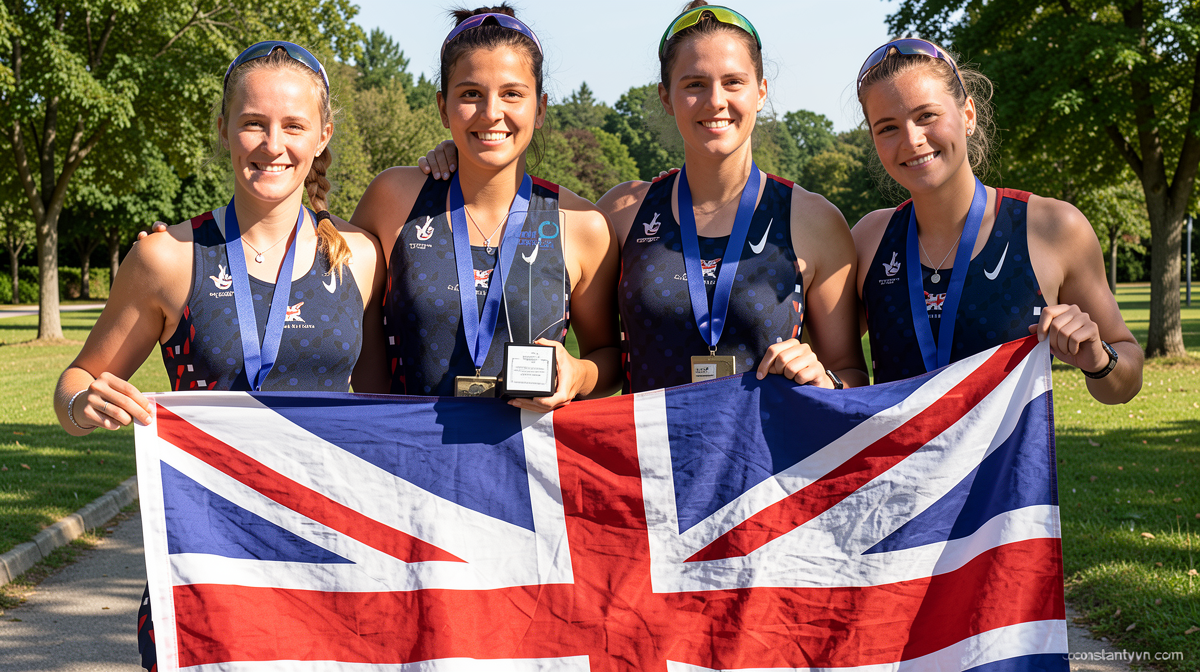
    Constantvpn.com – The global dietary supplements market was valued at $209.5 billion (£154 billion) in 2025, and Grand View Research projects it will nearly double to $431.7 billion (£317.4 billion) by 2033. Behind that staggering figure sits a far more intimate question: what exactly are the world’s top competitors putting into their bodies each day, and why? For elite athletes, the answer is rarely a single product. It is a carefully calibrated stack of compounds, each targeting a narrow slice of performance or recovery, layered atop a diet that already covers the vast majority of nutritional requirements.

    Prof Graeme Close, professor of human physiology at Liverpool John Moores University, puts the scale of usage bluntly. He notes that published studies suggest up to 90% of athletes use some form of supplementation.

    “I often jokingly say that means 10% are lying. The sports teams that I’ve worked in, I think that’s probably closer to 100% of athletes will be taking some form of supplementation.”

    Close, who oversaw nutrition for last year’s British and Irish Lions rugby union tour, frames supplements not as a shortcut but as a final adjustment. His view is that athletes who build their plates around whole foods first have already captured the major performance gains. What remains are fractional improvements.

    “What we’re talking about is small margins of benefit, where actually these athletes who focus on the food, I think what you often find is that they’ve got the big-ticket items right. So they’re seeing great performance benefits because their overall diet is immaculate. They might be missing out on the one per-centers, but they’ve really nailed the 99 per-centers. And they often do better than those who chase the one per-centers but have not given enough attention to the 99 per-centers.”

    The Creatine Story: From Lab Bench to Olympic Locker Room

    No supplement better illustrates the trajectory from obscure biochemistry to mainstream shelf presence than creatine. The compound is produced naturally in the kidneys, liver, and pancreas, and it serves as a rapid energy source for skeletal muscle — particularly valuable during short-duration, high-intensity efforts like sprinting or repeated maximal lifts. It occurs in meat and fish, though obtaining meaningful doses from food alone is impractical.

    “You would need the best part of a kilogram of raw chicken a day to get the amount of creatine you need,” Close observes, noting that consuming raw poultry carries a genuine food-poisoning risk from pathogenic bacteria.

    The compound’s leap into elite sport came in the early 1990s. Two scientists who had spent roughly two decades studying creatine’s physiology shared their accumulated findings with Steve Jennings, founder of the Maxim sports nutrition company that supplied products to the British Olympic team. The result was a product called Ergomax C150, an effervescent creatine tablet distributed to athletes ahead of the 1992 Barcelona Games.

    Investigative reporter Doug Gillon learned of what he described as a “secret trial” among British competitors and saw a box of the tablets firsthand. He wrote that if the scientists’ central claim — that creatine could improve explosive athletic performance by one to three percent — held up under scrutiny, then

    “sport may never be the same again.”

    He was correct. By the 1996 Atlanta Olympics, an estimated 80% of competitors were using creatine in some form. The Journal of the International Society of Sports Nutrition later described the 1990s creatine breakthrough as having “launched a new era in sports nutrition” and “sparked exploration into other supplements.” Subsequent research has also pointed toward potential cognitive benefits alongside the well-documented physical effects.

    Why Athletes Still Reach for the Tub

    Today, creatine sits on supermarket shelves worldwide and is tagged relentlessly across social media feeds. Yet its role in an elite athlete’s daily routine is far more nuanced than a casual consumer’s. Supplements in this context correct specific dietary gaps, support muscle hypertrophy and strength, aid recovery between training sessions, or address micronutrient shortfalls that a demanding training schedule makes difficult to close through food alone.

    The practical reality is that an elite athlete’s day, from waking to sleep, is structured around optimising both performance output and recovery capacity. Supplements occupy a small but defined niche within that architecture. They are not the foundation; they are, in Close’s phrasing, the “final piece of the jigsaw.”

    The Cleanliness Problem

    A complicating factor is the strict-liability regime governing most international competition. Athletes bear sole responsibility for every substance that enters their bodies, regardless of intent or knowledge. A contaminated batch, an unlabelled ingredient, or a cross-contaminated product can produce a positive test and end a career. This reality means that supplement selection at the elite level involves third-party testing, batch verification, and close coordination between nutritionists, doctors, and anti-doping authorities.

    Australian cyclist Nicole Frain, who competes at the highest level, underscores the naming convention itself as a reminder of purpose and proportion.

    “I’m a pretty big believer that they are called sport supplements. They are there [to supplement], not to replace.”

    The distinction matters. A supplement, properly understood, fills a gap that food cannot practically close. It does not substitute for training, sleep, hydration, or the macro- and micronutrient architecture of a well-planned diet. The athletes who thrive are those who treat the plate as primary and the tub as secondary — a hierarchy that, paradoxically, is the single most effective performance strategy available.

    Frequently Asked Questions

    What is Which supplements do athletes take and why?

    Which supplements do athletes take and why is the main topic of this guide. The article explains the context, practical details, and next steps readers should understand.

    Why does Which supplements do athletes take and why matter?

    Which supplements do athletes take and why matters because readers are looking for a useful answer, not just a short summary. Good content should match search intent and help them decide what to do next.

  • Premier League predictions 2026-27: BBC Sport pundits pick their top four

    Premier League predictions 2026-27: BBC Sport pundits pick their top four

    Constantvpn.com – Arsenal ended a 22-year wait to be Premier League champions last season, but can they successfully defend their crown? That is the next target for Gunners boss Mikel Arteta, whose side finished seven points clear of nearest rivals Manchester City last time out. So, who will challenge them in 2026-27?

    We asked 26 BBC TV and radio pundits to pick their top four, with explanations for their selections. We've also asked AI's opinion, and included what Opta's 'supercomputer' came up with too. The AI prediction was generated using Microsoft Copilot Chat – we simply asked the tool to "predict the Premier League table for the 2026-27 season".

    Opta's 'supercomputer' is actually a complex algorithm that uses a model based on betting market odds and the sports analytics company's own 'power rankings', which are calculated using past results. It has simulated the outcome of all 380 Premier League games 10,000 times and came to the same conclusion as AI, and three of the pundits. Disagree with our expert humans or think you know more than any machine?

    You can make your own top-four prediction, and forecast the rest of the Premier League table, at the bottom of this page. These predictions were made on the basis of how each squad shaped up on Thursday, 20 August, with 13 days to go until the transfer window shuts at 23:00 BST on Tuesday, 1 September. Last season, only four teams featured in the forecasted top-four positions, but this time there are seven named, in 15 different combinations.

    Overall expected ranking, using all 28 predictions is: Arsenal (109 points) Manchester City (73) Liverpool (38) Chelsea (35) Manchester United (21) Aston Villa and Tottenham (both two) Calculated using a system of four points for a first place, three points for second, two points for third and one point for fourth. Arsenal fans in dreamland as club win Premier League title Last year, only 17% of BBC predictors (6/35) thought they would be champions. This year, 89% (25/28) think they will successfully defend their crown and no-one thinks they will finish lower than second.

    Theo Walcott: They have got the biggest advantage of all – continuity. Mikel Arteta is still there, they are coming off an 85-point title-winning season and they have strengthened rather than rebuilt. The Bruno Guimaraes signing is massive, to add to a midfield that already boasts Declan Rice and Martin Zubimendi.

    Their defence was also ridiculously good last season, although William Saliba's progress after his World Cup injury is something to watch closely. Thomas Hitzlsperger: Arsenal are the team to beat. Unlike a lot of their rivals, they kept their manager and, every season, the team plays together and gets additions.

    I still don't expect Arsenal to play nice football in the sense that I am excited to watch them play. I just think they really know what it takes to win, and they are going to do the same again this season. Danny Murphy: It is always hard to call it now, especially when it feels like all the top teams have a lot of business to do before the transfer window shuts, but I can't look past Arsenal as champions.

    The main reasons being the momentum and confidence they will have from winning the Premier League already, but also the consistency of having the same manager and same players and just sprinkling even more quality on top. They have not lost any of their best players and they have got a group who know what the manager expects from them and are completely on board with it. Arteta didn't need to spend half the pre-season drilling them with his methods like a new manager has to.

    Joe Hart: It's really important how Arsenal handle the scrutiny of being champions, but they will totally understand that and what is coming their way. Leon Osman: They look like a team that are ready to have a run at winning three titles in the next four or five years. Teams like United in the early Premier League days, Arsenal under Arsene Wenger and Jose Mourinho's Chelsea give me the vibes this team does.

    And the way they've strengthened brilliantly states the league isn't their only objective this season. Matt Upson: They are my favourites again but I don't see them running away with it. Staying at the top is always harder – ask any manager – and you also have to remember there were spells when they looked like they had run out of steam last season and were grinding out results a lot of the time.

    The biggest challenge for Arteta this year will be picking the right team, or rather resting the right players, for the right games and keeping players engaged and ready to step in when needed. Chris Sutton: He will have to try to keep everyone happy but if you are fighting on all fronts, that's possible. They do look like they are at a different level, squad-wise.

    They won the title in a bit of a different way so it will be interesting to see how they go about it this time, but it does look on the face of it like they can beat you up, or just play through you. Arteta delighted with trophy while Maresca is 'concerned' Nedum Onuoha: Watching them against City [in the Community Shield], you knew how they were going to play and so did their players. Arsenal have not just spent pre-season getting ready for this, they have spent the past five or six years building.

    Glenn Murray: They have had continuity for several seasons now, plus winning the league has given the group a wave of belief that will see them win another title. Michael Brown: It's theirs to lose. Arsenal should win the league because of the transition at other clubs, but also because of the quality and rhythm they have already got.

    Rachel Brown-Finnis: Great squad depth and additions this summer. Arteta's army marches on! Troy Deeney: They are the best team and they going to win the league by a comfortable margin.

    My only question is can they win the Champions League too? I still think they need an extra player in on that left-hand side to get that done. Sue Smith: The way Bruno played in the Community Shield, it felt like he's fitted in already.

    There are probably still players that they will look to bring in, but they have got a couple of great options in every position now. Ellen White: Bruno gives them something different again because he is so tenacious, an absolute warrior. Their midfield is formidable now, with Rice, Bruno, and Martin Odegaard to go in there, and then you have got Miles Lewis-Skelly too, almost saying "I'm still here" after the talk of him leaving.

    It's a great problem for Arteta to have. I don't know if they will get another number nine this summer or not, but I still think they have more potential to be champions than any other team. Tony Pulis: They are already strong enough defensively and they can score goals from everywhere.

    If they get the centre-forward they are looking for, they are going to be better than they were last year. Shay Given: They might miss out on the title unless they sign a top striker in the next couple of weeks to help with the goal situation. Paul Robinson: If Victor Osimhen comes in from Galatasaray, and they get Villa defender Ezri Konsa too, then it's a different conversation.

    But they are not the only team still trying to get deals done. 'He's the professor' – Rodri's Manchester City journey City were the BBC predictors' pre-season favourites in eight out of their 10 seasons under Pep Guardiola from 2016 onwards, and were champions six times during that period. But before their first campaign with Enzo Maresca in charge, only 12% (3/26) think they will reclaim the title.

    Thomas Hitzlsperger: City are the only English club to have been ever-present in the Champions League since 2011, which is an achievement in itself when you think about how competitive the top of the Premier League is. With Pep Guardiola, I would always say they would finish in the top four, but now he has gone, and it is always so tough to follow someone like that. Maybe this is the year that City finally drop out.

    Shay Given: I don't think Pep leaving means we will see what happened when Sir Alex Ferguson left United. Instead, I am expecting the opposite, because of a fresh voice in the dressing room. These players have not won the Premier League in two years so they will be hungry for success.

    City will be number one. Troy Deeney: My prediction for City is not based off what happened in the Community Shield, it is based off what I saw with Enzo Maresca at Leicester and Chelsea. I am not sure he has got that ability to really demand what he wants.

    Pep has taught all these coaches, but only Arteta has tweaked it and kind of said "I am going to use all the principles, but this is my way of doing it". I don't want to be disrespectful, but Maresca is a BTEC version of Pep Guardiola. He plays a certain way and has no other way of dealing with it.

    You saw on Sunday how bad City were defensively but all of his teams are wide open, and he is still doing that now, even with better players – top-class players. Joe Hart: City were clunky against Arsenal in Cardiff but I don't think they will over-react to one poor game. I think they still believe they've got the team and the quality to challenge.

    Theo Walcott: Maresca replacing Pep is obviously a gigantic question mark, but City's squad is still absurd. The problem is the transition from Pep to Maresca, plus losing Rodri and others. Nedum Onuoha: City have still got a bunch of players who have won the title before, but they have got a new manager and have also lost some of their more senior players.

    Anita Asante: Maresca's playing style is not that dissimilar to Pep's so there is not this massive change in terms of the team's identity. They have still got some fantastic forward players too, but Rodri leaving is massive because we know how pivotal he has been at the club. It's the same with losing John Stones and Bernardo Silva too.

    They were leaders in the dressing room and they will be missed there, as well as on the pitch. Leon Osman: That signals problems for me, even with Erling Haaland there. Pat Nevin: Midfield, management, you name it – City are rebuilding.

    I will be surprised if they win it, but they will still be up there. Rachel Brown-Finnis: They still have some big guns, but will be too inconsistent to win the league. I'm leaving with an incredible sense of peace – Guardiola Matt Upson: Even if Maresca struggles a bit at first, you look at the quality and experience in their squad and the goals in their team, and they still have enough to stay up there.

    I can't leave them out. City had that huge drop-off under Pep in the season before last, when they were terrible for a few months, and they still made the top four. Danny Murphy: I look at the firepower City have got and, whoever the manager is and whoever they are playing against, they are still going to be able to score a lot of goals and win a lot of games.

    I would still have them as being Arsenal 's nearest rivals. Chris Waddle: The City midfield of Kevin de Bruyne, Rodri, Bernardo Silva and Ilkay Gundogan that won so much has all gone now, and they are replacing them with people where the expectation is they will grow into that City shirt. They are trying to build a new team, and it might take them a year or two.

    They will still be in the top four, but the question is how well – and how quickly – they gel together. Steph Houghton: Arsenal will be tough to beat but I still think City will push them, as soon as their players get back into a bit of form and find some rhythm. This is the next era for City, with a new manager and new players, and I think the likes of Elliot Anderson will come good.

    Then there is Jeremy Doku and Rayan Cherki, plus Haaland of course. It's still a world-class squad. Sue Smith: They are going to add to their midfield so it's hard to predict what they will do until the end of the transfer window and we know who they've got, but Anderson will be a success there.

    There is a lot of pressure and expectation on his shoulders but he is a brilliant player and it just seems like he'll be able to cope with that. Ellen White: City want Enzo Fernandez from Chelsea , but I am not sure he is the right player for them. And, whoever comes in, it is going to take time to find the right balance in midfield.

    Chris Sutton: There's no doubt the pressure will be on Maresca from the off, and replacing Rodri is nigh on impossible. They are in for Lille's Ayyoub Bouaddi, who is a talented player but he is 18, and would be a massive gamble. Michael Brown: City are in transition, and a lot depends on who they bring in.

    But if they have a really impressive end to the window, it changes everything. New Liverpool manager Andoni Iraola's Bournemouth side finished one place and three points behind the Reds last season Last season, 22 of 35 BBC predictors had them down as champions and only three thought they would finish lower than second. This time, only four of 28 have them finishing higher than third.

    Danny Murphy: Liverpool might need a bit more time before they are challenging for the title again. I am also not sure whether they think they have already got enough to replace Mohamed Salah by bringing in Victor Munoz and maybe giving Rio Ngumoha a bigger role, or whether they are really going to go for Paris St-Germain's Bradley Barcola, or someone like him, in the next few days. Michael Brown: They look light to me as I write this.

    Who are they going to get to improve them? Lindsay Johnson: Liverpool and Chelsea are in the same boat because both new managers will take time to settle in, and Liverpool probably don't have a big enough squad to last a full season playing the football Andoni Iraola plays. Theo Walcott: Liverpool are probably the hardest team to call.

    Iraola is an excellent manager and if Alexander Isak and Florian Wirtz have big seasons, they could absolutely push Arsenal for the title. Thomas Hitzlsperger: I've gone for them to finish second because I really like the way Iraola's teams play. Also, I am kind of biased here because I am really hoping Wirtz has the season now that people expected him to have last year.

    Paul Robinson: Wirtz looked a different player towards the end of last season and they also have a manager who has proved himself, and is Premier League ready. Sue Smith: I know it's a completely different level and expectation managing Liverpool and it's going be interesting to see how he does in that sort of step up, but all you can judge Iraola on is what he's done at Bournemouth and I think he's been brilliant. Defensively is my concern, though.

    Especially the right-hand side. Anita Asante: It will take time for Liverpool to adapt to Iraola's style, which is closer to Jurgen Klopp's. I am excited, because that means high-tempo, high pressing and playing on the front foot, but that's why it's even more important they sign reinforcements to strengthen their defence.

    Glenn Murray: They have got all the forward players you could dream of, but Iraola has a big headache when it comes to finding the right balance between attack and defence. Troy Deeney: They are decently balanced although I still think they need an additional left-back and an extra midfielder. Ultimately they have got one X-factor – Isak.

    He is a top goalscorer who has got a point to prove because everyone has written him off. Rachel Brown-Finnis: Iraola is Liverpool 's most exciting signing in recent years. Liverpool 's football DNA will be back.

    Leon Osman: Liverpool are a work in progress. Older players leaving, new managers in. Some good signings at the back but will Iraola get them firing straight away?

    I'm not sure. Chelsea sign Welbeck – watch all of his Premier League goals from last season Last season, Chelsea figured in all 35 top-four predictions, and finished 10th. This time, they are in 21/28 predictions, with five people backing them to be runners-up.

    Pat Nevin: As usual my top four is only a guess but it's the triumvirate of Joao Pedro, Cole Palmer and Morgan Rogers up front that makes me back Chelsea to be in there more than anything else. They are a group who are exciting, and brilliant as well. It will be fascinating to see how they get on.

    Sue Smith: They have been using Palmer and Rogers as two number 10s in pre-season, which is frightening. They are potentially going to be unplayable. Michael Brown: They have got all this talent but as usual it is still about them finding the right balance.

    They might surprise people and be solid. Joe Hart: Their squad is well built, and they don't have European football. Nedum Onuoha: It's a ridiculous anomaly for teams like Chelsea or Spurs to not be in Europe, and being able to focus on domestic football while they have both been spending such big money.

    Matt Upson: There seems to have been a big change in their transfer policy and the balance of their squad looks a lot better for them to be able to win trophies. Troy Deeney: No Europe means more time on the training pitch, so Xabi Alonso will be in a great position to figure out what works best. I wouldn't be surprised if they finished second, because I can't split them, City or Liverpool.

    Glenn Murray: Alonso is coming in with a point to prove after what happened at Real Madrid, and he has made some shrewd signings, including some experienced players who can help their young team-mates harness their enormous potential. Chris Waddle: Having Danny Welbeck and Jordan Henderson in the team will be like having a coach on the pitch. Yes they are 35 and 36 now, but I played in the Premier League until I was 36 and I didn't really find it hard.

    You still have your brain and, even if your legs have gone a bit, you can have legs around you. Step Houghton: That experience is what people were saying they were missing last season. Tony Pulis: I really rate Alonso and bringing in Welbeck and Henderson was almost an act of genius because if, you look from the outside, the problems at that club are because there has been no-one in the dressing room to pull up the young players when that has been needed.

    Thomas Hitzlsperger: Chelsea are probably the team I am most optimistic about when I look at the manager. Anita Asante: Alonso will give them structure and bring an identity to the team but he won't restrict the players. I feel like he will give them the freedom to express themselves.

    Theo Walcott: Alonso gives them the stability they have been missing. If Palmer stays fit, I can see them being one of the most consistent teams outside the title race. Carrick is pushing to improve the squad this summer Last season, none of the BBC predictors backed United to make the top four, and they finished third.

    This time they figure in 14/28 predictions, although only one of them has them improving on last year's position. Thomas Hitzlsperger: United can stabilise themselves this season. Michael Brown: The legs of the squad is still a concern, and the Champions League could make them unstable.

    Anita Asante: The mood at the club just feels different, compared to how dysfunctional they were under Ruben Amorim or Erik ten Hag. Ellen White: Unlike last season, Carrick has got Champions League football to contend with. I like Youri Tielemans as a signing, but they need more in…

    and is Marcus Rashford staying? Paul Robinson: The best thing Carrick can do with Rashford is put his arm around him and try to get the best out of him. It's difficult enough anyway to find another player at his level, but especially when you have already got him and don't have to pay anything for him.

    Steph Houghton: Rashford staying would be a massive bonus because we know his quality and he has a different skillset to a lot of the forwards they have already. Chris Waddle: They have Rashford back at the moment but is his heart in it? Or his head?

    I think he's had a taste of being abroad and I'd be surprised if he doesn't want to try it again. Matthew Upson: In the time Carrick was there, from January onwards, United showed they are definitely top-four material, and they are the ones I found it hardest to leave out. Manchester United topped the Premier League table over games played after Michael Carrick took charge at Old Trafford in January Tony Pulis: I still don't think United, over a season, will do it with what they have got at the moment.

    They might still get three or four in, and that changes the picture but, right now, they are short. Arsenal and City are miles ahead of them. Troy Deeney: I've got United down as fifth.

    A solid year, but nothing special. I don't think they have got a great squad so they will be out of the Champions League by February and then they can concentrate on the league. Lindsay Johnson: United's defence needs work but they may sneak in fourth.

    Outstanding week and season – Emery Lindsay Johnson: I've put Villa in there again because of Unai Emery and his experience. Leon Osman: Villa have been brilliant the past few seasons but they keep letting their best players go. How long can Emery keep over-performing with what he's given?

    Thomas Hitzlsperger: Villa being in the Champions League means they are probably going to be in the top six rather than the top four, but they are just so good under Emery. Glenn Murray: Tottenham are going to be much better than last season. They have made some great signings and James Maddison is back fit.

    My only worry for them is that they still need a goalscorer. Leon Osman: Their signings, plus injury returns should see Tottenham competing where they expect to – but can you ever trust Spurs? Paul Robinson: Spurs had a shocker last season but this time they are on the fringes of the Champions League places, without a doubt.

    When Roberto de Zerbi took over last season, he wanted guarantees in the transfer market this summer – and judging by the players he has brought in, he got them. Newcastle are miles off it, though. I cover the Saudi Pro League and Matthias Jaissle is a good coach who plays attractive football – but he needs the players and at the moment they don't have them.

    Troy Deeney: After finishing 17th two seasons in a row, expecting Spurs to be in the top five is a big ask. It is Nottingham Forest who are my surprise package this year – I know people will say they have lost Anderson but, the way they play, I don't think he is a massive loss. The owner is ambitious and so is Oliver Glasner, so it is a marriage made in heaven.

    Nedum Onuoha: I am going with Leeds and Sunderland to surprise people. A few people are expecting Sunderland to struggle because they are in Europe but the owners are a bit more ambitious than people realise. They won't necessarily be fifth in November, but I don't think they will be down the bottom either.

    The same for Leeds. Staying up last year was huge, and now they are thinking about part two of who they want to be, and part two features things like signing a goalkeeper for £40m. Steph Houghton: Sunderland are playing more games this season and have not been able to boost their squad yet, but hopefully that will happen next week.

    But they were seventh last time and will be there or thereabouts again, especially if they can sustain their home form. Tony Pulis: I don't see Villa making it although they are a good side. I don't think any of the teams like Bournemouth , Brighton and Brentford – who were all in the top 10 last season – will be anywhere near the relegation places, but it is very difficult for them to get into the top four.

    Danny Murphy: I am not talking about the top four, but Ipswich might surprise a few people and, out of the the ones who have come up, be the team who don't struggle. They have spent quite a lot, and brought in about a dozen players, like Sunderland did last year, and again they have brought in a similar type of player too, with a lot of athleticism. Their manager Gary O'Neil did all right at Wolves and Bournemouth and he will be as well-equipped as ever to know which games to go after, and when to dig in.

    Frequently Asked Questions

    What is Premier League predictions 2026 27?

    Premier League predictions 2026 27 is the main topic of this guide. The article explains the context, practical details, and next steps readers should understand.

    Why does Premier League predictions 2026 27 matter?

    Premier League predictions 2026 27 matters because readers are looking for a useful answer, not just a short summary. Good content should match search intent and help them decide what to do next.

  • How do the 9-1 GCSE grade boundaries work in England?

    How do the 9-1 GCSE grade boundaries work in England?

    Results Day: What England’s Numerical GCSE Grades Actually Mean

    Constantvpn.com – For hundreds of thousands of school-leavers across England, Wales, and Northern Ireland, the moment of truth arrived this week as GCSE and BTec results were released. But for students sitting in England, the numbers on those envelopes carry a meaning that differs sharply from what their parents or grandparents might remember. Since the numerical grading framework replaced the familiar letter scale, a “7” now sits where an “A” once did, and the top of the scale stretches into territory that simply did not exist before.

    Scotland, by contrast, does not administer GCSEs at all; its pupils sit National Qualifications instead. Wales and Northern Ireland continue to issue letter-based grades, meaning a student in Cardiff and one in Birmingham may receive fundamentally different symbols for comparable achievement levels.

    From Letters to Numbers: The Rollout

    The shift to numerical grading was embedded in a sweeping curriculum reform announced in 2014 under then-Conservative Education Secretary Michael Gove. The overhaul reduced the weight given to coursework, requiring that final examinations determine grades in nearly every subject. Exams were also redesigned to be taken only after two full years of study, replacing the earlier model in which pupils worked through modular units punctuated by regular formative assessments.

    A phased introduction

    The numerical scale did not appear overnight. Three subjects — English language, English literature, and mathematics — were the first to adopt the new grading in 2017. Over the following years the change spread across the full subject range, and by 2020 every GCSE in England was being awarded on the 9-to-1 scale. A result of “U” still denotes an ungraded outcome, just as it had under the old system.

    Mapping the New Scale to the Old

    The numerical grades are not a simple one-to-one substitution for the former letters. The two scales intersect at specific thresholds rather than aligning uniformly across the board. Understanding where they meet helps students, parents, and employers interpret results accurately.

    Where the scales converge

    The lower boundary of a grade 7 coincides with the lower boundary of the old grade A. Similarly, the floor of a grade 4 matches the floor of the former grade C, and the bottom of a grade 1 aligns with the bottom of the old grade G. Above grade 7, the new scale introduces additional tiers — grades 9 and 8 — that subdivide what used to be a single top band of A* and A.

    In practical terms, a 9 represents a high A*, an 8 sits at the low end of A* or the upper end of A, and a 7 corresponds to a low A. Moving downward, a 6 equates to a high B, a 5 to a low B or high C, and a 4 to a low C. A 3 maps onto a D or high E, a 2 onto a low E or high F, and a 1 onto a low F or G. The ungraded result, of course, remains unchanged.

    Grade Boundaries: Who Decides and What They Control

    Each examination year, examiners determine the minimum mark required to secure each grade. These boundaries are not fixed; they fluctuate depending on cohort performance and are published publicly on results day. A grade of 4 constitutes the official pass threshold. Grades 1 through 3 are technically classified as passes, yet many sixth forms and further-education colleges impose stricter entry conditions, demanding a minimum number of 5s or 6s before admitting a student to A-levels or equivalent programmes.

    The government’s school league tables, which rank secondary schools nationally, are calculated using the proportion of pupils who attain a grade of 5 or above in English and mathematics GCSEs. Additionally, any student scoring 3 or below in mathematics or English language is required to continue studying that subject the following year, extending their compulsory education in those areas.

    The Stated Rationale

    At the time of the reform’s announcement, the government defended the numerical scale on two principal grounds. First, it argued that the extra tiers at the top of the scale would better distinguish between high-achieving students:

    “recognises more clearly the achievements of high-attaining students, as the additional grades allow for greater differentiation”

    Second, officials contended that the visible break between letters and numbers would signal to employers and universities whether a candidate had sat the newer, more demanding qualification or an older reformed version:

    “whether a student has taken a new, more challenging GCSE, or an old reformed GCSE”

    Grading Elsewhere in the UK

    Northern Ireland

    The Council for the Curriculum, Examinations and Assessment (CCEA) introduced its own revised nine-category scale in summer 2019, running from A* down to G and incorporating a new C* tier. Pupils in Northern Ireland who opt to sit examinations set by English boards, however, will receive numerical grades on the 9-to-1 scale.

    Wales

    The Welsh government rolled out new and revised GCSE courses beginning in September 2015, with the most substantial changes concentrated in English language, Welsh language, and mathematics. Despite the curriculum updates, Wales retained its letter-based grading structure spanning A* through G, meaning Welsh students continue to receive alphabetic results rather than numerical ones.

    Scotland

    Scottish pupils do not take GCSEs at all. Their equivalent qualifications are the National 5, National 4, and Higher/Advanced Higher awards administered through the Scottish Qualifications Authority, operating under an entirely separate framework.

    Why the Distinction Matters

    For families navigating university applications, apprenticeship placements, or sixth-form entry, the interplay between numerical and letter grades creates a landscape that demands careful interpretation. A “7” on an English GCSE result is not the same achievement as a “7” would have been under the old system, and employers unfamiliar with the post-2017 framework may misread the significance of a numerical score. Understanding where the two scales intersect — and where they diverge — remains essential for anyone advising a young person through the next steps after results day.

    Frequently Asked Questions

    What is How do the 9 1 GCSE?

    How do the 9 1 GCSE is the main topic of this guide. The article explains the context, practical details, and next steps readers should understand.

    Why does How do the 9 1 GCSE matter?

    How do the 9 1 GCSE matters because readers are looking for a useful answer, not just a short summary. Good content should match search intent and help them decide what to do next.
  • ‘Incredible’: SpaceX rocket spotted off Christmas Island coast

    ‘Incredible’: SpaceX rocket spotted off Christmas Island coast

    A 52-Metre Rocket Drifts Into View Off Christmas Island’s Shoreline

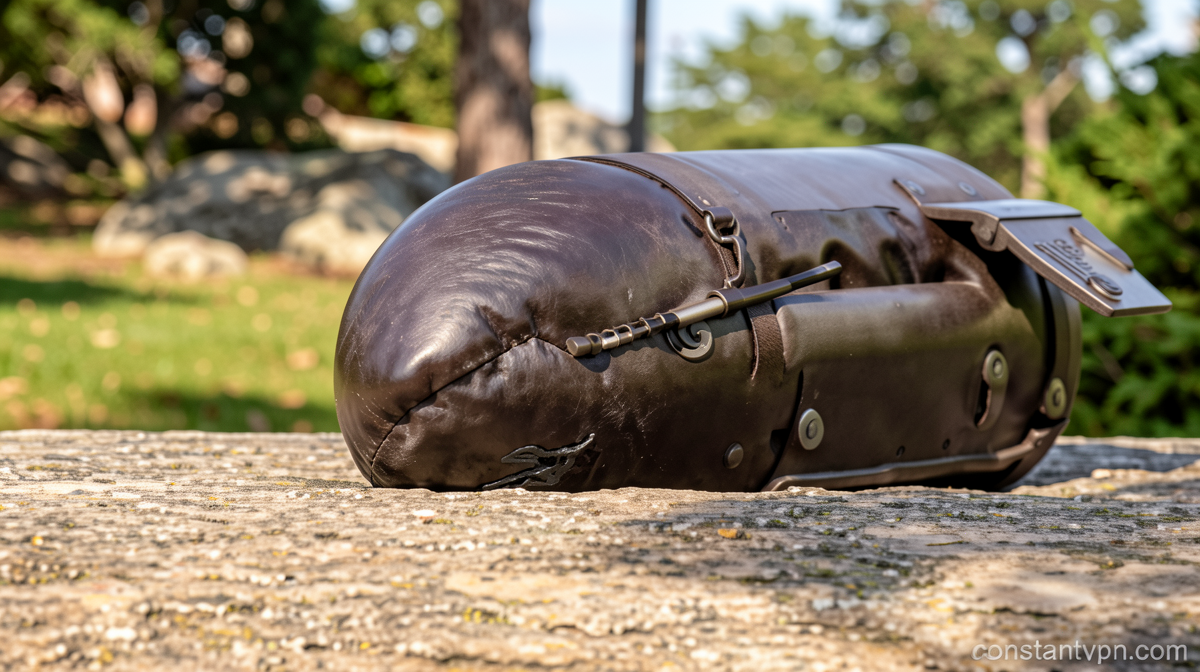
    Constantvpn.com – Residents of the remote Australian external territory of Christmas Island found themselves staring at something no one in their small coastal community had ever seen before: a colossal metallic structure, roughly the length of five parked cars end to end, being towed along the water just beyond the island’s shallow reef. The object was a SpaceX rocket, having completed a test flight launched from Texas on 24 July and subsequently splashed down in the Indian Ocean. What followed was a scene of bewildered curiosity, impromptu boat trips, and a small island population collectively trying to wrap their heads around the fact that a piece of orbital hardware had drifted into their backyard.

    The Discovery

    David Watchorn, who chairs the Christmas Island Tourism Association, was driving to work along the island’s limited road network when something large and unfamiliar caught his eye on the water. His first assumption was mundane — a pair of cargo vessels, perhaps, working their way through the channel. Only after a second look did the shape resolve into something far stranger.

    “A rocket, a space rocket,” he recalled thinking, watching the structure being towed toward shore.

    Watchorn’s initial misidentification is understandable. Christmas Island sits roughly 1,500 kilometres north of Perth, Western Australia, in the heart of the Indian Ocean. Its population hovers around two thousand people. Daily life revolves around fishing, tourism, the annual migration of red crabs through the island’s rainforest, and the rhythms of a small, tight-knit community. A 52-metre rocket is not something that features in the local mental landscape, and the sight of one being winched along the coastline would have been alien to nearly every resident.

    A Community Reacts

    Word spread quickly, as it does on an island where everyone knows everyone. Within hours, the rocket had become the dominant topic of conversation. Some workers slipped out of their shifts early, slipping away from their usual routines to catch even a brief glimpse of the debris from the shore. Others went further, firing up their boats and heading out past the reef to examine the structure at closer range. For a community accustomed to the quiet of open ocean and the occasional passing freighter, the spectacle was genuinely unprecedented.

    The scale of the object made the reaction all the more striking. At 52 metres in length, the rocket dwarfs most structures on the island. It is longer than the island’s main jetty, taller than the surrounding casuarina trees, and represents a level of engineering complexity that most residents would encounter only through television or the internet. Seeing it physically present, scarred and battered from re-entry, gave the experience a tangible weight that photographs could never convey.

    What the Rocket Had Been Through

    Watchorn spent time simply looking at the structure, turning his attention to the scorch marks, the warped panels, and the sheer industrial scale of the thing.

    “It’s really incredible to think about what it’s been through,” he told the BBC. “The more and more you look at it, the more fascinating it’s becoming.”

    That fascination is shared by aerospace engineers and laypeople alike. A rocket of this size must accelerate from a standstill to roughly 28,000 kilometres per hour in about eight minutes, survive temperatures exceeding 1,600 degrees Celsius during atmospheric re-entry, and then execute a controlled descent into open water. The fact that the structure remained largely intact — large enough to be towed, identified, and admired from a boat — speaks to the robustness of modern launch-vehicle design. SpaceX has made routine Indian Ocean splashdowns a standard part of its operational playbook, using the vast, sparsely trafficked waters south of Australia and east of Africa as a safe recovery zone for first-stage boosters and test articles.

    Why the Indian Ocean, and Why Christmas Island

    The Indian Ocean has long served as a default splashdown area for rockets launched from North America on eastward trajectories. After a vehicle completes its mission or test profile, the spent stage is guided to a predetermined coordinate in open water, where recovery teams or, in some cases, simply the currents, take over. Christmas Island’s position in the central Indian Ocean places it within a plausible drift corridor for debris released in that region. Ocean currents, prevailing winds, and the island’s shallow surrounding reef combine to make it a natural magnet for floating objects that might otherwise remain lost in deep water.

    For the island’s tourism sector, the event carried an unexpected promotional dimension. Watchorn, in his capacity as tourism chair, recognised that the sight of a space rocket on the horizon was a story no travel brochure could manufacture. The organic curiosity it generated — locals abandoning their routines, boats heading out at odd hours, photographs shared across social media — gave the island a brief, unscripted moment of global visibility.

    Aftermath and Disposition

    Once the rocket was secured and towed to a suitable anchorage, the immediate spectacle gave way to practical questions: how would the structure be removed, stored, or disposed of? Would any components be retained for study or display? For a community of two thousand, the logistics of managing a 52-metre piece of aerospace hardware are non-trivial, and the episode underscored how the expanding cadence of commercial spaceflight is beginning to intersect with places that were never designed to accommodate it.

    What remains, for now, is the memory of an ordinary commute interrupted by the extraordinary — a man driving to work, glancing at the water, and finding that the ocean had delivered, uninvited, a fragment of the space age to his doorstep.

    Frequently Asked Questions

    What is Incredible?

    Incredible is the main topic of this guide. The article explains the context, practical details, and next steps readers should understand.

    Why does Incredible matter?

    Incredible matters because readers are looking for a useful answer, not just a short summary. Good content should match search intent and help them decide what to do next.

  • Students wait for GCSE and BTec grades as app launches for 750 schools in England

    Students wait for GCSE and BTec grades as app launches for 750 schools in England

    England’s Schools Go Digital with Exam Results as Technical-Education Push Gains Momentum

    Constantvpn.com – More than 750 secondary schools across England will allow pupils to view their GCSE, BTec, and other Level 2 outcomes on a smartphone app for the first time this Thursday, marking a significant shift in how examination results are delivered. While the traditional envelope handout at school remains the primary method, students at those participating institutions will also be able to check their grades through the Education Record app beginning at 11:00 BST. The rollout extends to Wales and Northern Ireland for the in-person distribution, though the digital component is exclusive to England’s pilot cohort.

    What Students Will Receive

    Thursday’s release covers a broad spectrum of qualifications. Alongside standard GCSE entries, pupils will learn their outcomes in BTec Tech Awards, BTec Firsts, BTec Level 2 Technical courses, and Cambridge Nationals. In the previous academic year, over 360,000 vocational and technical qualification results were issued under these frameworks, underscoring the scale of the non-academic pathway many young people follow after compulsory schooling.

    Scotland’s results cycle ran slightly earlier in the month, with pass rates for National 5, Higher, and Advanced Higher examinations rising across the board. Meanwhile, A-level outcomes announced the prior week showed a modest uptick in top grades, with 28.5% of all entries across England, Wales, and Northern Ireland receiving an A* or A.

    The Education Record App: Beyond a One-Time Lookup

    The Department for Education frames the app not merely as a delivery mechanism but as a persistent academic record. Once results appear in the platform, they remain accessible for colleges, universities, and prospective employers to consult, potentially eliminating the need for students to carry printed transcripts between institutions. Officials argue the move will cut administrative burden for both pupils and teaching staff while creating a single, verifiable digital trail of achievement.

    The department emphasises that the in-person envelope ceremony at school or college still takes precedence. Pupils are expected to attend their institution first; the app functions as a supplementary channel rather than a replacement.

    Government Plans: Technical Subjects and the Resit Problem

    The timing of this year’s results coincides with a stated governmental priority to expand technical and applied-learning provision. Prime Minister Andy Burnham has outlined plans for schools and colleges in England to introduce subjects such as manufacturing and artificial intelligence alongside core academic study from Year 10 onward, broadening the menu available to teenagers beyond traditional A-level tracks.

    A parallel concern is the growing cohort of students who must resit GCSE English and mathematics. Under current rules, any pupil in England who does not secure at least a grade 4 in both subjects must continue studying them in parallel with their next qualification—whether that is A-levels, a T-level, or another route. The Department for Education states that resitting is not an automatic compulsion; colleges typically enter students into the November or May/June sittings when they judge readiness. Nevertheless, last year nearly a quarter of all maths and English GCSE entries were sat by candidates aged 17 or older, most of them young people repeating papers rather than mature learners sitting for the first time.

    A government-commissioned report published in May highlighted research indicating that half of 18- to 25-year-olds in England lacking Level 2 qualifications—including GCSEs at grade 4/C or above—have experienced periods outside employment, education, or training. Skills minister Baroness Jacqui Smith told Parliament in October that the department intended to introduce a new intermediate qualification designed as a bridge toward GCSE resits, aimed at students who

    “too often have been on this demoralising roundabout of taking exams and failing them.”

    What the Numbers Show

    Last year, 67.4% of all GCSE entries in England were graded at 4/C or above. This year marks the third consecutive academic year in which grading has been restored to pre-pandemic difficulty standards across all three nations. During 2020 and 2021, when examinations were cancelled and outcomes derived from teacher assessment, pass proportions climbed sharply; a phased recalibration has since brought them back toward 2019 baselines.

    Gender and Geography: Persistent Gaps, Shifting Dynamics

    Statistical data continue to show that girls outperform boys in GCSE attainment, yet last year’s gender gap was the narrowest recorded—girls’ pass rates edged down while boys’ rose marginally. Regional inequality remains a defining feature of the results landscape. Although the spread between the highest- and lowest-performing areas contracted, it still exceeds pre-pandemic levels. The familiar North-South framing, while useful, obscures difficulties faced by children in coastal and rural communities.

    One stark illustration: in South West England, 40% of children eligible for free school meals achieved a grade 4 in both maths and English at GCSE, compared with 56% of the same cohort in London. Such disparities inform ongoing debates about resource allocation, curriculum access, and the adequacy of current support structures for disadvantaged pupils.

    What Comes Next for Students

    For the hundreds of thousands of young people receiving their results this week, the immediate question is direction. Those meeting the grade 4 threshold in English and maths can proceed to A-levels, T-levels, apprenticeships, or other post-16 routes without additional study obligations. Those below the threshold face the resit pathway, with the next examination windows arriving in November and again in May or June. The new intermediate qualification, if implemented as planned, is intended to offer a structured alternative to the current binary of pass-or-repeat, giving struggling students a graduated route back into formal qualification.

    Frequently Asked Questions

    What is Students wait for GCSE and BTec?

    Students wait for GCSE and BTec is the main topic of this guide. The article explains the context, practical details, and next steps readers should understand.

    Why does Students wait for GCSE and BTec matter?

    Students wait for GCSE and BTec matters because readers are looking for a useful answer, not just a short summary. Good content should match search intent and help them decide what to do next.
  • Vaccine breakthrough stops cancer returning in trial

    Vaccine breakthrough stops cancer returning in trial

    Personalised mRNA jab paired with immunotherapy keeps melanoma at bay in landmark trial

    Constantvpn.com – For the first time in a large-scale clinical study, a tailored cancer vaccine delivered alongside an existing immunotherapy agent has demonstrably delayed the return of melanoma in patients who had already undergone surgery. The finding, announced jointly by pharmaceutical giant Merck and biotechnology firm Moderna, marks what many oncologists are calling a turning point in how the immune system can be weaponised against tumours. The vaccine, branded Intismeran, was administered to more than 1,000 individuals carrying high-risk stage two, three, or four melanoma — a spectrum that ranges from bulky localised growths to cancers already metastasising into distant organs.

    How the personalised vaccine is built

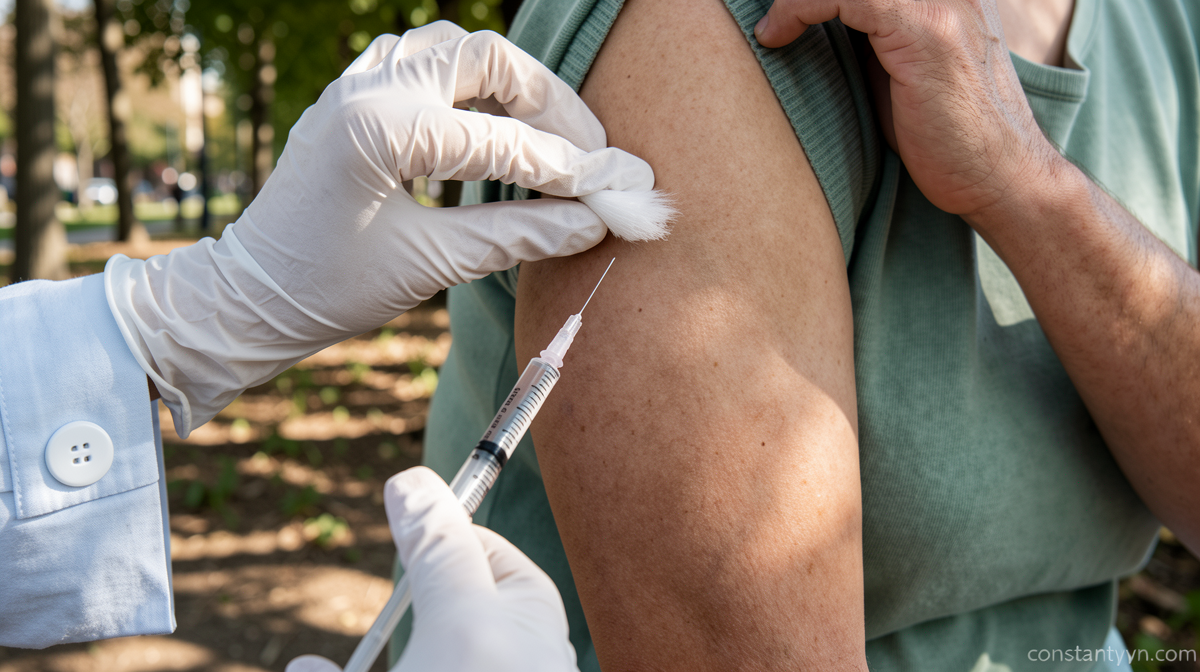
    Unlike conventional vaccines that target a single pathogen, Intismeran is engineered to recognise the unique genetic mutations present in each individual patient’s tumour. The process begins in the operating theatre: surgeons excise a small fragment of the melanoma, and laboratory scientists then sequence its DNA to identify the specific mutations driving that particular cancer. Using mRNA technology — the same platform that powered several of the SARS-CoV-2 vaccines rolled out during the pandemic — the companies translate those mutation signatures into a bespoke injection. Once administered, the mRNA instructs the patient’s own immune cells to identify and destroy any residual tumour cells matching that genetic fingerprint.

    The vaccine was not given in isolation. Every participant in the trial also received Keytruda, a checkpoint-inhibitor immunotherapy already approved for several cancer indications. The comparison arm received Keytruda alone. Merck and Moderna reported that the combination strategy produced a statistically significant extension in the duration patients remained free of detectable disease, alongside a measurable reduction in the likelihood of the cancer seeding other organs.

    What the trial data actually shows — and what it does not yet

    The announcement came from the two companies themselves and presented interim findings from the phase three study. Full datasets have not been published, and the results have not undergone peer review, the process by which independent specialists scrutinise methodology, statistical rigour, and interpretive claims before a study enters the scientific record. Experts universally acknowledged the encouraging signal while cautioning that the durability of the benefit remains unknown. How long the cancer-free interval lasts, whether it widens over time, and how it compares across tumour stages are questions that only complete follow-up data can answer.

    Even assuming the full dataset confirms the interim signal, the treatment still faces a lengthy regulatory gauntlet. National medicines agencies would need to review safety and efficacy dossiers before granting marketing authorisation. In the United Kingdom, a separate pathway through NHS commissioning and pricing negotiations would then determine whether Intismeran becomes available on the public health system and at what cost to the taxpayer.

    Expert reaction: cautious optimism

    Dr Talisia Quallo, who leads prevention and early detection at Cancer Research UK, described the interim data as showing genuine promise while stressing that the figures still require full independent review.

    “It’s vital that research like this continues to be funded so that more people with cancer can have personalised treatment options to them live longer, better lives.”

    Dr Lennard Lee, a consultant medical oncologist and associate professor at the University of Oxford, framed the result in broader terms:

    “This is certainly good news for patients with melanoma, but the study has much wider implications. It provides proof of principle that personalised cancer vaccines work.”

    Stephane Bancel, chief executive of Moderna, characterised the findings as a “pivotal moment” in cancer research. On the markets, shares of both Moderna and Merck jumped following the announcement, reflecting investor appetite for a platform that could be extended well beyond melanoma.

    Why this matters beyond melanoma

    Melanoma accounts for roughly a fifth of skin-cancer deaths in the United Kingdom, and the five-year survival rate drops sharply once the disease reaches stage four. A treatment that can shrink the window of vulnerability after surgical removal addresses one of the most pressing gaps in current oncology: the period between definitive surgery and the point at which microscopic residual cells, if left unchecked, repopulate and metastasise.

    The mRNA platform’s flexibility is what makes the approach scalable. Merck and Moderna have confirmed that analogous personalised vaccines are already in development for lung, bladder, and kidney cancers — tumour types where the same principle of targeting patient-specific mutations applies. If the melanoma data matures favourably, the regulatory and manufacturing infrastructure built for Intismeran could accelerate timelines for those additional indications.

    The broader implication is a shift in therapeutic philosophy. Rather than treating every patient with a given cancer type identically, the model envisions a bespoke immunological intervention calibrated to the molecular identity of each individual tumour. Whether that vision translates into routine clinical practice within the next decade depends on the full trial readout, peer review, regulatory clearance, and ultimately on health systems deciding the economics work. What the interim data has done, however, is move the conversation from theoretical possibility to empirical demonstration — and that distinction, in oncology, is rarely overstated.

    Frequently Asked Questions

    What is Vaccine breakthrough stops cancer returning in trial?

    Vaccine breakthrough stops cancer returning in trial is the main topic of this guide. The article explains the context, practical details, and next steps readers should understand.

    Why does Vaccine breakthrough stops cancer returning in trial matter?

    Vaccine breakthrough stops cancer returning in trial matters because readers are looking for a useful answer, not just a short summary. Good content should match search intent and help them decide what to do next.