Author: Susan Martinez – constantvpn.com

  • Jump in energy bills drives UK inflation to highest rate for four months

    Jump in energy bills drives UK inflation to highest rate for four months

    UK Inflation Climbs to Four-Month High as Energy Costs Reshape Household Budgets

    Constantvpn.com – Household energy bills have become the dominant force pushing UK inflation back above recent lows, with the annual rate reaching 2.9% in the twelve months ending July. The surge was triggered primarily by a sharp escalation in wholesale gas prices — the steepest increase recorded in nearly four years — which in turn forced a mid-year adjustment to the domestic energy price cap.

    The underlying driver traces back to the US-Iran conflict that erupted in February, disrupting global oil flows and tightening supply conditions across international energy markets. The resulting price shock has rippled through UK household budgets, making July’s inflation print the highest since March.

    What the Numbers Mean for Households

    On 1 July, regulator Ofgem lifted the price cap governing household gas and electricity charges by 13%, translating into an additional £221 per year for the average UK household. That single adjustment accounted for a substantial share of the monthly inflation acceleration.

    Looking ahead, Cornwall Insight projects a further 4% rise in energy bills from October. If realised, that would push typical household energy expenditure to its highest level since July 2023. The consultancy attributes the continued pressure to two compounding factors: persistent uncertainty surrounding the US-Iran confrontation — which has seen effective closures of the Strait of Hormuz, a critical chokepoint for oil-carrying tankers — and an ongoing European heatwave that is inflating gas demand for power generation to meet air-conditioning and cooling loads.

    Offsetting Trends: Food and Retail

    Not every category is moving in the same direction. Food inflation decelerated to 1.3%, the lowest reading in close to five years. Harvir Dhillon of the British Retail Consortium noted that prices for pasta, olive oil, and fresh fruit all declined in July, pointing to competitive pressure among grocers keeping weekly shopping costs in check.

    Motor fuel price increases also moderated, easing to a 15.5% annual rise from 21.3% in the twelve months to June — though fuel costs remain well above their 2025 levels.

    On the other side of the ledger, ONS prices director Mike Hardie flagged that furniture prices fell less than the seasonal norm, while clothing discounts were shallower than usual, both contributing modest upward pressure to the headline figure.

    Policy Response and Political Fallout

    Chancellor John Healey acknowledged the Iran conflict’s continuing impact on UK price levels but framed the economy as broadly resilient, pointing to targeted relief measures already in place.

    “We have cut VAT on electricity bills and capped bus fares at £2 — to give breathing space to those feeling the strain,” he said. “There is more to do to restore hope and build a stronger economy where prosperity is shared more fairly across Britain.”

    Shadow chancellor Mel Stride offered a sharper critique, arguing that Labour’s governance left the country unprepared for external shocks and that ordinary households were bearing the cost.

    “The country was unprepared for global shocks due to Labour’s ‘mismanagement’, leaving ordinary people ‘paying the price’.”

    Community-Level Impact

    For families already stretched thin, the renewed cost pressure is tangible. Penny Keevil, founder of Second Chance Medway — a crisis support centre operating a discounted food pantry two days a week — reports that demand now extends well beyond benefit recipients to include working households.

    “The need for affordable food now reaches across every part of the community,” she said. “Energy bills are still far too high and wages and incomes aren’t keeping up.”

    Outlook: Where Inflation Heads Next

    Analysts broadly agree that Wednesday’s print is unlikely to prompt the Bank of England to alter its key interest rate at the September meeting. Yael Selfin, KPMG’s chief economist, described July as the opening of a gradual upward drift in inflation, with energy-related costs expected to carry the rate toward a peak of roughly 3.5% over coming months.

    Ruth Gregory, chief economist at Capital Economics, expects inflation to return to the Bank’s 2% target “by the end of next year,” contingent on energy prices stabilising. She anticipates the Bank will hold rates at 3.75% through this year before cutting to 3.00% next year.

    Sarah Coles, head of personal finance at AJ Bell, cautioned that the current environment is “nothing like as dramatic as it was during the height of the cost-of-living crisis,” noting that prices for items including jam, marmalade, honey, pizza, quiche, men’s clothing, and shoes have actually declined.

    Yet Suren Thiru, chief economist at the Institute of Chartered Accountants in England and Wales, warned that sustained inflationary pressure would become the principal threat to UK growth in the months ahead, eroding household budgets and constraining consumer spending at precisely the moment the economy needs broad-based demand.

    The 2% target, which the Bank maintains preserves price stability and enables households and firms to plan with confidence, now sits a full percentage point below the current rate. Until energy markets stabilise and the geopolitical overhang lifts, that gap is likely to remain a defining feature of UK economic life.

    Frequently Asked Questions

    What is Jump in energy bills drives UK inflation?

    Jump in energy bills drives UK inflation is the main topic of this guide. The article explains the context, practical details, and next steps readers should understand.

    Why does Jump in energy bills drives UK inflation matter?

    Jump in energy bills drives UK inflation matters because readers are looking for a useful answer, not just a short summary. Good content should match search intent and help them decide what to do next.

  • Kanye West announces tour dates in Russia

    Kanye West announces tour dates in Russia

    St Petersburg Gets a 70,000-Seat Western Headliner for October

    Constantvpn.com – The rapper known as Ye — formerly Kanye West — will take the stage at Gazprom Arena in St Petersburg twice this October, marking the first time a major Western pop star has headlined a Russian concert hall since Moscow launched its full-scale invasion of Ukraine four years ago. The announcement, made on Monday, triggered an immediate sellout at the 70,000-capacity venue, with tickets priced between 9,000 roubles (roughly £78) and a premium tier of 160,000 roubles (approximately £1,394) disappearing within hours.

    The booking lands at a moment when West is actively attempting to repair a public image that has been battered by years of antisemitic outbursts, pro-Nazi declarations, and a string of cancelled European dates. Whether two nights in a Russian arena will help or complicate that rehabilitation remains an open question — one that has already drawn sharp commentary from inside Russia’s own political establishment.

    A European Tour That Fractured Mid-Summer

    West’s 2026 world tour, which accompanied the release of his album Bully, stumbled badly across Europe this summer. In the United Kingdom, the long-running Wireless Festival was scrapped entirely after the Home Office denied the rapper entry, stating his presence would not be “conducive to the public good.” West had been scheduled to headline all three nights of the festival. Concerts in France, Poland, Italy, and the Czech Republic were likewise called off.

    Not every date fell through, however. Shows in Spain, Portugal, the Netherlands, Turkey, and Albania proceeded as planned. In Madrid earlier this month, national broadcaster RTVE reported that up to 60 percent of the audience consisted of foreign fans who had been unable to see West perform in their own countries. The spectacle itself drew strong reviews. Javier Villuendas, writing for RTVE, singled out the “spectacular” stage design — a giant illuminated dome on which West performs — and described the hit-heavy setlist as, “to put it simply, a fire emoji.” He added a pointed aside: “We didn’t see any Nazis in the audience, by the way.”

    Daniel Caballero of Mondo Sonoro called the show “electrifying,” noting that the audience was left “practically speechless.” Caballero observed that West appeared focused, committed, and “determined to regain his sanity and his passion” — a characterization that underscores how much the musician is trying to project control after a period of public chaos.

    The Russia Question: Welcome, But With Strings Attached

    Speculation about a Russian concert has circulated since at least 2024, when West visited the country to celebrate the birthday of fashion designer Gosha Rubchinskiy, a longtime collaborator. Now that the dates are confirmed, the reaction inside Russia has been mixed. Vitaly Milonov, a prominent conservative lawmaker known for his nationalist positions, suggested in a video statement that the performer should swap his planned setlist for traditional Russian songs. He concluded: “Maybe after this he’ll stop his disgusting antics and become a normal person.”

    The comment captures a broader tension. Before the war, Western acts such as Red Hot Chili Peppers, Lana Del Rey, Muse, and System of a Down played Russian venues without controversy. Since the invasion, most major record labels suspended operations in the country, and the handful of Western artists who have appeared have tended toward lesser-known names — Tyga, DaBaby, Akon, and the pro-Trump rapper Lil Pump among them. Jason Derulo performed in both St Petersburg and Moscow last year and told fans he would return on his own 2026 world tour. West’s booking, by contrast, places a globally recognized figure at the centre of a Russian cultural calendar for the first time in years, a fact that will be read by nationalists as either a triumph of soft power or an embarrassment.

    How the Image Damage Accumulated

    The antisemitic remarks that triggered the current crisis began in 2022, when West posted a series of offensive comments on social media. His accounts were suspended, and fashion partners including Adidas and Balenciaga severed their relationships with him. He subsequently declared himself “a Nazi,” released a track titled “Heil Hitler,” and sold merchandise bearing the swastika symbol.

    In January of this year, West placed a full-page apology in the Wall Street Journal, writing: “I am not a Nazi or an antisemite.” He described a “four-month-long manic episode of psychotic, paranoid and impulsive behaviour” and said he was “deeply mortified” by his actions. Citing his bipolar disorder, he explained: “you’re manic [and] you don’t think you’re sick.” He also attributed his statements to a brain injury.

    Some observers questioned the timing of that statement, which coincided with the rollout of Bully and the launch of the world tour. The coincidence raised the spectre of a public-relations reset rather than a genuine reckoning — a suspicion that the cancelled European dates and the UK entry ban only deepened.

    What the St Petersburg Dates Signal

    For European audiences who have not seen West perform in almost two decades, the Madrid and other surviving dates offered a first look at his current stagecraft. The St Petersburg shows will extend that window into a geopolitical context where Western cultural presence is both rare and politically charged. Whether the concerts are received as a neutral entertainment event or as a statement about cultural normalisation between Russia and the West will depend less on the music than on the audience’s own reading of the moment. West, for his part, appears to be treating the tour as a single, indivisible project: a chance to play, to sell tickets, and to let the performances speak for themselves — even when the politics surrounding them refuse to stay silent.

    Frequently Asked Questions

    What is Kanye West announces tour dates in Russia?

    Kanye West announces tour dates in Russia is the main topic of this guide. The article explains the context, practical details, and next steps readers should understand.

    Why does Kanye West announces tour dates in Russia matter?

    Kanye West announces tour dates in Russia matters because readers are looking for a useful answer, not just a short summary. Good content should match search intent and help them decide what to do next.

  • Parents pushed to breaking point by Child Maintenance Service, BBC told

    Parents pushed to breaking point by Child Maintenance Service, BBC told

    Child Maintenance System Leaves Thousands of Families in Financial Ruin

    Constantvpn.com – Mothers who skipped meals to keep lights on. Fathers whose accounts were inflated by children they never had. Arrears stacking up into five figures while the agency meant to resolve the dispute sat idle. Across England, Scotland, and Wales, parents on both sides of a separation are describing a child maintenance system that has pushed them to the edge of collapse.

    The Child Maintenance Service (CMS), operated by the Department for Work and Pensions, exists to ensure that children of separated or divorced parents continue receiving financial support from both households. Yet the stories emerging from families caught in its machinery paint a picture of bureaucratic failure, years-long limbo, and quiet desperation.

    A Mother’s Descent into Food Banks

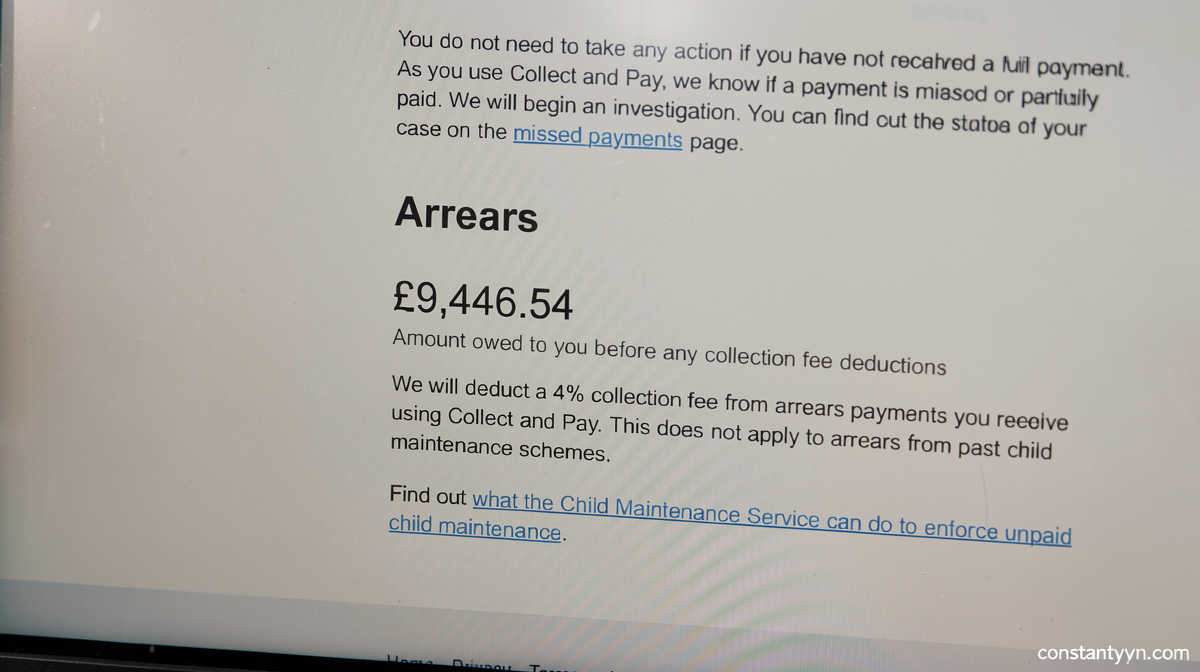
    Katy split from her partner more than three years ago, leaving two children in her primary care. The pair could not agree on how much the father should contribute, so she turned to the CMS for intervention. Her ex-partner was assessed at owing more than £330 per month. He has not paid. The accumulated arrears now stand at nearly £10,000.

    “Last year, I was really struggling. I did go to food banks… there’s been occasions where I’ve wanted the kids to be able to do more, more clubs, do stuff with their friends. I’ve had to say no, I feel terrible.”

    Another mother, whose ex-partner had been abusive before stopping payments entirely, described being forced to skip meals to stretch whatever income remained. A father told investigators that years of disputes with the CMS had driven him to the brink of breakdown, including after the agency added a child to his account who was not his. In one case, a parent was charged £20,000 in maintenance they did not owe.

    Scale of the Problem

    Approximately four million children in England, Scotland, and Wales have parents who are separated. By law, a maintenance arrangement must be in place when a child is under 16, or under 20 if enrolled in approved education or training. Both parents bear responsibility for the costs of raising their children regardless of how much time they spend with them.

    The CMS currently oversees more than 800,000 cases across those three nations, touching the lives of over a million children. Northern Ireland operates its own separate service. Demand has surged: case numbers have climbed by roughly 300,000 over the past five years. In the first quarter of the most recent reporting period, the agency logged more than 1,400 formal complaints, according to the DWP’s latest annual report.

    How the Formula Works — and Where It Breaks Down

    The CMS calculates maintenance using a formula anchored to the income of the paying parent — the one who does not provide the majority of day-to-day care. It does not factor in the receiving parent’s financial position. Once an arrangement is set, the paying parent may remit funds directly, or the CMS can intervene through its Collect and Pay mechanism, deducting money from wages, bank accounts, or benefit payments.

    As of the end of March 2026, approximately 350,000 cases were running through Collect and Pay. The system imposes a 20% administrative surcharge on the amount the paying parent owes and deducts 4% from what the receiving parent is entitled to receive. The agency holds statutory power to pursue arrears and can seek a court-recognised liability order to enforce a debt.

    Yet enforcement has been patchy at best. In the first three months of the most recent year, virtually no payments were made in almost 61,000 Collect and Pay cases — a figure affecting some 86,000 children, per DWP data.

    The Court Route: Weeks of Waiting

    In Katy’s case, the CMS informed her in March of last year that it would apply for a liability order against her ex-partner, while cautioning that the court process would take 26 weeks. She marked the date on her calendar and held her breath. As the deadline approached, the promised action had not materialised, leaving her without recourse and without income for her children.

    What the DWP Says

    The department responsible for the CMS maintains that “in the vast majority of cases” it successfully arranges “vital payments for children.” It added that it takes “very seriously the small number of cases where things go wrong.” No timeline for remedying the specific failures described by affected families was provided.

    Why This Matters

    Child maintenance is not an abstract policy line. It is the difference between a child’s school uniform and a parent’s skipped dinner, between a weekend football club and a food bank queue. When the system that mediates these payments stalls, errors accounts, or imposes fees that deepen the very poverty it is meant to alleviate, the consequences land squarely on children who had no role in the dispute. With case volumes climbing and complaint figures rising, the question facing policymakers is no longer whether the CMS needs reform, but how quickly it can be rebuilt to match the scale of need it now serves.

    Frequently Asked Questions

    What is Parents pushed to breaking point by Child?

    Parents pushed to breaking point by Child is the main topic of this guide. The article explains the context, practical details, and next steps readers should understand.

    Why does Parents pushed to breaking point by Child matter?

    Parents pushed to breaking point by Child matters because readers are looking for a useful answer, not just a short summary. Good content should match search intent and help them decide what to do next.
  • Hunt wins third gold as Asher-Smith makes history

    Hunt wins third gold as Asher-Smith makes history

    Constantvpn.com – Great Britain's women dominate the 4x100m relay Amy Hunt won her third gold medal of a potential historic quadruple and Dina Asher-Smith earned a spot in the record books as Great Britain's 4x100m relay stars put on a show at the European Championships. Britain's new sprint sensation Hunt celebrated her third title in six days, following triumphs in the 100m and 200m , as the GB women's quartet claimed the hosts' second gold medal in a spectacular ending to Saturday's action in Birmingham. The 24-year-old, who described her team-mates as "superwomen" and a "privilege to race with", will now attempt to become the first athlete to win four gold medals at a single edition in the event's 92-year history when the mixed 4x100m relay takes place on Sunday.

    Team-mate Asher-Smith, meanwhile, achieved her seventh gold at the championships – 10 years after capturing her first. With that, the 30-year-old matched the record tally also held by Norway’s Jakob Ingebrigtsen and Croatian discus thrower Sandra Elkasevic. Following her 200m bronze on Thursday, Asher-Smith also equalled Polish sprinter Irena Szewinska's overall record tally of 10 medals at the championships.

    In an utterly dominant performance, Imani-Lara Lansiquot completed the job for a GB team which also featured 21-year-old student midwife Success Eduan, crossing the line in 42.05 seconds – more than a second clear of fellow medallists Switzerland (43.12) and Poland (43.15). Hunt told BBC Sport: "I am stood next to the real life GOAT [greatest of all time]. She [Asher-Smith] is the most decorated European athlete in history.

    "I am stood next to some amazing women. This girl [Eduan] is a midwife, she brings babies into the world. This girl [Lansiquot] wrote a play.

    We're all amazing. "That was stunning to come together. I had the time of my life." Johnson-Thompson vows she still has hunger to compete Fresh rivals & forced to settle for silver – but Hodgkinson up for fight European Championships medal table & GB medallists Just 15 minutes earlier, 100m gold medallist Romell Glave stormed down the home straight to bring the men's quartet home for gold in 38.45 seconds, ahead of Germany (38.64) and Belgium (38.70).

    The men's team also led for most of the final, with Jeremiah Azu, Louie Hinchliffe and then 200m silver medallist Zharnel Hughes safely guiding the baton around to huge cheers inside Alexander Stadium. That was Hughes' fifth European gold, taking the former world 100m medallist level with Matthew Hudson-Smith , Mo Farah and Roger Black as the most successful British man at the championships. The two relay successes took Britain's medal tally to 12 – including six golds – as the hosts remained in hot pursuit of table-topping Italy heading into the final day of competition.

    Great Britain storm to 4x100m relay gold There was a sense that Asher-Smith's seamless baton changeover to Hunt was a symbolic moment. As one British sprint star achieved a piece of history a decade in the making, the other continued to demonstrate that she is only just getting started. Asher-Smith, a world champion over 200m and British record holder over both sprint distances, has amassed 22 senior international medals since making her debut in the women's 4x100m squad at the 2013 World Championships.

    She was the last athlete to achieve a sprint treble at the European Championships in 2018, 12 months before completing her rise to the top of an individual global podium. Until now. Hunt, undeniably the star of these championships as she seeks to capture an "iconic" four golds, will ultimately hope to emulate Asher-Smith and translate continental dominance to global success in the coming years.

    Continuing to progress rapidly following an injury-disrupted start to her senior career, the Cambridge University graduate claimed a breakthrough first individual global medal with world silver in Tokyo last year. Back on home soil, Hunt made no secret that she intends to take it all this week. So far, none have been able to stop her.

    But her work in Birmingham is not yet complete. Monday's 100m gold represented her first senior international title. Then she held off Asher-Smith in the 200m.

    Now, joining forces with her British team-mates to retain their relay title, the treble is hers. "It's such a privilege to be able to step on the track with these ladies and the individual superpowers that we bring," said Hunt. "It's no joke.

    We were all superwomen together out there, and it was so much fun." The mixed 4x100m is a new addition to these championships, and not a gold previously available to Asher-Smith as she built her record collection of honours. It remains to be seen whether Asher-Smith will choose to join Hunt in that event. Doing so would give her the chance to assert herself as the outright most successful athlete in championship history.

    "That was my aim, honestly, coming into this season," said Asher-Smith. "I knew that with the last European Championships, I was getting a bit close, so it was just in my vision board, but not in the forefront. "I'm proud to have done it.

    It's been over a decade of hard work with some incredible ladies and incredible championships. "So yeah, I'm very happy." Great Britain's 40-year wait to win the men's 1500m title continued despite Jake Wightman and Jake Heyward leading on the final bend. Wightman, who completed his return to the world podium last September following injury setbacks, faded to sixth (3:37.18) behind team-mates Heyward (3:36.40) and Arlo Ludewick (3:36.65), who narrowly missed out on the medals in fourth and fifth respectively.

    Gold was won by fast-finishing Dutchman Stefan Nillessen in three minutes 35.70 seconds, ahead of Sweden's Samuel Pihlstrom and Ireland's Andrew Coscoran. Katarina Johnson-Thompson finished 21st overall in the heptathlon , with British team-mate Jade O'Dowda 13th, as Ireland's Kate O'Connor backed up her Commonwealth title with European gold. There was disappointment for 2025 world indoor champion Amber Anning, who was forced to pull out of the women's 400m final after suffering an injury during her warm-up.

    Yemi Mary John placed fifth in 51.12 seconds, ahead of Anning's late replacement Charlotte Henrich (51.29), as Norway's Henriette Jaeger took a dominant victory in 49.04 seconds. Morgan Lake cleared 1.88 metres for eighth in the women's high jump final, won by Yaroslava Mahuchikh after Ukraine's Olympic champion produced a first-time clearance over 1.97m. Johnson-Thompson – 'grateful I'm still competing' O'Connor secures European gold in heptathlon 'Glam helps mentality' says sprinter Amy Hunt, but can it give you that winning edge?

    European Championships: Day seven schedule & BBC coverage

    Frequently Asked Questions

    What is Hunt wins third gold as Asher?

    Hunt wins third gold as Asher is the main topic of this guide. The article explains the context, practical details, and next steps readers should understand.

    Why does Hunt wins third gold as Asher matter?

    Hunt wins third gold as Asher matters because readers are looking for a useful answer, not just a short summary. Good content should match search intent and help them decide what to do next.

  • ‘Houses burn and train derails on hottest day’ and ‘Britain on fire’

    ‘Houses burn and train derails on hottest day’ and ‘Britain on fire’

    British Newspapers Capture Nation’s Triple Crisis on Record-Breaking Day

    Constantvpn.com – Thursday’s weather extremes dominated British headlines as newspapers grappled with simultaneous emergencies across the country. The nation experienced what meteorologists confirmed as the warmest day of 2026, while wildfires consumed residential areas and a train collision near Lewes left commuters injured. This convergence of events created an unusual editorial challenge for British journalists, who had to balance breaking news with weather coverage.

    The Times Leads with Comprehensive Coverage

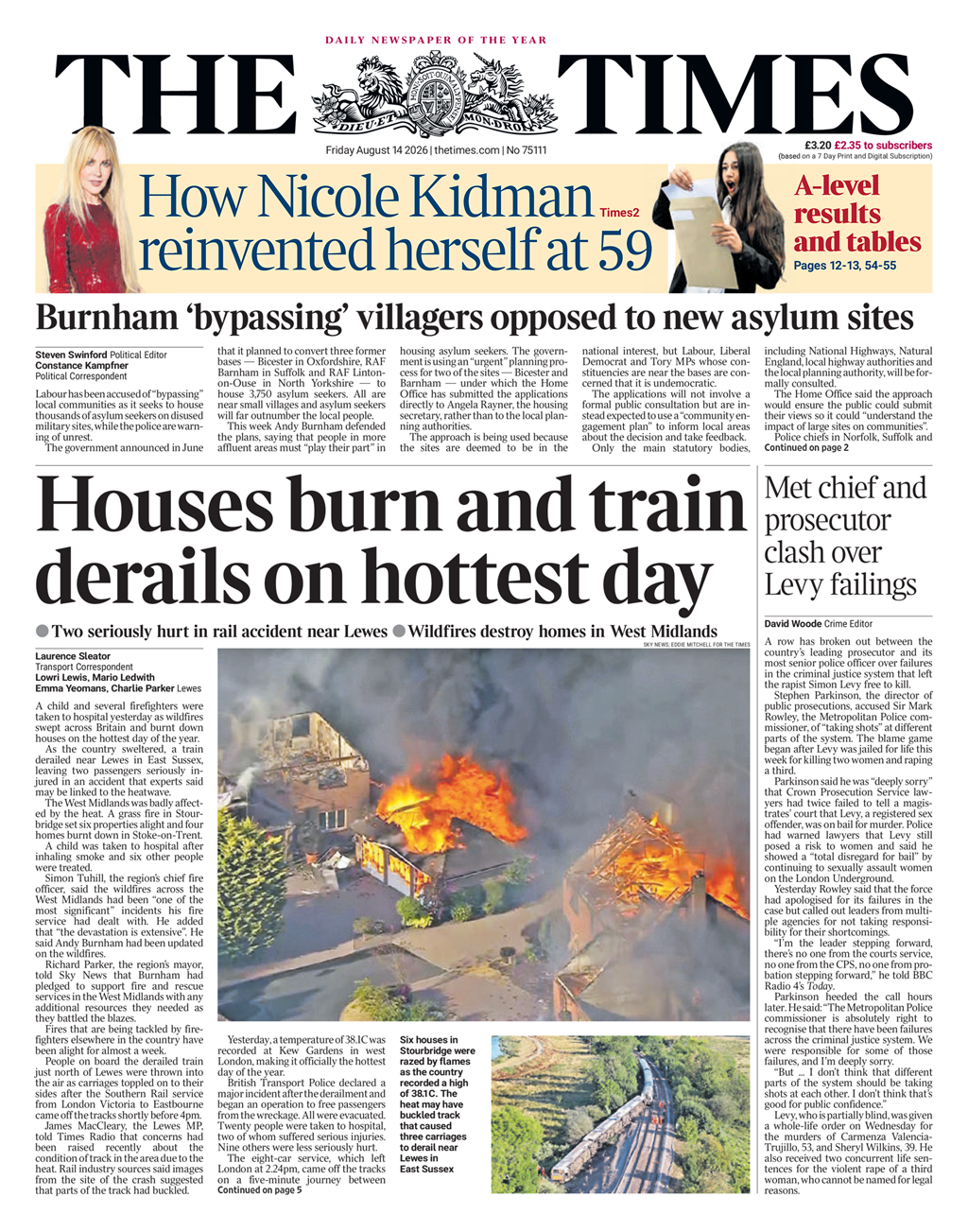
    The Times front page presented a compelling visual narrative with a photograph showing homes engulfed in flames beneath the headline “Houses burn and train derails on hottest day.” This headline proved particularly effective in capturing three distinct stories that unfolded on the same day. The West Midlands experienced intense wildfires that threatened numerous properties, while the rail incident near Lewes resulted in serious injuries to two passengers. Meanwhile, the heatwave reached its peak, establishing a new temperature record for the year.

    The newspaper’s approach reflected a desire to provide readers with a complete picture of the day’s challenges rather than focusing on a single story. This editorial decision acknowledged that British readers were dealing with multiple disruptions simultaneously, from transportation delays to potential property damage from the fires.

    Tabloid Responses Vary Widely

    The Daily Mail adopted a more dramatic approach with its single-word headline “Inferno” displayed across a photograph of the West Midlands conflagration. The paper opened its coverage with the statement: “Wildfires caused apocalyptic scenes last night as they engulfed homes.” This language emphasized the severity of the situation and helped readers understand the scale of the emergency.

    The Daily Mirror similarly focused on the fire situation with the headline “Britain on fire” accompanying a photograph of burning houses. However, the paper also included an inset story about the train derailment, categorizing both events under what it termed “Heatwave devastation.” This framing suggested that the extreme temperatures were connected to both the fires and the rail accident.

    The Daily Star took a different editorial path by prioritizing the train crash over the weather events. Its headline “Horror on the 2.24pm” drew attention to the specific timing of the incident. A large photograph showed emergency responders working near the overturned train, which had come to rest in shrubbery beside the railway line. The paper also included a smaller image of the burning homes with the caption “‘Apocalyptic’ wildfire,” acknowledging both major stories of the day.

    Broader National Coverage

    The Daily Telegraph front page featured a photograph of the derailed train with people standing on top of it, but the paper’s primary headline concerned international affairs. Claims emerged that “China ‘funding Palestine marches’” dominated the front page, with the paper reporting that a “US committee claims Beijing is supporting anti-Israel protests on Britain’s streets.” The coverage examined whether China had been backing Code Pink, described as “a far-left feminist protest group established in America.”

    Metro distinguished itself by making the high temperatures the central focus of its front page. The paper highlighted the pressure on healthcare services, noting that the heatwave had driven increased attendance at A&E departments. According to the report, these facilities had experienced “their busiest time ever” the previous month, with “a record 2.5 million patients” requiring care. The article described nurses collapsing in the “stifling heat” and reported that “3,000 patients a day” were being treated in corridors due to overcrowding.

    Specialized Perspectives

    The Guardian provided both weather and sports coverage, featuring Team GB athlete Morgan Lake seeking relief from the heat under an umbrella during the European Athletics Championship in Birmingham. The photograph appeared above an article headlined on temperatures reaching 38.1C “as fifth heatwave peaks.” Beyond the weather story, the paper’s main front-page offering addressed concerns about financial instability in Britain’s higher education sector. New figures indicated that a decline in international student numbers could deprive universities of essential funding.

    The i Paper concentrated on economic implications, highlighting water regulator Ofwat’s decision to permit five suppliers to raise bills by an additional £3.4bn collectively over the coming years. The headline created a contrast between the 24 million customers facing increased costs and the companies that continued to lose 1.2bn litres of water through leaks daily. This framing suggested that consumers were bearing the burden of infrastructure failures.

    The Daily Express combined multiple stories under the headline “Did record 38.1C hear cause train to derail” alongside a photograph of burning homes beneath the sub-headline “Britain in meltdown.” This approach connected the weather extremes to both the rail accident and the wildfires, suggesting a nationwide crisis.

    The Financial Times stood apart from its competitors by omitting prominent coverage of the hottest day’s aftermath. Instead, the paper led with investor optimism regarding AI company Anthropic’s potential “record $2tn IPO valuation.” A secondary story featured commentary from the jewellery maker Swarovski’s boss, who described the trend of “Women buying own lab-grown diamonds” as “very endearing.”

    Implications for British Readers

    The convergence of these events on a single day highlighted vulnerabilities in British infrastructure and public services. The heatwave’s impact extended beyond discomfort, affecting transportation networks, healthcare facilities, and even international relations coverage priorities. As the country continues to experience extreme weather patterns, these newspaper front pages documented a moment when multiple challenges required simultaneous attention from both the public and policymakers.

    The varied editorial responses demonstrated how different publications chose to prioritize stories based on their readership expectations. While some papers emphasized the dramatic visual impact of the fires, others focused on the human element of the train accident or the economic consequences of infrastructure failures. This diversity in coverage provided British readers with multiple perspectives on a day that tested the nation’s resilience across several fronts.

    Frequently Asked Questions

    What is Houses burn and train derails on hottest?

    Houses burn and train derails on hottest is the main topic of this guide. The article explains the context, practical details, and next steps readers should understand.

    Why does Houses burn and train derails on hottest matter?

    Houses burn and train derails on hottest matters because readers are looking for a useful answer, not just a short summary. Good content should match search intent and help them decide what to do next.

  • Count Binface has taken on three PMs and lost – but could this be his best ever performance?

    Count Binface has taken on three PMs and lost – but could this be his best ever performance?

    Count Binface Faces Nigel Farage in Clacton: A New Chapter for the Intergalactic Space Warrior

    Constantvpn.com – The self-proclaimed intergalactic space warrior has once again claimed the political spotlight, this time donning a massive silver rubbish bin atop his head as he prepares to challenge Reform UK leader Nigel Farage in the Clacton by-election. Count Binface, the election veteran who has become something of a fixture in British political life, is positioned to achieve his strongest electoral performance to date.

    The by-election was triggered by an unusual political sequence: Farage resigned from Parliament, only to immediately announce his candidacy for re-election, prompting a coordinated boycott by the country’s two other major political parties. As votes are being counted along the Essex coastline, Count Binface is expected to secure his highest vote share in any contest, having previously fallen short against three sitting prime ministers and one future prime minister.

    The Man Behind the Bin

    Operating within the silver container is Jon Harvey, an Oxford-educated comedian who has built a career in political satire. Harvey has contributed scripts to several BBC comedy programmes, including The Thick of It and Have I Got News For You, giving him insight into both comedy and political discourse.

    His electoral journey began in 2017 when he first appeared in a bin, standing for election in Maidenhead against then-Prime Minister Theresa May. At that time, he was known as Lord Buckethead, a character derived from a Star Wars parody film. Harvey secured 249 votes and achieved viral recognition, which led to an appearance on John Oliver’s HBO programme Last Week Tonight. The performance also resulted in a legal disagreement with another individual claiming the Lord Buckethead title, which Harvey described at the time as “an unpleasant battle on the planet Copyright”.

    A History of Electoral Defeats

    Harvey later switched to the Count Binface persona, declaring himself leader of the Recyclons from planet Sigma IX. His first contest as Count Binface was against Boris Johnson in Uxbridge, where he received 69 votes. Despite the modest tally, Harvey shared the stage with the sitting prime minister during the results announcement, alongside another candidate dressed as Elmo from Sesame Street.

    His third major contest came during the 2024 general election campaign, when he faced Conservative leader Rishi Sunak. Count Binface achieved 308 votes, marking his strongest result at that point. The Monster Raving Loony Party’s Sir Archibald Stanton received 99 votes in the same contest, representing 0.2% of the vote share.

    Most recently, in June 2024, Count Binface encountered newly-elected Makerfield MP Andy Burnham in a by-election that paved the way for Burnham to become prime minister. Rather than maintaining the traditional political distance, Burnham warmly shook hands with the intergalactic warlord as he was elected Labour MP. Count Binface secured 95 votes compared to Burnham’s 24,927.

    The British Tradition of Novelty Candidates

    The United Kingdom possesses a lengthy history of eccentric candidates participating in elections. The Monster Raving Loony Party was established in 1982 by Screaming Lord Sutch, a rock musician who contested more than 40 elections while wearing his signature top hat and gold lame suit. Sutch first stood in a by-election during the 1960s.

    Other notable novelty candidates include a different Lord Buckethead who contested elections in 1987 and 1992, and comedian Al Murray’s pub landlord character who ran against Farage in 2015. Objections to such “frivolous” candidates trace back to 1918, when a £150 deposit requirement was introduced for candidates. This threshold was subsequently raised to £500 in 1985, largely due to the Monster Raving Loony Party’s growing popularity.

    The barriers to entry remain relatively accessible: any individual over 18 years of age who can assemble a £500 deposit and obtain 10 supporting signatures may stand as a candidate in UK elections. This accessibility explains Count Binface’s frequent appearances in high-profile contests. However, Harvey has forfeited his £500 deposit on every occasion, having failed to reach the 5% vote threshold required for a deposit refund.

    A Stage for Everyone

    Despite his electoral defeats, Count Binface has consistently enjoyed moments of prominence. This stems from another British electoral tradition: all candidates must stand together on a stage during the election count to hear their vote totals announced. This practice serves as a literal leveller, granting equal visibility to everyone from prime ministers to individuals dressed as rubbish bins. Each candidate possesses the right to be seen and heard as an official participant in the democratic process.

    As the Clacton results are tallied, Count Binface may well be approaching his most significant electoral achievement, proving that even in defeat, the space warrior from Sigma IX continues to capture the British public imagination.

    Frequently Asked Questions

    What is Count Binface has taken on three?

    Count Binface has taken on three is the main topic of this guide. The article explains the context, practical details, and next steps readers should understand.

    Why does Count Binface has taken on three matter?

    Count Binface has taken on three matters because readers are looking for a useful answer, not just a short summary. Good content should match search intent and help them decide what to do next.

  • Multiple fires destroy homes and cause devastation in West Midlands

    Multiple fires destroy homes and cause devastation in West Midlands

    West Midlands Plagued by Wildfires as Record Heat Grips the Region

    Constantvpn.com – A series of devastating wildfires swept through the West Midlands on Thursday, leaving a trail of destruction across multiple towns and cities. The conflagrations, fueled by record-breaking temperatures, destroyed numerous homes, forced hundreds of residents to flee their properties, and resulted in several hospitalizations. Emergency services described the day as one of the most demanding in their history, with thousands of calls flooding into fire control centers as blazes erupted simultaneously across the region.

    The crisis unfolded against the backdrop of the UK’s hottest day of the year, with temperatures reaching 38.1 degrees Celsius in Kew Gardens. This extreme heat created tinder-dry conditions that allowed fires to spread with alarming speed, particularly through areas of dry grass and woodland that had been parched by weeks of warm weather.

    The Stourbridge Conflagration

    The most dramatic incident occurred near Stourbridge Golf Course, where a massive fire consumed approximately 40 acres of land. About 100 firefighters were deployed to tackle the blaze, which spread rapidly through the dry vegetation, setting six homes ablaze. West Midlands Fire Service confirmed that the fire had several points of origin, suggesting that the extreme conditions allowed multiple embers to ignite separate areas simultaneously.

    Smoke from the Stourbridge fire blanketed the area and could be seen spreading for miles across the landscape. Aerial footage captured the extent of the devastation, showing destroyed homes and thick plumes of smoke rising into the sky. Jane Baxter, who was evacuated from her home on Norton Road, recalled first noticing the smell of smoke around 13:15 BST. She described the situation as becoming “horrendous” as she could see flames towering above the rooftops of neighboring houses.

    Residents living in homes backing onto the golf course received instructions from police to evacuate. Dave Edwards, one of those residents, explained that people were told to wet their fences and prepare to flee as the fire continued to advance. The ambulance service treated six people at the Stourbridge scene, with two requiring hospital transport.

    Regional Devastation Spreads

    While Stourbridge bore the brunt of the destruction, other areas across the West Midlands were not spared. In Stoke-on-Trent, four homes were completely destroyed by a separate fire in the Goldenhill area. One resident described the buildings as “completely gone,” emphasizing the intensity of the flames. Several homes in the same area were also evacuated as a precautionary measure.

    In Birmingham, a woman was seriously injured in a blaze at Castle Vale, while another large fire broke out off Hillmeads Road in Druids Heath. Further afield, in Worcestershire, Pershore saw several homes damaged and 30 residents evacuated from the Lancelott Court area. One person was treated for smoke inhalation, and approximately 200 homes in the vicinity were left without electrical power.

    Warwickshire also experienced significant disruption, with the county’s fire and rescue service responding to a large fire in Salford Priors, Stratford-upon-Avon. The incident was declared a major incident, a designation that indicates a significant event requiring coordinated multi-agency response. By 21:00 on Thursday, the major incident status had been lifted, though fire crews remained on site monitoring the situation.

    Official Responses and Infrastructure Impact

    West Midlands Fire Service chief Simon Tuhill described the day’s events as “one of the most significant” incidents the service had ever managed. He noted that the fire control team had processed thousands of 999 calls throughout the day, highlighting the scale of public concern and the number of emergencies triggered by the fires.

    Prime Minister Andy Burnham expressed his sympathy for those affected, calling the situation “awful” to witness. He praised the efforts of firefighters who had been taken to hospital and confirmed he was in regular contact with local leaders, including West Midlands Mayor Richard Parker.

    “My thoughts are with everyone affected, particularly those who have been injured or forced from their homes, and with the firefighters who have been taken to hospital.”

    Mayor Parker characterized the situation as “extremely worrying and fast-moving,” reflecting the rapid escalation of multiple fires across the region. The infrastructure impact extended beyond immediate fire damage, with Severn Trent Water issuing warnings about potential disruptions to water supplies across the West Midlands as firefighting operations consumed large volumes of water.

    Transport networks also suffered, with smoke from several fires forcing the closure of the M6 northbound carriageway between junctions five and six. The closure caused delays exceeding two hours for motorists traveling through the region.

    Human Cost and Recovery

    The human toll of Thursday’s fires included a child and three firefighters who were transported to hospital across the region. While the severity of their injuries was not immediately specified, the fact that multiple emergency responders required medical attention underscored the dangerous conditions faced by those battling the blazes.

    As evening fell, many residents who had been evacuated began to return to their properties, though some homes in Stourbridge and Stoke-on-Trent were confirmed destroyed. The combination of extreme heat, dry conditions, and strong winds created a perfect storm for wildfire activity, and officials warned that the region could face continued challenges in the coming days as recovery efforts commence and the risk of further fires remains elevated.

    Frequently Asked Questions

    What is Multiple fires destroy homes and cause?

    Multiple fires destroy homes and cause is the main topic of this guide. The article explains the context, practical details, and next steps readers should understand.

    Why does Multiple fires destroy homes and cause matter?

    Multiple fires destroy homes and cause matters because readers are looking for a useful answer, not just a short summary. Good content should match search intent and help them decide what to do next.
  • Lucy Davis urges women to check their breasts for cancer – here’s how

    Lucy Davis urges women to check their breasts for cancer – here’s how

    Actress Lucy Davis Opens Up About Incurable Breast Cancer Diagnosis

    Constantvpn.com – Lucy Davis, beloved for her portrayal of the endearingly awkward Dawn Tinsley in the original British television adaptation of The Office, has shared her personal journey with breast cancer. The 53-year-old actress recently disclosed that her cancer has progressed to an incurable stage after spreading to her bones, making chemotherapy no longer a viable option for her treatment.

    What makes Davis’s case particularly noteworthy is how her symptoms presented themselves. Rather than experiencing the classic, easily identifiable lump that many people associate with breast cancer, she discovered something subtler. “The initial lump that I felt, wasn’t a ‘lump’ as such; rather a kind of hard spot. Really tiny,” she explained in a heartfelt Instagram post.

    Understanding Breast Cancer Warning Signs

    Davis’s experience highlights an important medical reality: breast cancer symptoms don’t always manifest in the traditional way that people expect. While a noticeable lump remains one of the most common indicators, it is certainly not the only sign worth monitoring. Medical professionals emphasize that awareness of various symptoms can lead to earlier detection and better outcomes.

    The National Health Service provides comprehensive guidance for self-examination, recommending that women check their breasts or chest approximately once each month. This regular routine helps individuals become familiar with what is normal for their bodies, making it significantly easier to identify any unusual changes when they occur.

    It is important to recognize that breasts naturally fluctuate in appearance and feel throughout different phases of the menstrual cycle. Additionally, changes occur gradually as women age, so what constitutes an abnormal change may vary from person to person.

    Key Symptoms to Monitor

    Healthcare providers recommend paying close attention to several specific indicators beyond just lumps. Any swelling or lump appearing in the breast, chest area, or armpit should be noted. Skin changes on the breast surface are also significant, including dimpling that might resemble orange peel texture, or redness that could be more difficult to detect on darker skin tones.

    Changes in breast size or shape warrant attention, though it is completely normal for one breast to be slightly larger than the other. The key is recognizing when a change deviates from your personal baseline. Nipple discharge, particularly when not pregnant or breastfeeding, should be monitored, especially if blood is present.

    The initial lump that I felt, wasn’t a ‘lump’ as such; rather a kind of hard spot. Really tiny.

    Additional warning signs include alterations in nipple appearance, such as inversion where the nipple turns inward, or the development of a rash that might look similar to eczema. Sores or ulcers appearing on the chest area should also prompt medical consultation.

    How to Perform a Breast Self-Examination

    Proper self-examination involves both visual inspection and physical palpation. Begin by standing in front of a mirror with your arms resting at your sides, then raise them overhead to observe any visual changes. Look carefully at the shape, size, and skin texture of both breasts.

    For the physical examination component, use a circular motion to feel around each breast and side of the chest, moving all the way up to the collarbone and underneath each armpit. Apply a combination of light and firmer pressure, being careful not to press so hard that it causes discomfort. Make sure to feel around and over each nipple as well.

    Medical professionals advise consulting a general practitioner if you notice any of the following: a persistent lump or swelling in the breast, chest, or armpit area; any changes in your breasts, chest, or nipples that seem unusual for you; or ongoing pain in the breast or armpit that does not resolve on its own.

    The Importance of Regular Screening

    Recent studies have highlighted a concerning gap in breast cancer screening, revealing that many women under 50 who are at higher risk are missing crucial screening opportunities. This finding underscores the importance of proactive health monitoring, particularly for those with family histories or other risk factors.

    Davis’s candid sharing of her diagnosis serves as a powerful reminder that breast cancer can affect women at various stages of life, and that symptoms may present in unexpected ways. Her willingness to speak publicly about her condition helps raise awareness and encourages others to remain vigilant about their health.

    While her cancer is now considered incurable, Davis’s openness about her journey provides valuable information for the public. Her story illustrates why understanding the full spectrum of breast cancer symptoms matters, and why regular self-examination should be an integral part of women’s healthcare routines regardless of age or perceived risk level.

    Frequently Asked Questions

    What is Lucy Davis urges women to check?

    Lucy Davis urges women to check is the main topic of this guide. The article explains the context, practical details, and next steps readers should understand.

    Why does Lucy Davis urges women to check matter?

    Lucy Davis urges women to check matters because readers are looking for a useful answer, not just a short summary. Good content should match search intent and help them decide what to do next.

  • Burnham considers disposable BBQ ban over wildfire risks

    Burnham considers disposable BBQ ban over wildfire risks

    Disposable Barbecue Restrictions Under Review as UK Faces Record Heat

    Constantvpn.com – Prime Minister Andy Burnham has confirmed that officials are actively evaluating a potential prohibition on single-use grills, responding to escalating wildfire threats exacerbated by prolonged drought conditions across the country. The announcement came as the government convened an emergency Cobra meeting to coordinate its response to unprecedented temperatures recorded over recent months.

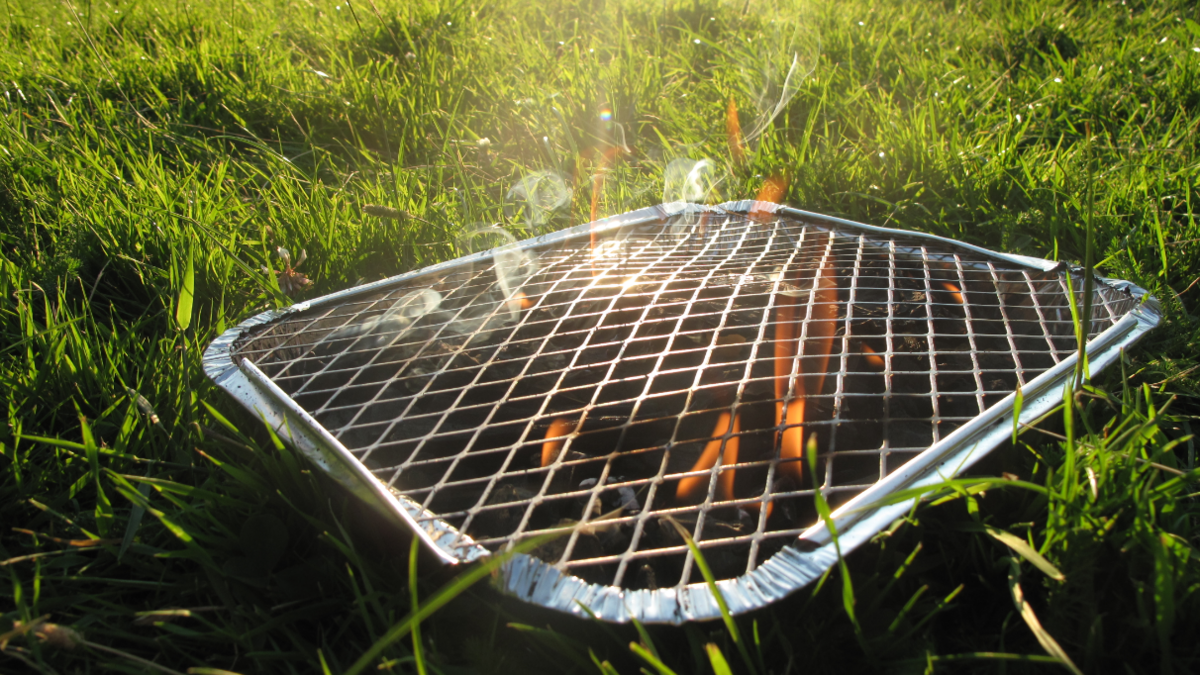
    Speaking to journalists, the Prime Minister emphasized that disposable barbecues have contributed to several recent fire incidents, urging citizens to exercise heightened caution when utilizing these temporary cooking devices. “I do want to leave the meeting today with a loud and clear message that we do want people to take the greatest possible care when they are out in the countryside, both in terms of cigarettes, but also those temporary barbecues that we know are causing risk of fires,” Burnham stated during his visit to Stevenage.

    Drought Conditions Intensify Fire Risk

    The urgency of the situation has been underscored by official declarations from environmental authorities. Nearly three-quarters of England, alongside the entirety of Wales, has been formally classified as experiencing drought conditions. These dry environments create ideal circumstances for fires to ignite and spread rapidly, particularly in rural and semi-rural areas where vegetation remains parched.

    Adding to the concern, the Met Office issued an uncommon amber extreme heat warning for Thursday. Forecasts indicate temperatures will reach the mid-to-high thirties across the Midlands and south-east regions, with potential peaks approaching 38 degrees Celsius. Such conditions significantly increase the likelihood of spontaneous combustion in dry vegetation and elevate the danger posed by discarded cigarette butts and hot barbecue coals.

    Retailers Take Voluntary Action

    Several major retail chains have already taken proactive steps, removing single-use grills from their shelves without waiting for government intervention. These voluntary withdrawals follow repeated cautions from fire service leaders who have documented the correlation between disposable barbecue usage and summer fire incidents. The devices, while convenient for outdoor gatherings, present particular hazards when used in dry conditions or near flammable vegetation.

    The government’s consideration of restrictions remains open-ended, with officials weighing whether to implement limitations on sales, usage, or both. A Labour Member of Parliament recently corresponded with prominent retailers, requesting they cease selling disposable barbecues for the remainder of the summer season. Liberal Democrat representatives have similarly expressed support for such measures.

    Local Authorities Already Implementing Controls

    Local councils possess existing mechanisms to regulate disposable barbecue use through public space protection orders. Municipalities including Brighton & Hove and Fylde in Lancashire have successfully employed these orders to prohibit single-use grills in designated areas. Individuals who violate such regulations currently face penalties of up to £100, though this ceiling is scheduled to increase to £500 in upcoming legislative amendments.

    Councils must conduct public consultations and compile evidence demonstrating ongoing threats to community quality of life before implementing these protective measures. The National Farmers Union has advocated for broader adoption of such orders, recognizing the vulnerability of agricultural lands to fire during extended dry periods.

    Cobra Meeting Addresses Multi-Sector Challenges

    The emergency session convened by Burnham brings together representatives from multiple government departments. Attendees include ministers from the Department for Environment, Food and Rural Affairs, the Home Office, and the Department for Health, alongside officials from the Environment Agency. A spokesperson for Number 10 acknowledged that firefighters, agricultural workers, and National Health Service personnel are all confronting weather-related difficulties.

    This marks the first emergency Cobra session on heat-related issues chaired directly by the Prime Minister, though an earlier meeting had been organized by senior officials earlier in the year. The gathering reflects the government’s recognition that extreme weather events require coordinated responses across multiple sectors.

    Historical Context and Future Implications

    Fire service data reveals a troubling trend: crews responded to 393 wildfires across England and Wales during July alone, establishing the month as the most active period on record for such incidents. Fire chiefs have characterized these events as increasingly recurring phenomena linked to broader climate patterns.

    In June, the administration announced plans to position specialist firefighting teams in strategic locations throughout England, encouraging local forces to utilize government funding for equipment upgrades. These investments aim to enhance response capabilities as wildfire frequency continues to rise.

    The Green Party had previously urged Burnham to chair a Cobra meeting, with party leader Zack Polanski criticizing what he described as insufficient governmental action. While welcoming the meeting, Polanski emphasized that discussion alone would not suffice. He advocated for flexible working hours during peak heat periods and proposed legally binding maximum workplace temperatures to protect employee health.

    The party has also championed the creation of additional publicly accessible cooling centers for vulnerable populations and called for financial assistance to help households implement heatproofing measures. These recommendations align with growing international consensus that extreme heat events will become more frequent and severe as global temperatures continue rising.

    As the summer progresses, residents across the United Kingdom may need to adjust their daily routines, outdoor activities, and even home environments to accommodate increasingly challenging weather conditions. The potential introduction of disposable barbecue restrictions represents just one element of a broader strategy to mitigate fire risks during this critical period.

    “I do want to leave the meeting today with a loud and clear message that we do want people to take the greatest possible care when they are out in the countryside, both in terms of cigarettes, but also those temporary barbecues that we know are causing risk of fires,” said Prime Minister Andy Burnham.

    The government’s approach will likely evolve as more data becomes available about the severity and duration of current conditions. Officials have indicated they remain prepared to implement additional measures if necessary, demonstrating a willingness to adapt policies in response to emerging challenges posed by climate change.

    Frequently Asked Questions

    What is Burnham considers disposable BBQ ban over?

    Burnham considers disposable BBQ ban over is the main topic of this guide. The article explains the context, practical details, and next steps readers should understand.

    Why does Burnham considers disposable BBQ ban over matter?

    Burnham considers disposable BBQ ban over matters because readers are looking for a useful answer, not just a short summary. Good content should match search intent and help them decide what to do next.