
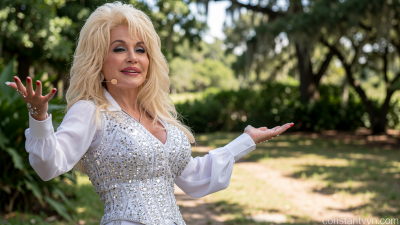
The Rejection That Built an Empire: How Dolly Parton Turned a “No” Into $450 Million
Constantvpn.com – In the summer of 1974, a young songwriter named Dolly Parton had just finished recording one of the most enduring love songs in American music history. The track, “I Will Always Love You,” was ready for release, and a call came asking whether Elvis Presley might record a version. Most artists would have leapt at the opportunity without hesitation. Parton, however, listened to the terms attached to the offer — his manager wanted half the publishing rights — and said no. She later admitted she wept through the entire night afterward, torn between pride and fear of what she might have gained.
Two decades later, in 1992, Whitney Houston transformed the song into a chart-topping power ballad. Worldwide sales surpassed 20 million copies, and the royalties flowing back to Parton exceeded $10 million, as tallied by Forbes. That single decision, made in a moment of instinctive self-protection, became the defining anecdote of a career that extended far beyond the stage.
From Rags to Royalties: A Childhood Lesson in Ownership
Parton did not arrive at that instinct by accident. Born into rural poverty in Tennessee, she described in her 1971 smash hit “Coat of Many Colours” the patched garments her mother stitched together so she could walk to school without shame. The economic precarity of those years left a permanent imprint on how she viewed money, contracts, and creative ownership.
Her father, though unable to read or write, possessed what Parton called “a great sense of business.” In a 2017 conversation with the BBC’s World Service, she recalled how he shaped her thinking from the earliest days of her career:
“My dad wasn’t an educated man, he wasn’t able to read and write, but my daddy had a great sense of business. So when I got into the music business, I thought of it as a business. And so I started early on keeping my own songs and my own publishing company.”
That publishing company became the financial backbone of everything that followed. By retaining ownership of her catalog rather than ceding it to labels or outside writers, Parton ensured that every subsequent cover, sync placement, or streaming play generated income that stayed within her own structure.
Diversification: Theme Parks, Film, and the Smoky Mountains
The publishing royalties were only one pillar. In 1985, Parton co-founded Sandollar Productions, a film and television company that went on to produce projects including the 1990s cult thriller Buffy the Vampire Slayer. The following year, in 1986, she became co-owner of Dollywood, a theme park nestled in the foothills of the Great Smoky Mountains in her home state of Tennessee. The attraction had changed hands several times over its first quarter-century before her involvement, and her buy-in triggered an exponential surge in annual visitor numbers.
She continued expanding the property’s footprint. In 2015, the DreamMore Resort opened nearby — a four-star hotel and spa designed to extend guests’ stays beyond a single park day. Today, numerous members of Parton’s family are employed at the complex, which stands as the largest employer in its county.
Recent Ventures and the “Cup of Ambition”
The entrepreneurial engine has not slowed with age. In 2025, Parton launched the Dolly Beauty cosmetics line, extending her personal brand into consumer goods. That same year, in June, she opened Dolly’s Tennessean Travel Stop, a retail concept shop that includes a signature coffee brand called Cup of Ambition — a deliberate nod to her Grammy-winning single “9 to 5.” The move underscores a pattern: every new venture is tethered to an existing cultural touchpoint, reducing the marketing risk of entering unfamiliar markets.
Paul Milliken, a Fox 5 Atlanta reporter who has interviewed Parton repeatedly over the years, identified diversification as the central mechanism behind her commercial longevity. Speaking to the BBC’s Wake Up to Money programme, he noted that the lesson she models for younger artists remains active and influential.
Philanthropy as Extension of Brand
Wealth, for Parton, was never purely an end in itself. She has directed millions of dollars toward child literacy initiatives, wildfire relief efforts, and research aimed at developing a cure for Covid-19. In 2022, the Carnegie Medal of Philanthropy was awarded to recognize the scale and consistency of that giving.
Yet she has also spoken candidly about how poverty shapes spending habits long after the bank account has changed. In that same 2017 interview, she offered a reminder that no amount of success fully erases the child who once wore a knitted coat to class:
“Being brought up poor means I don’t take things for granted, and no matter how much money I make, I’ll always count my blessings quicker and more often than I count my money.”
She added, with characteristic self-deprecation, that walking into a store and facing a high price tag still triggers a reflexive thought about what her parents might have accomplished with that sum.
Neutrality as Strategy
Parton’s commercial reach depended in part on her status as one of the rare cultural figures Americans could agree upon across partisan lines. She declined the Presidential Medal of Freedom on two separate occasions — once when offered by Donald Trump, once by Joe Biden — a choice that preserved the brand’s apolitical positioning and kept her consumer products accessible to every demographic.
Maike Currie, vice president of personal finance at savings firm PensionBee, told the BBC’s Wake Up to Money that Parton’s example has rippled through the industry. She pointed to Taylor Swift’s decision to rerecord her catalog in order to reclaim ownership of her masters as a direct echo of the publishing-ownership philosophy Parton adopted decades earlier. Currie characterized Parton as a “brilliant businesswoman” whose influence extends well past the chart positions her music once held.
By the time of her death, Forbes estimated her net worth at $450 million — a figure built not on a single hit or a single endorsement, but on a lifetime of retaining ownership, diversifying revenue streams, and treating every creative asset as a long-term investment rather than a one-time transaction. The woman who cried all night after saying no to Elvis ended up proving that the most profitable answer in show business is sometimes the one that protects what you already own.
Related Reading
Frequently Asked Questions
What is How Dolly Parton s business savvy?
How Dolly Parton s business savvy is the main topic of this guide. The article explains the context, practical details, and next steps readers should understand.
Why does How Dolly Parton s business savvy matter?
How Dolly Parton s business savvy matters because readers are looking for a useful answer, not just a short summary. Good content should match search intent and help them decide what to do next.