At least 13 killed and dozens injured after Qatar gas explosion
At least 13 killed and dozens injured after Qatar gas explosion
Technical Accident in Ras Laffan Industrial Zone
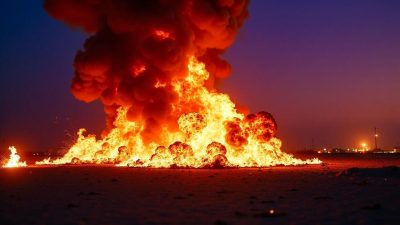
At least 13 killed and dozens – A major incident occurred in Qatar’s Ras Laffan industrial zone on Sunday night, leading to the deaths of at least 13 individuals and injuries to over 60 people. The explosion, classified as a “technical accident” by the country’s interior ministry, caused widespread disruption, with the city’s skyline briefly illuminated in an orange glow due to the intense fire. The blast, which originated from the Barzan local gas supply facility, was felt across central Doha, prompting alarm among residents living more than 70 kilometers away from the site.
“This was an accident and not sabotage or hostile in nature,” stated Qatar’s Energy Minister Saad Sherida al-Kaabi, emphasizing that the incident did not impact the nation’s energy exports. He added that the government is actively investigating the cause of the explosion, which had occurred during the restart of operations following a maintenance hiatus.
Global Energy Hub Faces Temporary Setback
The Ras Laffan Port, home to the world’s largest liquefied natural gas (LNG) export facility, has long been a cornerstone of Qatar’s energy infrastructure. Earlier this year, the site was targeted by Iranian strikes, which inflicted “extensive damage” during the US-Israel conflict. Despite these prior attacks, the explosion this week appears to be an isolated event, though it has raised concerns about the facility’s resilience.
QatarEnergy, the state-owned energy company, confirmed the blast happened at the Barzan local gas supply facility on Sunday, 21 June. The incident occurred in the evening hours as workers resumed operations that had been paused in March. Emergency response teams were swiftly deployed to manage the fire, which has since been brought under control. The minister noted that the facility’s production was intentionally halted in December 2025 for urgent maintenance, with restarts only beginning two days prior to the accident.
Investigation and Casualty Details
Authorities have initiated an investigation to determine the exact cause of the explosion. The Energy Minister highlighted that the incident did not pose environmental risks, though the timeline of operations remains under scrutiny. He mentioned that the required repairs to the facility could reduce LNG output by 12.8 million tons over a three to five-year period, potentially affecting global energy markets.
According to preliminary reports, all the victims of the explosion were citizens of India and Pakistan. The Indian Embassy in Doha expressed solidarity with the affected families, stating it was in constant communication with Qatari officials and committed to providing assistance. “We convey our deepest condolences to the families of those who have unfortunately passed away in the sad incident at Ras Laffan Industrial City last night,” the embassy wrote on X, underscoring the international concern over the event.
Impact on Doha and Regional Stability
The explosion’s aftermath sent shockwaves through the city, rattling windows in central Doha and causing panic among residents. While the immediate danger has subsided, the incident has sparked questions about the safety of the region’s energy infrastructure. Qatar’s energy sector, which accounts for a significant portion of the country’s economy, has faced challenges in recent months, including the temporary halt of production during the conflict with Iran.
Although the facility’s operations were paused in March as part of maintenance efforts, the recent restart has been critical for maintaining Qatar’s position as a key global energy supplier. The country’s LNG exports, which constitute a fifth of the world’s total, were temporarily disrupted, but shipments have since resumed. The minister noted that the recovery process would take time, with the exact resumption date yet to be confirmed.
Historical Context and Future Implications
Ras Laffan Port, the largest artificial harbor globally, has endured several threats since its establishment. The Iranian strikes earlier this year highlighted the vulnerability of the site to external conflicts, even as it continued to play a vital role in international energy supply chains. The current explosion, while not directly linked to the conflict, has reignited discussions about the need for enhanced safety measures and redundancy systems in critical infrastructure.
Qatar’s energy minister stressed that the incident was a “technical accident,” underscoring the importance of maintaining operational continuity. The statement came as the country navigated the delicate balance between energy production and regional tensions. With the global demand for LNG fluctuating, any disruption to Qatar’s exports could have far-reaching effects. However, the government has reassured stakeholders that the facility’s long-term functionality remains intact.
Community Response and Recovery Efforts
Local authorities have been working closely with emergency services to address the aftermath of the explosion. The focus has shifted to assessing the damage and supporting affected families, with the Indian Embassy playing a key role in coordinating relief efforts. Officials have emphasized that the incident, while tragic, does not signal a broader threat to Qatar’s energy security or its role in the global market.
Residents in Doha and nearby areas expressed relief that the explosion did not escalate further, though many remain wary of future incidents. The government has pledged to conduct a thorough review of safety protocols and has promised transparency in its findings. Meanwhile, the energy sector continues to monitor the situation, with the hope that the facility will return to full capacity soon.
Global Energy Supply and Economic Considerations
As the world’s top LNG exporter, Qatar’s energy sector is a linchpin in global energy markets. The explosion at Ras Laffan, though localized, has prompted reassessment of supply chain dependencies. Analysts suggest that the reduction in output, estimated at 12.8 million tons over several years, could influence pricing and availability in energy-importing nations. The government’s ability to resume operations swiftly will be crucial in mitigating these effects.
QatarEnergy’s statement confirmed that the explosion occurred during the restart phase, a process that had been delayed for months. This delay, attributed to maintenance requirements, may have contributed to the incident. The company has since outlined a recovery plan, though the timeline for full restoration remains uncertain. The event serves as a reminder of the challenges inherent in maintaining large-scale energy infrastructure amid geopolitical and operational complexities.
Conclusion and Looking Ahead
The explosion at Qatar’s Barzan facility has underscored the delicate interplay between energy production, safety, and regional dynamics. While the immediate focus is on recovering from the loss of life and property, the incident also highlights the need for proactive measures to prevent future occurrences. The government’s commitment to transparency and collaboration with international partners, including the Indian Embassy, will be key in rebuilding trust and ensuring the facility’s operational stability.
As the investigation progresses, the global energy community watches closely for updates. Qatar’s ability to maintain its export commitments despite this setback will be a test of its resilience and adaptability. The incident, though significant, remains a singular event in an otherwise robust energy sector, with the potential to reinforce Qatar’s standing as a reliable supplier in the years to come.
