‘Spider-Man of Yemen’ dies falling into volcanic crater
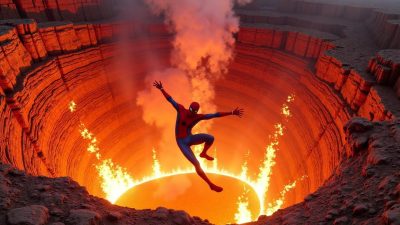
Spider-Man of Yemen Dies After Fatal Fall into Volcanic Crater
Constantvpn.com – Al-Qaqa Ibn Antar, a 30-year-old free-climber celebrated in local circles as the “Spider-Man of Yemen,” perished in a dramatic accident involving a volcanic crater in the country’s southwest region. Local authorities confirmed that the incident occurred on Friday when Antar attempted to scale the steep rock faces of the Hardah Dam crater without safety gear. The climb, which had drawn attention for its vertical challenge, ended in tragedy as he plummeted into the depths of the crater, marking a somber end to his adventurous career.
Heroic Rescue Amid Rugged Terrain
Following the fall, Yemen’s Civil Defence Authority praised the “heroic efforts” of its water rescue team, which successfully retrieved Antar’s body from the crater’s bottom. The operation, deemed “one of the most difficult and complex field rescue missions,” involved scaling the crater’s near-vertical walls using specialized climbing equipment. A cage was then winched down to the crater’s edge, where divers located the body at a depth of 30 meters beneath the water’s surface. The team’s ability to navigate harsh environmental conditions and extreme temperatures within the volcanic structure was highlighted in their statement, released on Sunday.
“Despite the perilous conditions, our rescue team demonstrated exceptional field capabilities, overcoming rugged terrain and high heat to complete the operation,” said the Civil Defence Authority in a statement.
Antar’s death has sparked discussions about the risks of extreme climbing in Yemen. Known for his daring acrobatic stunts, he had built a significant following on social media, where his videos of climbing feats had captivated audiences. His latest attempt to conquer the Hardah Dam crater, a site renowned for its striking geological features, was seen as a bold move. The crater, part of the Hardah Dam in Dhale province, is not only a natural landmark but also a popular destination for adventurers seeking thrills. However, the incident underscores the dangers of venturing into such environments without proper safety measures.
A Legacy of Risk and Resilience
Antar’s passion for climbing had earned him a reputation as a fearless athlete. His videos often showcased feats that pushed the boundaries of physical limits, such as navigating precarious rock formations and performing high-risk maneuvers. Friends and fellow climbers described him as a “natural performer,” someone who thrived on the adrenaline of the climb. The tragedy of his fall into the volcanic crater has left many in shock, with social media platforms flooded with tributes to his courage and skill.
Video evidence of the fall, which has gone viral, depicts Antar ascending the crater’s steep walls before losing his grip and tumbling into the sulfur-rich lake below. The footage, shared widely online, captures the moment of his descent, emphasizing the unpredictability of the terrain. Climbers and geologists note that the Hardah Dam crater, formed by volcanic activity, presents unique challenges. Its walls are smooth and slick, with narrow ledges that require precise movements. The sulfur lake at the crater’s base adds another layer of danger, as the water is hot and corrosive, potentially complicating rescue efforts.
The crater, located near the town of Dhale, has become a focal point for both tourists and adventurers. Its dramatic appearance, with steep rock faces and a shimmering lake, has made it a symbol of Yemen’s rugged natural beauty. However, the recent incident has raised questions about the safety protocols in place for climbers. While the Civil Defence Authority emphasized the team’s competence, some critics argue that more precautions could have been taken to prevent the accident. Antar’s absence from the climbing community is a significant loss, as his presence had been a source of inspiration for many.
Volcanic Crater as a Natural Wonder
The Hardah Dam volcanic crater, a feature of Yemen’s unique landscape, has long attracted climbers and tourists alike. Its formation, attributed to ancient volcanic activity, has created a natural amphitheater with dramatic rock formations and a crater lake that glows with a faint yellow hue due to sulfur compounds. The area’s popularity has grown in recent years, with visitors eager to experience the challenge of scaling its walls. Yet, the incident serves as a stark reminder of the hazards associated with such pursuits.
Antar’s final climb was part of a series of attempts to explore the crater’s hidden features. While the exact details of his route remain unclear, the footage suggests he was close to the top when the accident occurred. His fall into the crater, which is 120 meters wide, marked the end of a journey that had begun years earlier. Climbers in Yemen often tackle such challenges without full safety gear, relying on their experience and physical prowess. Antar, however, was known for his meticulous preparation and daring spirit, qualities that had made him a standout figure in the local climbing scene.
Impact of the Incident
News of Antar’s death has spread rapidly, drawing attention to the risks of extreme sports in Yemen. His social media presence, which had amassed thousands of followers, has amplified the tragedy, with fans mourning his loss. The incident has also prompted a review of safety standards for climbing in the region, particularly around the Hardah Dam crater. Officials are considering stricter guidelines to protect adventurers, ensuring that future climbs are less perilous.
Meanwhile, the crater itself remains a symbol of both beauty and danger. Geologists and environmentalists have noted its ecological importance, as the sulfur lake supports a unique ecosystem. The combination of volcanic activity and the surrounding landscape has created a habitat that is both fascinating and hazardous. Antar’s fall into this environment highlights the delicate balance between human ambition and nature’s unpredictable forces.
Yemen’s climbing community is now reflecting on the incident, with many expressing admiration for Antar’s bravery while acknowledging the need for better safety measures. The Civil Defence Authority’s rescue mission, though successful, has underscored the complexity of such operations. As the body was recovered, the crater’s depths became a testament to the risks taken by those who seek to conquer its natural challenges.
The story of Al-Qaqa Ibn Antar is a reminder of the lives that are shaped by the pursuit of adventure. His legacy, though cut short, will continue to inspire climbers and adventurers worldwide. The volcanic crater, with its timeless allure, will remain a place of both wonder and reflection, honoring the risks that define human exploration.
