Goalkeeper tactical timeouts to be banned at World Cup
Goalkeeper Tactical Timeouts to Be Banned at World Cup
Constantvpn.com – In a significant shift for international football, FIFA’s referees’ chief, Pierluigi Collina, has announced that goalkeepers will no longer be allowed to trigger tactical timeouts during matches at the 2026 World Cup. This decision aims to curb a growing trend where teams exploit the moment of an injured goalkeeper to disrupt the opposition’s momentum. Under the new rule, players will be restricted from leaving the field to confer with their coaches when a goalkeeper is down, effectively halting the so-called “goalkeeper tactical timeout” tactic.
Background of the Controversy
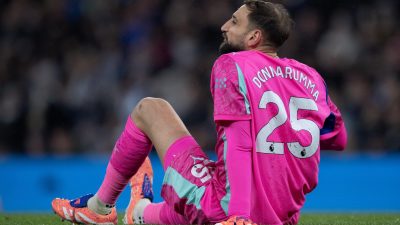
The debate over this practice has intensified in recent years, with managers using it to gain an advantage. During a Premier League encounter between Leeds United and Manchester City, manager Daniel Farke publicly criticized Gianluigi Donnarumma for feigning injury. Farke claimed the Italian goalkeeper was manipulating the rules to create a pause in play, allowing his team to regroup. The scenario typically involves the goalkeeper sitting on the turf, signaling for the physio, and then the rest of the players swiftly heading to the technical area for a team discussion. Once the coach delivers instructions, the goalkeeper rises to continue the game, often leaving the opposition scrambling to adjust.
Collina, who has been leading the review of this issue, emphasized that the change is a response to widespread concerns. “We had a workshop with all the coaches of the 48 teams, and we made it clear that referees will take charge,” he stated. The decision was reached after analyzing how this tactic impacts the flow of matches. While goalkeepers are entitled to genuine injuries, the current system allows players to use the moment as a strategic pause, which Collina calls “a form of unfair advantage.”
VAR Protocol Changes for Attacking Fouls
Alongside the timeout rule, the International Football Association Board (Ifab) has approved a modification to VAR protocols. This update permits reviews of attacking fouls that occur before the ball is in play, addressing a gap in the current system. The change is expected to enhance fairness by allowing officials to scrutinize critical moments that may affect the outcome of a game.
Collina highlighted the importance of this adjustment, noting its potential to prevent controversial decisions. He referenced a notable incident from March, when England drew 1-1 with Uruguay at Wembley. During a corner kick, Adam Wharton blocked Jose Maria Gimenez’s run before the ball was struck, enabling Harvey Barnes to score. The VAR, under the new protocol, could now review this foul and potentially award a retake, ensuring that such tactical advantages are minimized.
This development aligns with Collina’s vision of making the game more transparent. “We think it’s very unfair that the goal was given when the defender was prevented from defending,” he said. The updated VAR rules will apply to goals, penalty kicks, and disciplinary actions that occur during corners or free kicks, providing referees with more authority to correct errors in real-time.
Implementation and Challenges
While the new rules are set to take effect at the 2026 World Cup, their effectiveness remains a topic of discussion. Collina acknowledged that the three-minute hydration break in each half might still offer teams opportunities to regroup, even if the timeout tactic is banned. However, he stressed that referees will be proactive in enforcing the rule, without issuing yellow cards or penalties for players who attempt to speak to their coaches.
Collina also drew parallels with the National Women’s Soccer League (NWSL), which introduced a similar temporary measure earlier this year. The NWSL’s approach requires both teams’ players to stay in position or gather in the center circle when a goalkeeper is injured. While this prevents players from leaving the field, it doesn’t fully address the issue of using the tactic to disrupt play. “It’s quite weird that only the referee, the physio, and the goalkeeper remain on the pitch,” Collina remarked, highlighting the imbalance in the field during these pauses.
As part of the implementation, leagues have been encouraged to conduct trials during the 2026-27 season to refine the approach. Collina believes that these trials will help determine the best way to enforce the rule while maintaining the game’s integrity. The final decision to ban the tactic at the World Cup was made after evaluating feedback from coaches and officials, ensuring a balanced approach that minimizes disruption without stifling legitimate strategy.
Impact on Team Strategies
The new rules will force teams to adapt their strategies, particularly in situations involving goalkeepers. Previously, teams could use the injured goalkeeper as a trigger for tactical pauses, allowing them to regroup and alter their approach. With the timeout banned, players will need to rely on other methods to communicate with their coaches, such as quick signals or brief exchanges during breaks in play.
Collina emphasized that the goal is to restore the natural flow of the game. “The goalkeeper has the right to be injured, but the players do not have the right to leave the field for a timeout,” he said. This distinction is crucial, as it ensures that the advantage is not unfairly extended to teams exploiting the situation. The rule also aims to reduce the time wasted during matches, ensuring that play remains continuous and that teams are not given undue opportunities to disrupt the opposition.
Despite these intentions, the success of the rule will depend on how referees and players react. Collina expressed confidence that the changes will be effective, citing the support from coaches during the workshop. “We are very confident that Ifab will provide a clear clarification before the World Cup, allowing VAR to intervene just before the ball is in play,” he added. The measure will be reassessed after the tournament to evaluate its impact and make further adjustments if needed.
Broader Implications for Football
The decision to ban goalkeeper tactical timeouts reflects a broader effort to modernize football’s rules and reduce tactical advantages. By introducing this change, FIFA aims to make the game more fair and efficient, particularly in high-stakes tournaments like the World Cup. The updated VAR protocol also underscores the importance of technology in upholding consistency and accuracy in decision-making.
Collina’s comments highlight the growing emphasis on accountability in football. “This is a step forward in ensuring that all teams play on equal terms,” he said. The new rules will require players and coaches to be more strategic in their communication, as they can no longer rely on the goalkeeper’s injury as a convenient pause. This shift is expected to lead to more dynamic matches, where teams must think on their feet and adapt quickly to changing circumstances.
As the 2026 World Cup approaches, the focus will be on how these rules are applied in practice. Collina’s plan to involve all teams in the process ensures that the decision is well-received and understood. While the outcome of the tournament will determine the long-term success of the changes, the immediate impact is likely to be felt in the way teams manage their strategies and interactions with officials.
