Hundreds arrested and dozens of police injured after Champions League riots in France
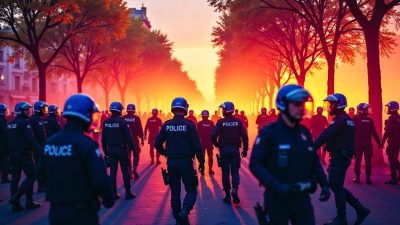
Hundreds Arrested and Dozens of Police Injured After Champions League Riots in France
Constantvpn.com – Following Paris St-Germain’s (PSG) dramatic Champions League final victory over Arsenal, Paris experienced widespread unrest as football fans clashed with security forces. Over 219 individuals were injured during the chaos, with eight in critical condition, according to Interior Minister Laurent Nuñez. The minister emphasized that the country’s ability to maintain public order was tested, while also highlighting the balance between freedom of assembly and controlling excessive behavior.
Security Measures and Disruptions
Authorities deployed thousands of officers to manage the situation, which disrupted bus, train, and rail services in the capital. Fifty-seven police personnel sustained injuries during the turmoil. Nuñez noted that 780 people were arrested in total, with more than 450 currently in custody. The scale of the operation underscored the severity of the riots, which began after the match concluded and escalated into a full-blown public disorder.
The unrest reached a tragic turn when a 24-year-old man was found dead following an accident on Paris’s ring road. Rioters had attempted to block the area overnight, creating dangerous conditions for pedestrians and motorists. While the exact circumstances of the death remain under investigation, some witnesses reported that the victim was riding a motorcycle when it collided with concrete blocks. A separate incident in another part of the city left a teenager critically injured during a brawl, though it is unclear if they were directly involved in the football-related disturbances.
Victory Celebrations and Chaos
Paris’s iconic landmarks became scenes of both celebration and chaos as the city marked PSG’s triumph. The celebrations commenced at the Eiffel Tower around 18:00 local time, drawing thousands of fans who lined the streets to cheer. However, the jubilant atmosphere quickly turned chaotic, with reports of flares being set off, electric bikes burning on roads, and shopfronts being smashed. Police were forced to use tear gas to disperse crowds in the city center, a measure that intensified as the unrest spread.
PSG players and staff, including the team’s captain, participated in the festivities by touring the Champ-de-Mars area adjacent to the Eiffel Tower. They later attended a presidential reception hosted by French President Emmanuel Macron at the Elysee Palace. Despite the public celebrations, the club’s home stadium, Parc des Princes, is set to host further festivities in the coming days. These events are expected to draw similar large crowds, though organizers have increased security measures to prevent a repeat of the previous night’s chaos.
Context and Minister’s Response
The minister’s comments on Sunday reflected the urgency of the situation. “We are a great country for maintaining public order,” he stated, stressing that security forces would remain “firm” in their approach. “We allow freedom of assembly, but not excesses,” he added, pointing to the need to control the behavior of those who sought to disrupt peace. This sentiment was echoed by the Paris prosecutor’s office, which confirmed that the arrests were provisional and that the offenses ranged from attacks on officers to property damage, theft, and illegal weapon possession.
Similar disturbances had occurred the previous year when PSG claimed the same trophy. Last year’s celebrations had turned deadly, with a man killed by a falling beam during the revelry. This year’s riots, however, saw an even greater mobilization of police, with a total of 6,000 officers deployed to ensure safety. The Champs-Élysées, a major thoroughfare in Paris, was particularly affected, as fans swarmed the area shortly after the match ended. The high volume of people created bottlenecks, with some groups vying for dominance over the streets and others resisting control.
Political Reactions and Public Sentiment
Far-right leader Marine Le Pen took to X to comment on the riots, stating, “Only in France does a football club’s victory spark riots.” She added, “Only in France does everyone feel compelled to lock themselves in their homes on the evening of a victory to avoid being confronted with violence.” Her remarks highlighted the perception that PSG’s success had become a catalyst for societal tensions, with some critics arguing that the club’s popularity exceeds its responsibilities.
While the majority of attendees were there to celebrate, Nuñez acknowledged that a smaller group of individuals, not affiliated with PSG, had caused disturbances. These troublemakers, he claimed, were intent on creating chaos, prompting security forces to take decisive action. The minister’s insistence on a firm response has sparked debate, with some calling for a more lenient approach to prevent further escalation. Meanwhile, the death of the 24-year-old near Porte Maillot has raised questions about the extent of the violence and its impact on daily life in Paris.
Broader Implications and Future Outlook
Experts have noted that the riots reflect a broader pattern of public sentiment toward PSG’s success. The team’s recent victories have not only brought pride to fans but also ignited frustrations among those who feel the city’s infrastructure is strained by large gatherings. The situation has also prompted discussions about the role of social media in amplifying unrest, with some arguing that online calls to action contributed to the physical confrontations in the streets.
As the city recovers from the chaos, authorities are working to assess the damage and determine the causes of the riots. The Interior Ministry has pledged to review its security strategies for future matches, aiming to prevent similar incidents. Meanwhile, fans and residents continue to reflect on the night’s events, with some expressing relief at the conclusion of the celebrations and others lamenting the loss of life and property. The incident has left a lasting mark on Paris, serving as a reminder of the power of sports to unite and divide in equal measure.
The French government is also considering long-term measures to address the root causes of the unrest, such as improving public spaces and ensuring better crowd management. Nuñez has called for unity, urging citizens to support security efforts while celebrating the team’s achievements. As the investigation into the 24-year-old’s death continues, the focus remains on understanding the dynamics that led to such widespread violence, even as the city prepares for its next major event.
With the French president’s reception and the club’s stadium set to host further festivities, the challenge for authorities lies in balancing celebration with control. The Paris police have already made 480 arrests, with 277 individuals held in custody, including 82 minors. These figures highlight the extent of the disorder but also the effectiveness of the security response. As the city moves forward, the legacy of the Champions League riots will remain a topic of discussion, both in the streets and in the corridors of power.
