Afghanistan women can return to competition
Afghanistan Women Can Return to Competition
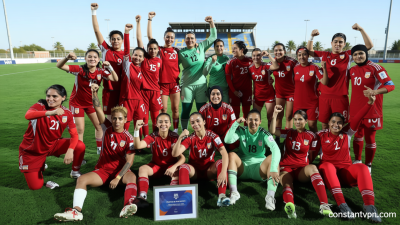
Afghanistan women can return to competition – FIFA has granted the Afghan women’s football team the opportunity to rejoin international competitions after years of disruption. The organization’s recent approval allows the team to participate in official matches, marking a pivotal moment for Afghan female athletes. Former captain Khalida Popal, a key figure in the team’s history, emphasized that this development will elevate the squad as a beacon of perseverance in the face of adversity.
A New Chapter for Afghan Football
The return of Afghan women to the global stage comes after a prolonged hiatus, with their last competitive match dating back to December 2018. The Taliban’s resurgence in 2021 imposed strict limitations on women’s rights, including a prohibition on participating in sports. This policy pushed many female players to seek refuge abroad, creating a diaspora of talent that has since been nurtured through international support. Now, with FIFA’s intervention, these athletes can once again represent their homeland on the field.
Previously, FIFA’s regulations required teams to be officially recognized by their national federation to compete in global tournaments. This posed a challenge for Afghan Women United, as the Afghanistan Football Federation had not acknowledged the team due to the Taliban’s restrictions. However, a critical amendment to FIFA’s governance framework, passed during a council meeting in Vancouver, provides a pathway for teams to gain recognition even when their member association fails to support them. The change permits FIFA to approve the registration of a national or representative team under exceptional circumstances, ensuring that players are not excluded from international play due to factors beyond their control.
Hope and Resilience in the Face of Adversity
“Our team has always been known as an activist team,” Popal explained in an interview with Reuters. “But this opportunity, with the right support from FIFA, will be the time for us to also show some skills and develop the youth talent in the diaspora.” She highlighted the dual purpose of the team’s return: to demonstrate the resilience of Afghan women and to foster growth for the next generation. Despite the challenges of playing under the Taliban’s regime, Popal believes the team can serve as a voice of encouragement for those still within Afghanistan.
“I know it’s going to be tough because Afghan women inside Afghanistan will struggle to be part of that. But if we can still be the voice for them to send out hope messages and show them our support that you are not forgotten, then we will continue to use our platform.”
The amendment not only opens doors for Afghan Women United but also sets a precedent for other teams facing similar barriers. FIFA President Gianni Infantino acknowledged the significance of this initiative, stating, “We are proud of the beautiful journey initiated by Afghan Women United and, with this initiative, we aim to enable them, as well as other FIFA member associations that may not be able to register a national or representative team for a FIFA competition, to make the next step.” This statement underscores FIFA’s commitment to supporting underrepresented teams and ensuring equitable access to international competition.
A Global Network of Talent
Over the past few years, a network of Afghan female players has formed across multiple countries. More than 80 women’s footballers from Afghanistan now reside in Australia, Europe, the United States, and the Middle East, many of whom were among the 25 players who had signed contracts before the Taliban’s takeover. These players have continued their training and development abroad, maintaining their connection to the sport despite the challenges of displacement. FIFA has organized regional selection camps in England and Australia, with a final training camp planned in New Zealand in June, to consolidate this talent and prepare for future competitions.
The team’s return to action is already underway. In October and November 2025, Afghan Women United competed against Chad, Tunisia, and Libya in Morocco, showcasing their progress on the international stage. Their first victory came in November when they defeated Libya, a moment of pride for the squad and their supporters. These matches, part of the FIFA United Women’s Series, have provided a platform for the team to gain visibility and experience, paving the way for more opportunities in the months ahead.
Future Competitions and Strategic Goals
Although Afghanistan will not be eligible to qualify for the 2027 Women’s World Cup, the team is poised to participate in the 2028 Olympics qualifiers. This is a crucial step forward, as it allows Afghan women to compete in high-profile tournaments and reestablish their presence in global football. The planned June training camp in New Zealand will serve as a focal point for the team’s preparation, bringing together players from different countries to strengthen cohesion and readiness.
FIFA’s decision reflects a broader effort to support teams in challenging environments. By granting recognition to Afghan Women United, the organization has demonstrated its willingness to adapt its policies to accommodate the unique circumstances of displaced athletes. This move also highlights the importance of international solidarity in preserving the rights of women in sports, even in regions where such rights are under threat.
The Path Forward
While the road to full integration into international football may still have hurdles, the current developments offer a glimmer of hope. The team’s participation in the United Women’s Series has been a significant achievement, allowing them to compete against recognized opponents and build confidence. As they prepare for the 2028 Olympic qualifiers, the focus will be on leveraging their combined strength and experience to make a lasting impact.
Popal’s vision for the future includes not only competing in international matches but also inspiring young Afghan women to pursue football. Her words echo a broader message: that despite the obstacles, the spirit of the game remains unbroken. With FIFA’s backing, the team can continue to advocate for women’s rights through sport, proving that football can be a powerful tool for change and resilience.
As the team moves forward, their story serves as a testament to the perseverance of Afghan women in the face of political and social challenges. The return to competition is more than a sporting milestone—it is a symbol of hope, unity, and the enduring strength of a community that refuses to be silenced.
Stay updated with the latest football news directly on your mobile device. Follow the developments of Afghan Women United and other teams as they navigate the evolving landscape of international football.
