
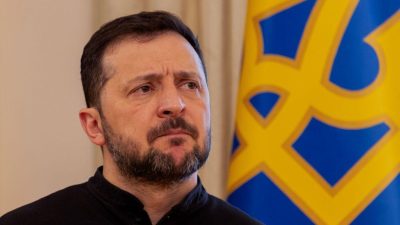
Zelensky Says Airlines Should Avoid Russian Airspace
Constantvpn.com – As Ukrainian drone strikes penetrate ever deeper into Russian territory, President Volodymyr Zelensky has issued a direct safety directive to the global aviation sector. In a nightly video address delivered Tuesday, he told carriers, insurers, and airport authorities that Russian skies now carry a sustained, elevated hazard that commercial operators must treat as effectively closed. The message is unambiguous: Zelensky says airlines should avoid routing through Russian airspace until the threat environment changes.
“We want to warn every airline that uses Russian airspace, every insurer, everyone who still uses key Russian airports: the Russian sky is becoming completely dangerous.”
The remark represents a clear step up in tone. Ukraine has been hitting targets inside Russia for months, but Zelensky framed the present phase as qualitatively different — drone volume and depth have crossed a threshold where the risk to any transiting aircraft is no longer hypothetical. He stressed that no passenger jet has been targeted and that Ukraine has no intention of threatening civilian aviation, yet the density of overhead drone traffic makes the danger concrete rather than theoretical.
Putin Dismisses the Warning as Statecraft
Vladimir Putin, speaking to reporters at the Shanghai Cooperation Organisation summit in Kyrgyzstan, rejected the advisory outright. He labelled Zelensky’s remarks a “declaration of state terrorism” and vowed that Russia would press on with its own intensified strike campaign against Ukraine. Diplomacy, he told journalists, was off the table: “They are asking us to resume negotiations… but you don’t negotiate with terrorists.”
The exchange came against a backdrop of escalating Russian bombardment. Heavy strikes killed 12 people on Tuesday, and further attacks struck Odesa, Sumy, and Kyiv on Wednesday. Kyiv and its surrounding oblast had endured seven consecutive days of assault at the time of reporting. Russia’s defence ministry announced preparations for what it called “massive” strikes aimed at Ukrainian power-generation infrastructure.
Who Still Crosses Russian Skies, and What It Means Operationally
Since Moscow’s full-scale invasion began in February 2022, most Western carriers have rerouted entirely around the eastern European corridor, and Ukraine has kept its own airspace shut to civilian traffic. Nevertheless, a significant share of global aviation still transits Russian skies. Airlines based in China, Turkey, and several Gulf states continue using the route because it saves meaningful flight time and fuel on long-haul sectors linking Asia and Europe. Those carriers — and the insurers underwriting their policies — are precisely the audience Zelensky’s warning addresses.
Operational disruption is already tangible. Ukrainian strikes have hit energy facilities deep inside Russia and have repeatedly struck logistics depots belonging to Wildberries and Ozon, the country’s two largest online retailers. At Russia’s major airports, particularly the four hubs serving Moscow, drone alerts have triggered repeated suspensions of arrivals and departures. Under the air-defence protocol known as the “Kovyor” (carpet) plan, any drone detected in a defined sector automatically halts all flights in that zone, regardless of whether a specific aircraft is in immediate danger. Several cancellations were logged on Wednesday alone.
Risk Assessments and Historical Precedent
Osprey Flight Solutions, an aviation risk advisory firm, issued a client alert noting that while most Ukrainian drone and missile strikes are expected to fall within roughly 300 kilometres (186 miles) of the border, daily attacks at greater depth are almost certain to persist through the year. The firm assessed a “realistic possibility that the frequency of Ukrainian strikes will continue to increase in the short term deep inside Russian territory” and warned that miscalculation or misidentification of aircraft remains likely in areas adjacent to the conflict zone.
The stakes of operating commercial aircraft near an active war zone are not abstract. In July 2014, a Russian-made missile brought down Malaysia Airlines Flight MH17 over eastern Ukraine, killing all 298 people aboard. In 2025, the UN aviation body formally ruled that Russia bore responsibility for the downing; the Kremlin has consistently denied any role. More recently, in 2024, Putin offered an apology to the president of neighbouring Azerbaijan after a Russian air-defence system shot down a commercial airliner in Russian airspace, killing all aboard.
Frequently Asked Questions
Which airlines are most affected by the warning? Carriers based in China, Turkey, and Gulf states that operate long-haul routes between Asia and Europe via the northern corridor remain the primary audience. Western carriers largely rerouted after February 2022 and are less directly impacted.
Has any passenger aircraft been hit? Zelensky stated explicitly that no passenger aircraft has been targeted. The warning concerns the elevated probability of misidentification amid dense drone traffic, not a confirmed incident.
What is the “Kovyor” plan? It is Russia’s air-defence protocol under which detection of a drone in a defined sector automatically suspends all arrivals and departures in that zone, regardless of proximity to any specific aircraft. It has caused repeated flight cancellations at Moscow-area airports.
How far inside Russia are strikes reaching? Osprey Flight Solutions expects the bulk of strikes within roughly 300 km of the border but notes that daily attacks at greater depth are almost certain to continue through the year, with frequency likely to increase in the short term.