
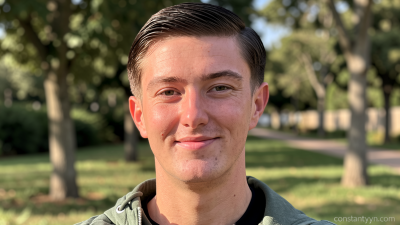
Independent Scrutiny Ordered for Hampshire Police After Fatal Handcuffing of Stabbed Student
Constantvpn.com – Hampshire Police will face a formal, independent inspection of its response procedures to serious violent incidents following the death of Henry Nowak, an 18-year-old university student who was handcuffed by officers while dying from stab wounds in Southampton. The review, commissioned by the force’s Police and Crime Commissioner, will examine how the organisation trains its personnel, structures its control-room operations, and supports front-line officers in making unbiased, life-saving decisions during moments of extreme urgency.
The inspection falls under the remit of His Majesty’s Inspectorate of Constabulary and Fire & Rescue Service (HMICFRS), the statutory body responsible for auditing police and emergency-response forces across England and Wales. Its findings will evaluate whether the force’s existing frameworks adequately prepare officers to distinguish between a perpetrator and a victim in the chaotic seconds after a knife attack — a distinction that proved fatal in Nowak’s case.
What Happened on the Night of 3 December
Nowak, a first-year student at the University of Southampton originally from Chafford Hundred in Essex, was repeatedly stabbed in Southampton by Vickrum Digwa. When police arrived at the scene, Digwa told officers he had been the victim of a racially motivated assault. Acting on that account, officers placed Nowak — who was bleeding and dying — into handcuffs before he was taken to hospital, where he later died.
Footage of the handcuffing was subsequently released and ignited widespread public fury. Protests erupted in Southampton, turning into violent disorder, and the incident became a flashpoint in ongoing national conversations about policing practice, racial bias in emergency response, and the regulation of knife crime. The Prime Minister commented that the arrest footage raised “serious questions for police,” while the case prompted parliamentary scrutiny of how officers are trained to assess who is the victim and who is the aggressor in a knife incident.
Commissioner’s Rationale for the Inspection
Donna Jones, the Hampshire Police and Crime Commissioner, formally requested the HMICFRS review, framing it as a necessary step to restore public trust in the force. She emphasised that the family of the deceased and the wider community are entitled to clarity about how the organisation functions under pressure.
“This inspection will provide an independent assessment of the force’s training, processes and culture, including the handling of allegations of racially aggravated assault,” Jones said. “Henry’s family deserve answers, and the public deserve reassurance that their police service is equipped to recognise victims and provide the highest standard of care when it matters most.”
She added that officers must be guaranteed access to accurate information, appropriate training, and institutional support when making split-second decisions that determine whether a person lives or dies.
“The public must have confidence that police officers receive the right information, the right training and the right support to make critical decisions,” Jones stated.
Scope and Boundaries of the Review
The inspection will trace the full operational chain of a police response to a serious-violence call: from the moment a member of the public phones the control room, through dispatch decisions, to the initial attendance of officers at the scene. Specific areas of focus include:
How call handlers interpret and prioritise reports of knife or stab incidents; the speed and accuracy of dispatch decisions; the decision-making and risk-assessment training provided to officers before they attend; and the mechanisms in place to help officers identify where immediate intervention — such as administering first aid or applying tourniquets — is required rather than where restraint is appropriate.
Crucially, the review will not examine the individual conduct or actions of the officers who attended the 3 December incident involving Nowak. That matter is the subject of a separate investigation by the Independent Office for Police Conduct (IOPC), which handles complaints about officer behaviour. The Commissioner’s office stated that the inspection’s scope was deliberately calibrated to avoid any overlap or interference with ongoing judicial proceedings or conduct investigations.
Judicial Outcome and Broader Implications
In June, Vickrum Digwa was sentenced to life imprisonment with a minimum term of 21 years. The presiding judge rejected Digwa’s defence of self-defence, finding that his account of the confrontation was not credible. The sentencing underscored the gravity of the original attack and reinforced public demand for accountability at every stage of the police response that followed.
The Nowak case has become emblematic of wider anxieties about how British policing handles racially diverse communities in emergency situations. It has intensified debate over whether existing training adequately addresses implicit bias, whether control-room protocols allow sufficient time for officers to verify who is the victim before applying restraint, and whether legislative reform of knife-carrying offences would reduce the frequency of such incidents altogether.
The HMICFRS inspection is expected to produce a public report with recommendations. Forces across England and Wales typically have a defined period to respond to such findings, and the outcomes may influence national training standards for all police organisations, not just Hampshire. For Nowak’s family and for the residents of Southampton who witnessed the aftermath, the inspection represents a formal acknowledgment that the sequence of events on that December night was not simply bad luck but a failure of process that can, and should, be corrected.
Related Reading
Frequently Asked Questions
What is Inspectors to assess police after Henry?
Inspectors to assess police after Henry is the main topic of this guide. The article explains the context, practical details, and next steps readers should understand.
Why does Inspectors to assess police after Henry matter?
Inspectors to assess police after Henry matters because readers are looking for a useful answer, not just a short summary. Good content should match search intent and help them decide what to do next.