
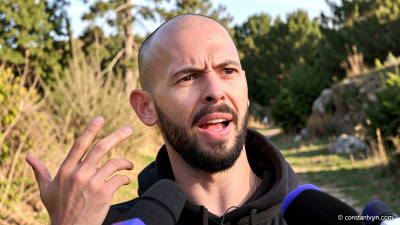
Tate Brothers’ Lawyers Reveal Social Media Wealth Was Staged for Views
Constantvpn.com – Two men currently locked in a Florida detention facility have, through their own legal team, effectively told a court that the gleaming supercars, the private jets, and the $50-million superyacht that populate their Instagram feeds were never theirs to begin with. The revelation lands at a critical juncture: Andrew Tate and his younger brother Tristan are fighting to secure bail while British authorities press extradition proceedings built on dozens of sexual-crime allegations that both men categorically reject.
The Business of Being “Uberwealthy”
In a formal court filing, the brothers’ representatives laid out what they describe as the commercial logic behind the spectacle. Their enterprises, they explain, revolve around instructing men on how to generate income, and the entire operation runs on one currency: online attention. The more extravagant the post, the more views and likes it attracts, and the more revenue flows back into the business.
“The outrageousness of the posts by them and about them is the point. The more hyperbolic and outlandish the post, the more likely it will generate views and likes, which in turn generates income. In short, they are playing a role.”
The filing goes further, arguing that Andrew Tate has at times deployed hyperbole purely for “comedic effect,” with no expectation that audiences would parse the statements as literal inventory lists. The superyacht that prosecutors singled out, the submission states, was never in the Tates’ name. They were compensated for promoting it. The Aston Martin and Bugatti vehicles that appear in their content were rented for shoots, not purchased for a driveway.
Prosecutors’ Flight-Risk Argument
The Crown Prosecution Service, which brought the case, has built its opposition to bail around the notion that the brothers represent a genuine flight risk. Prosecutors point to social media posts in which Andrew Tate allegedly mocked the prosecutors themselves and floated the idea that he could simply vanish by assuming another identity. They also cite what they characterize as a “propensity to intimidate vulnerable complainants” and argue that both men “have significant resources available to them, both in terms of money and in social media networks.”
The government’s submission frames the wealth question bluntly:
“The government alleges that the Tates are a risk of flight based on their social media claims that they are ‘self-proclaimed billionaires’ who own ‘high-end vehicles, private jets, and a custom $50-million-dollar superyacht and have unrestricted access to traditional funds, cryptocurrency, and bitcoin.'”
The brothers’ lawyers push back on the evidentiary weight of those claims, noting that prosecutors have not demonstrated the grandiose assertions are factually accurate. In their telling, the gap between the curated online persona and the actual balance sheet is not a cover-up but a feature of the brand.
Arrest, Charges, and the Road to Extradition
US Marshals Service agents took the two men into custody in Miami last month after British prosecutors unveiled 38 additional charges, including rape counts and offences connected with sex trafficking. Those new counts bring the total number of allegations facing the pair to 59, spanning a period from July 2010 through August 2017. Both men have denied every charge.
The extradition framework means the brothers remain in US custody while UK authorities complete their paperwork and the Florida court weighs whether to grant interim release. The flight-risk debate is therefore not abstract: it determines whether two men with millions of followers and a history of posting from exotic locations can walk out of a county jail pending the outcome of a process that may take months.
Background: From Luton to Global Infamy
Andrew, 39, and Tristan, 38, are dual British-American citizens who spent part of their childhood in Luton, a town in Hertfordshire north of London. Andrew first entered the public eye after appearing on the UK edition of the reality show Big Brother in 2016. A former kickboxer, he subsequently built a following numbering in the millions across several platforms, posting videos that flaunt what looks like an ultra-luxurious lifestyle. He has described himself publicly as a “misogynist,” a label that has become inseparable from his brand and has drawn sustained criticism from commentators, academics, and fellow creators.
The brothers’ content has long featured luxury automobiles, designer wardrobes, and exotic travel. The court filing now clarifies that at least some of those images were commercial arrangements rather than snapshots of personal ownership. Whether that distinction satisfies a judge weighing bail, or whether prosecutors will simply argue that the scale of the deception itself evidences the capacity to flee, remains to be seen in the next round of hearings.
What is clear is that the episode has sharpened a broader question about influencer culture: when a public figure’s entire commercial model depends on projecting a lifestyle that exceeds the actual one, where does marketing end and misrepresentation begin? The Tate brothers’ lawyers have answered that question for their clients. The court will decide whether the answer is sufficient to keep them behind bars until the extradition process concludes.
Related Reading
Frequently Asked Questions
What is Andrew Tate exaggerates and did not own?
Andrew Tate exaggerates and did not own is the main topic of this guide. The article explains the context, practical details, and next steps readers should understand.
Why does Andrew Tate exaggerates and did not own matter?
Andrew Tate exaggerates and did not own matters because readers are looking for a useful answer, not just a short summary. Good content should match search intent and help them decide what to do next.