
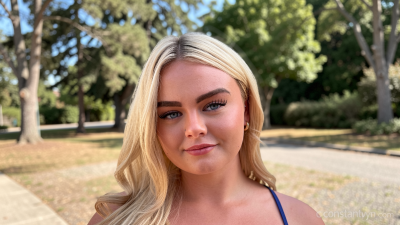
At 13, Grace Was Told Her Pain Wasn’t Real. Now She Needs Morphine Every Month
Constantvpn.com – Endometriosis affects roughly one in ten women across their reproductive years, yet the medical establishment has long operated under the assumption that teenagers simply cannot develop the condition. For Grace, a 14-year-old from Yorkshire, that assumption cost her two years of untreated agony, repeated emergency-department visits, and a growing dependence on opioid painkillers.
Her periods arrived when she was 11. By the time she turned 13, each monthly cycle brought what she describes as a sensation of heated barbed wire coiled around her abdomen. The pain was so severe that her parents had to physically carry her to the car. Hours of waiting in A&E would follow, only for her to be discharged home in tears with another prescription for stronger analgesics.
A Pattern of Dismissal
Before the correct diagnosis ever reached her, Grace cycled through a catalogue of alternative explanations from clinicians: irritable bowel syndrome, an ovarian cyst, anxiety, or simply “a bad period.” Each was wrong. Each reinforced her sense of invisibility.
“I feel like I was seen as a girl who didn’t want to go to school and was being dramatic.”
When she pressed for further investigation, doctors repeatedly told her the condition could not be endometriosis because of her age. Her GP never identified it. Neither did the first private consultant her family consulted. It was only after the family insisted on a second private opinion that a positive diagnosis finally landed.
“Even a specialist didn’t believe me. And if a specialist won’t listen to me, who will?”
The Physical Toll
Endometriosis occurs when tissue resembling the uterine lining takes root outside the womb, forming lesions and scar tissue on internal organs and surrounding structures. In Grace’s case, the monthly flare-up leaves her bedbound. Once the co-codamol and tramadol she keeps at home are exhausted, hospital admission becomes the only option, and morphine is administered regularly.
The dependency on opioids troubles her deeply.
“It’s scary, because I don’t want to have to rely on them for the rest of my life.”
Why Teenagers Are Overlooked
The misconception that endometriosis is an older-woman’s condition persists despite clinical evidence to the contrary. The condition can develop at any point once menstruation begins. In its early stages — particularly in adolescents — it frequently fails to appear on standard ultrasound scans, making imaging-based exclusion tempting but unreliable for clinicians.
Faye Farthing, a spokesperson for the charity Endometriosis UK, notes that the average diagnostic delay for older women stands at nine years. For teenagers, the delay can be just as long, compounded by the fact that early-stage lesions resist detection on conventional scans. Newer diagnostic tools are in development and aim to shorten that window, but until they reach routine clinical use, the burden of proof falls disproportionately on the patient to convince a doctor her pain is structural rather than psychosomatic.
Farthing argues that government policy, NHS commissioning, and day-to-day clinical practice all need to overhaul how menstrual health is taught to young people.
“If we are to ensure the next generation are not robbed of the future they deserve,”
she says, education about what constitutes normal versus pathological menstrual pain must reach schools and families earlier.
Fertility and the Clock
Even at 14, Grace has received warnings that her condition is likely to compromise fertility. Damage to her reproductive organs means she may be unable to conceive naturally after the age of 30. The implication is stark: she has roughly a 15-year window in which to start a family, or risk losing the option entirely.
“I have to have kids within the next 15 years, otherwise I might not be able to.”
She now receives ongoing treatment aimed at easing symptoms, but the condition itself remains incurable. The lesions and scarring do not reverse; management focuses on pain control and preserving whatever reproductive function remains.
What Clinicians Should Recognise
Dr Gail Busby, a paediatric gynaecologist who runs both NHS appointments and a private adolescent endometriosis clinic in Manchester, sees girls younger and older than Grace in her practice. She points out that nearly 80% of adolescents report painful periods, so dysmenorrhoea alone is not diagnostic. What matters is the degree to which pain disrupts daily life.
“When you’re in bed and your best friend is a hot water bottle — that’s not normal.”
Missing school regularly, skipping PE every month, withdrawing from social activities — these are the markers that should prompt a clinician to look beyond “growing pains” or anxiety. Dr Busby stresses that adolescent presentations of endometriosis are not unusual and should not be dismissed on the basis of age alone.
A Broader Conversation
The issue gained fresh public attention this week when BBC presenter Emma Barnett disclosed that she had undergone a hysterectomy to manage her own endometriosis — a procedure she said she never wanted. Her revelation underscored how far the condition can progress before definitive intervention becomes necessary, and how many women endure years of misdiagnosis before reaching that point.
For girls like Grace, the stakes are compounded by the fact that adolescence is precisely the period when educational attainment, emotional development, and social bonding are most critical. Chronic pain that keeps a teenager in bed each month does not merely cause physical suffering; it narrows the world they are supposed to be exploring. Anxiety and depression rates are measurably higher among adolescent girls living with untreated or undertreated menstrual pain, according to clinical literature cited by specialist gynaecologists.
“We should enjoy adolescence,”
Dr Busby says. The implication is that every month a teenager spends in unmanaged pain is a month stolen from the very developmental window that cannot be recovered later.
Grace’s story is not an outlier. It is, in the words of the clinicians who treat her, a predictable consequence of a diagnostic culture that still treats a 13-year-old’s complaint of severe pelvic pain as something to be explained away rather than investigated. Until that culture shifts — in training curricula, in A&E triage protocols, in GP consultation norms — the next Grace will sit in a waiting room, be handed a stronger tablet, and be told to come back next month.
Related Reading
Frequently Asked Questions
What is Doctors said I was too young?
Doctors said I was too young is the main topic of this guide. The article explains the context, practical details, and next steps readers should understand.
Why does Doctors said I was too young matter?
Doctors said I was too young matters because readers are looking for a useful answer, not just a short summary. Good content should match search intent and help them decide what to do next.