
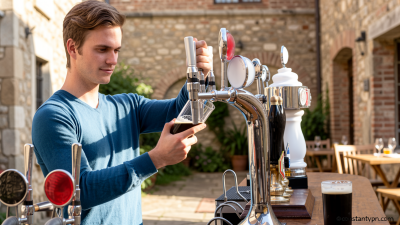
England and Wales Pubs Face a Landmark Overhaul of How Their Rates Bills Are Calculated
Constantvpn.com – The Treasury has confirmed that a formal inquiry into the valuation methodology behind business rates for pubs and hotels across England and Wales is now underway. The move, which could reshape how tens of thousands of hospitality premises are assessed for tax purposes, represents the most significant intervention in the rates framework since the post-pandemic discount era began winding down. A report is expected by March 2027, and the government has explicitly invited input from landlords, hotel operators, and independent business owners during the consultation window.
Who Leads the Inquiry and What It Covers
Jerry Schurder, previously the business rates policy lead at advisory firm Newmark UK, has been appointed to steer the review. His mandate centres on how rateable values are assigned to hospitality properties — a question that has generated sustained industry frustration for years. Findings from his work will feed directly into the next full rates revaluation scheduled for 2029, meaning the practical impact of any recommendations will land on bills roughly two years after the report is published.
James Murray, the Treasury’s financial secretary, framed the exercise as a structural correction rather than a one-off concession:
“A rethink of valuations — so that we can build a fairer system for the future.”
The Valuation Problem: Why Pubs Are Treated Differently
The core grievance among pub operators is that their premises are assessed under a fundamentally different logic than retail or office space. Where a shop or warehouse is valued primarily on floor area, a pub’s rateable value is derived from a metric called Fair Maintainable Trade. In practical terms, this means that if a pub’s turnover rises — perhaps through a successful events programme or a change in management — its rates bill climbs in tandem, regardless of whether the physical footprint of the building has changed. Industry bodies have long argued that this creates a perverse incentive structure and exposes hospitality businesses to tax volatility that their fixed-cost competitors do not face.
A Sector Under Severe Pressure
The urgency of the reform debate is underscored by closure data. The British Beer and Pub Association (BBPA) reports that 161 pubs shut their doors during the first quarter of this year across England, Scotland, and Wales — a loss the group equates to roughly 2,400 jobs. While rising rates bills are cited as a contributing factor, operators also point to increases in National Insurance contributions and the minimum wage as compounding pressures on staffing costs.
Emma McClarkin, chief executive of the BBPA, described the cumulative effect in blunt terms:
“For years pubs have paid a disproportionately higher business rates bill which has ground down their ability to keep the doors open, so this review is sorely needed and hugely welcome.”
Recent Policy Shifts and the Road to the Current Discount
The political trajectory leading to today’s review has been turbulent. Under the previous chancellor, Rachel Reeves, the government signalled its intention to phase out the pandemic-era business rate discounts entirely, with no relief remaining from April of this year. That announcement coincided with substantial upward adjustments to the rateable values of pub premises, leaving landlords facing sharply higher bills almost overnight.
After sustained pushback from the hospitality sector, the government reversed course earlier in 2026, introducing a 15% rates cut for pubs and music venues. In July, Andy Burnham then announced a further 20% reduction for pubs, social clubs, and live music venues in England, effective from April. The two measures stack: the 20% discount operates on top of the existing 15% support. However, the government specified that the relief would not extend to the “very largest” live music venues, and some operators reported confusion over whether their premises would qualify as a “pub” under the eligibility criteria. Full clarification on which businesses are covered is expected to appear in Chancellor John Healey’s first Budget later this autumn.
Reactions Across the Business and Political Spectrum
Craig Beaumont of the Federation of Small Businesses welcomed Schurder’s appointment, noting he would bring “crucial heavyweight business rates expertise into the Treasury.” At the same time, Beaumont urged the government to go beyond hospitality-specific fixes and address the wider rates architecture, including raising the small-business rates relief threshold so that more micro-enterprises fall outside the system entirely.
Tom Ironside of the British Retail Consortium also supported the review but cautioned that “it is vitally important that the needs of retailers are not overlooked” in any subsequent reform package.
From the opposition benches, the tone was sharper. Shadow Chancellor Sir Mel Stride dismissed the timing:
“Far too late for a sector this Labour government has already done its best to kill off. Tax hikes on business premises and jobs, alongside job-destroying regulation in the Employment Rights Act, have left many hospitality businesses on the brink.”
Daisy Cooper, the Liberal Democrat Treasury spokesperson, called rates reform “long overdue” but paired that endorsement with demands for an emergency VAT reduction and a reversal of recent jobs-tax changes, which she described as having “hammered hospitality in particular.”
What Comes Next
The review’s output will land in March 2027, giving Parliament and industry roughly eighteen months to digest recommendations before the 2029 revaluation cycle. For pub owners watching the closure statistics climb, that timeline is both a reason for cautious optimism and a reminder that the next two years of operating decisions will be made under the current, contested valuation rules. The autumn Budget will be the immediate next milestone, where eligibility boundaries for the stacked discounts are expected to be drawn with greater precision.
Related Reading
Frequently Asked Questions
What is Pubs and hotels could see business?
Pubs and hotels could see business is the main topic of this guide. The article explains the context, practical details, and next steps readers should understand.
Why does Pubs and hotels could see business matter?
Pubs and hotels could see business matters because readers are looking for a useful answer, not just a short summary. Good content should match search intent and help them decide what to do next.