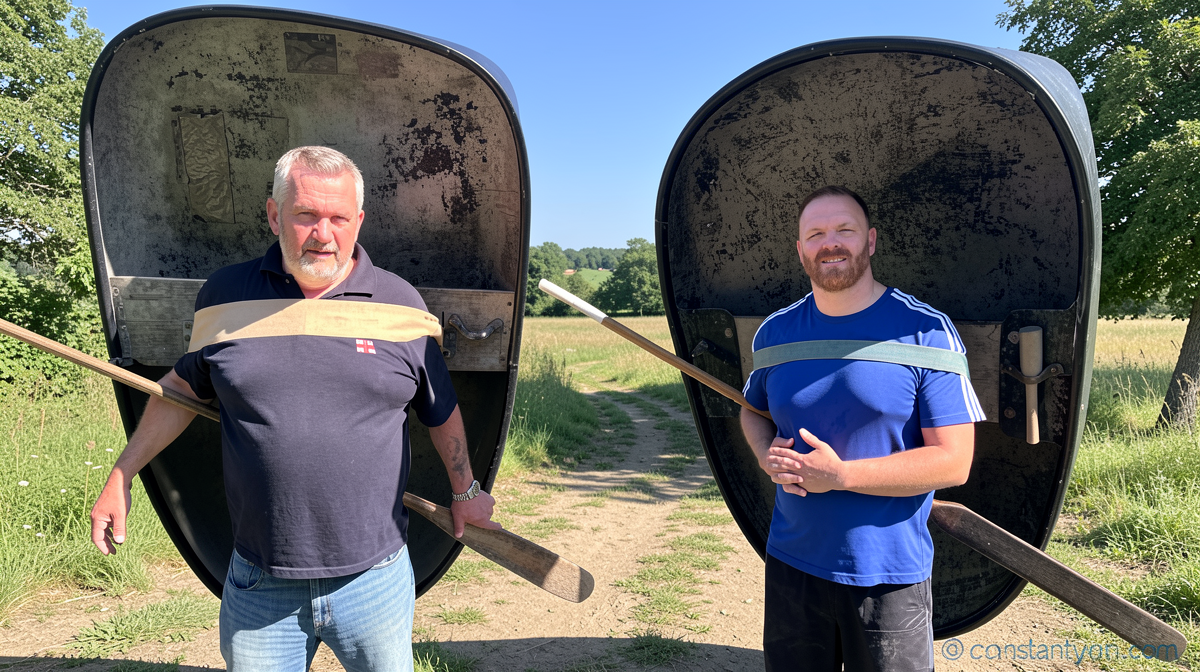
A River That Once Teemed With Life Now Yields Almost Nothing
Constantvpn.com – For three centuries, the Elias family has taken to the waters of the River Tywi in Carmarthenshire, Wales, each generation passing down the craft of coracle fishing — a practice rooted in the small, rounded wooden boats that have shaped coastal and inland life across west Wales since at least the 17th century. Now, that lineage faces an existential threat. Keith Elias, a fifth-generation practitioner of the trade, spent the entire three-month season from May through July and brought home a single fish. His great-grandfather, William Elias, would have found such a haul unthinkable on a river that once ran so dense with salmon and sewin (sea trout) that nets barely had room to swing.
The collapse in catch numbers is not anecdotal. Andrew Davies, 63, who has fished the Tywi for 38 years and chairs the Carmarthen Coracle and Netsman Association, put the situation bluntly:
“I’ve been fishing for 38 years, I’ve never seen a season as bad as this. When I first started, this river was black with fish, it was alive with fish. But it’s gone now — there’s no life in the river.”
Davies said only four coracle licences were issued for the current season, down from the dozen he recalls when he first cast his net. The four remaining fishers on the Tywi managed a combined total of 12 fish across the entire 2026 season — a number that, just a handful of years ago, represented a single night’s take.
The Weight of a Vanishing Tradition
Coracle fishing was once a genuine livelihood for communities along west Wales’s rivers. Fishermen worked at night, launching their shallow-drafted vessels from riverbanks and casting weighted nets into the current to intercept migrating salmon and sea trout. Today the practice survives largely as a heritage activity, a cultural anchor rather than a breadwinner. Even American politics once touched the tradition: President Jimmy Carter was known to enjoy fishing in Welsh rivers during visits. Yet the fishermen who keep the practice alive say recent water quality has rendered the activity functionally impossible.
“It’s been in my family for so long, I love carrying the tradition on, but it’s getting to the point where you get to the end of the season and you’re not hitting fish. You just don’t want to go,” Elias said.
What the Water Tells
Citizen scientists working for the campaign group Save the River Tywi have been conducting regular water-quality tests along the river’s course. Their findings point to contamination from multiple vectors: industrial discharge, agricultural runoff, and untreated human waste. Fishermen corroborate the data with what they observe directly — dead fish bobbing to the surface, a persistent foul odour rising from the water, and visible algal blooms that turn stretches of the river into a murky, oxygen-depleted slurry.
Local residents have also posted video footage online showing what they identify as discharge plumes entering the river near the site of Mekatek, an electronics-recycling company operating under a discharge licence issued by Natural Resources Wales (NRW). Mekatek responded by saying it shared concern over the decline in sewin populations and noted it had spent more than 40 years refining its processes to minimise environmental impact. The company invited anyone sceptical to arrange a site visit and observe operations firsthand.
Enforcement and Investment: Promises Against a Backdrop of Spills
NRW, the public body responsible for water-quality regulation in Wales, stated that it treats every pollution report seriously and confirmed a number of ongoing enforcement and compliance investigations within the Tywi catchment. Davies, however, expressed frustration that repeated reports to the agency have produced no visible corrective action.
“I think something needs to be done to clean the rivers up in Wales, people have been dodging the bullet,” he said.
The broader picture is grim. The nearby River Teifi was identified last year as one of the most polluted waterways in the United Kingdom, with 2,232 recorded spills lasting more than 22,000 cumulative hours in 2024 alone. Some of those incidents were attributed to Welsh Water, the region’s water utility. The company announced it will invest £889 million in storm-overflow infrastructure between 2025 and 2030, including six specific projects designed to reduce the volume of untreated water discharged into the Tywi. Welsh Water added that improving river water quality requires collaboration across sectors — industry, agriculture, and water services alike — rather than action by any single entity.
What Is at Stake
The Tywi’s decline is not merely a sporting or heritage concern. Salmon and sea trout are keystone species in freshwater ecosystems; their absence signals cascading damage to invertebrate populations, riparian habitats, and the water chemistry that supports all aquatic life. For the communities of Carmarthenshire and wider west Wales, the river also carries cultural weight — it appears in poetry, place-names, and the identity of towns built along its banks. Mayor of Carmarthen Russell Sparks described the river’s condition as a “really tough situation,” noting that over recent years it has been “really sad to see it, feel it and smell it,” attributing the odour to a combination of pollutants and algal blooms.
If the trend continues, the coracle — a vessel type unique to Wales and a symbol of its maritime and riverine heritage — may become a museum artefact rather than a working craft. The question facing policymakers, regulators, and industry is whether intervention can still reverse decades of cumulative damage, or whether the Tywi’s fishery, and with it a 300-year-old family tradition, will simply fade into silence.
Related Reading
Frequently Asked Questions
What is I ve caught one fish all season?
I ve caught one fish all season is the main topic of this guide. The article explains the context, practical details, and next steps readers should understand.
Why does I ve caught one fish all season matter?
I ve caught one fish all season matters because readers are looking for a useful answer, not just a short summary. Good content should match search intent and help them decide what to do next.
