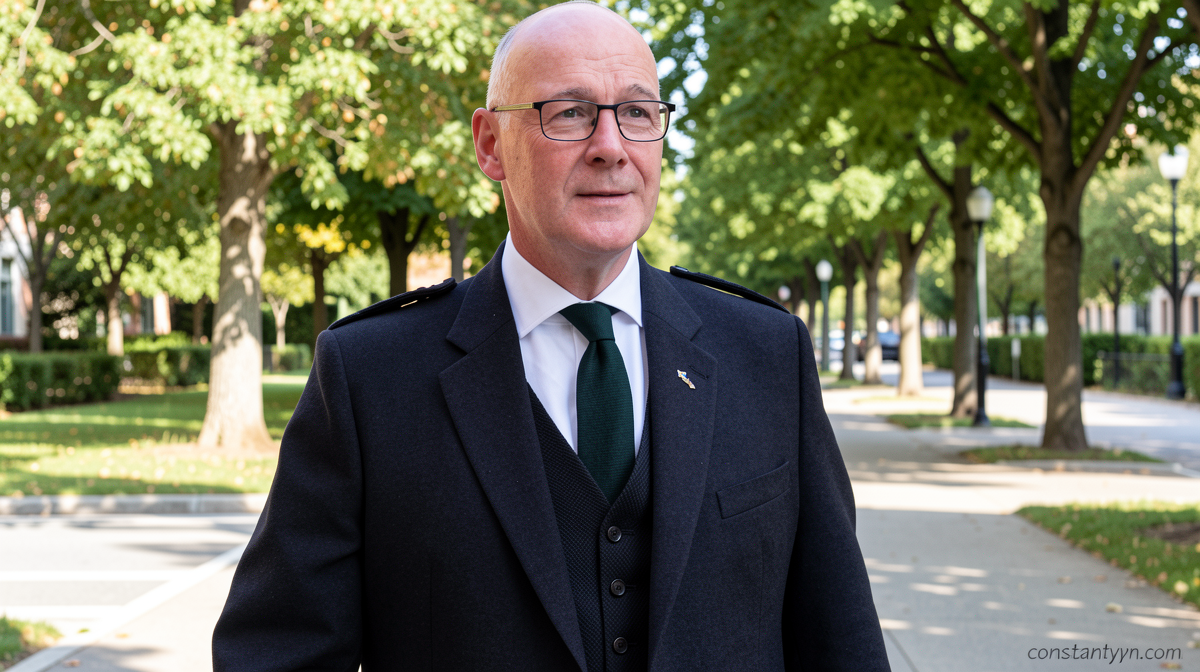
Scotland’s First Minister Faces Scrutiny Over Premium Airfare to World Cup
Constantvpn.com – Public spending in Scotland has come under fresh examination after details emerged showing that First Minister John Swinney and two senior aides paid more than £45,000 in taxpayer money for business-class seats on transatlantic flights tied to the nation’s participation in the 2026 FIFA World Cup. The revelation has reignited debate over how ministers should travel when representing the country abroad, particularly when the journeys in question fall well below the duration threshold that Scottish government rules normally require for premium cabin upgrades.
The Itinerary and the Bill
Swinney departed Edinburgh on 11 June to attend Scotland’s opening fixture in Boston, a match that marked the nation’s return to the World Cup stage after nearly three decades of absence. Three days after the game, he was scheduled to join trade discussions in Kentucky, extending the trip’s purpose beyond mere spectatorship. His private secretary, John Webster, and special adviser Colin McAllister — who serves as Chief of Staff to the First Minister — accompanied him in the premium cabin.
The full cost of the US delegations, encompassing airfare, accommodation, and daily expenses, reached £98,442. Itemised figures show that Swinney’s own ticket and Webster’s each came to £17,893, while McAllister’s business-class fare was £9,864. A further £11,800 covered economy-class seats for several additional officials travelling with the First Minister, and car hire for his visit exceeded £10,000. Sports Minister Maree Todd, who made a separate three-day trip to Miami to watch Scotland’s final group-stage match, flew economy along with four accompanying officials at a combined cost of £5,485.
A Rule Booked Around
The Scottish government’s own travel guidance stipulates that business-class travel should be reserved for flights exceeding ten hours, “unless otherwise agreed.” Direct services between Edinburgh and Boston typically last roughly seven hours — a gap that has drawn attention to whether the premium upgrade was justified under internal policy. Swinney acknowledged the pressure of tight scheduling when explaining the decision.
“Obviously, when flights have got to be booked, when there’s intense pressure on the time involved, then the costs are likely to be higher. We tried to minimise those costs.”
Justice Secretary Neil Gray offered a more expansive defence, framing the premium seating as a practical necessity for ministers who must perform duties immediately upon arrival.
“These are busy trips for ministers and it is right that they are able to arrive fresh, they’re able to arrive in a way that means that they’re able to participate and do their work immediately, so I think that’s a proportionate use.”
Gray also highlighted the diplomatic dimension of the visit, citing gains in Scotland’s “soft-power reach and the ability to make significant international connections,” and insisted the First Minister’s presence was warranted.
“It was right that the first minister and his team were there to participate and to be part of that.”
Defence From the Economy Bench
Economy Secretary Stephen Flynn, speaking at the BBC’s Scotcast live show during the Edinburgh Festival, took a more pointed tone in backing the travel choices. He argued that expecting senior politicians to endure cramped economy seating before high-stakes meetings with US counterparts would set an unhelpful standard.
“If we want our politicians to go and sit in row 46 beside the toilets and then land in Boston and then go and engage with US government officials having done so we’ll get exactly what we deserve as politicians.”
Opposition Pushback
Conservative MSP Stephen Kerr seized on the figures to criticise what he described as a pattern of cost-oversight among SNP ministers. He acknowledged public enthusiasm for Scotland’s World Cup campaign but questioned the financial discipline behind the delegations.
“Nobody begrudged SNP ministers joining the Tartan Army to cheer on Scotland men’s team at their first World Cup appearance in nearly three decades, but in typical SNP fashion costs were never kept under control.”
Kerr went further, suggesting the ministers should have borne the premium costs personally rather than drawing on the public purse.
“Swinney and his ministerial colleague were clearly happy to escape all the challenges facing them back home, but they should have met these significant costs out of their own pocket.”
Context: A Nation’s Return to the Pitch
The World Cup trip sits against a backdrop of extraordinary national emotion. Scotland’s qualification ended a drought stretching back to the 1998 tournament, and the squad’s 4-2 victory over Denmark earlier in the cycle — featuring a goal by midfielder Scott McTominay that was immortalised in a Glasgow mural — had already electrified the country. The “Tartan Army” phenomenon in Boston, where tens of thousands of supporters packed the streets, gave the visit a cultural weight that ministers argued justified their physical presence. Yet the juxtaposition of that grassroots fervour against the itemised airline receipts has made the travel costs a focal point for scrutiny of how public money is deployed when sport, diplomacy, and politics intersect.
Related Reading
Frequently Asked Questions
What is John Swinney defends 45 000 business?
John Swinney defends 45 000 business is the main topic of this guide. The article explains the context, practical details, and next steps readers should understand.
Why does John Swinney defends 45 000 business matter?
John Swinney defends 45 000 business matters because readers are looking for a useful answer, not just a short summary. Good content should match search intent and help them decide what to do next.
