
From Showroom to Throne Room: Belgium’s Latest Royal Recognition
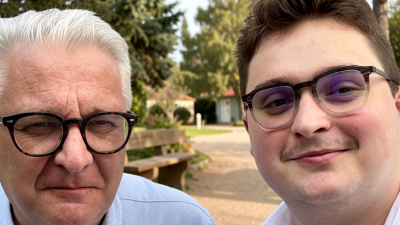
Constantvpn.com – A young man who spent his early career selling cars in Belgium now carries the title of prince. Clément Vandenkerckhove, aged 26, has been formally acknowledged as the son and heir of Prince Laurent, the younger brother of King Philippe. The quiet town hall ceremony took place roughly six months ago, yet the full details of the recognition have only now surfaced publicly, confirming what many Belgians had already sensed from earlier media coverage.
The relationship between Prince Laurent and the singer Wendy Van Wanten — whose birth name is Iris Vandenkerckhove — predates the prince’s 2003 marriage to Princess Claire. Clément is the product of that earlier bond, and his entry into the royal household marks another chapter in a Belgian monarchy that has repeatedly grappled with questions of paternity and family structure.
What the Recognition Does — and Does Not — Confer
While Vandenkerckhove now holds the rank of prince, the practical implications are deliberately limited. He will not draw from the public royal allowance, a benefit restricted under 2013 Belgian legislation to a narrow circle: King Philippe, his father King Albert II, Prince Laurent himself, and Princess Astrid. Equally, he sits outside the line of succession to the Belgian throne, unlike his half-sister Princess Louise and half-brothers Prince Aymeric and Prince Nicolas, who were born within the marriage to Princess Claire. He will also refrain from participating in official royal engagements.
The decision to keep him at the periphery of court life appears designed to honour both his existing identity and the family’s established protocols. It sidesteps the kind of public spectacle that accompanied earlier royal paternity disputes in Belgium.
A Son’s Perspective on an Unexpected Father
Vandenkerckhove has had years to absorb the reality of his parentage, yet he remains cautious about fully adopting his father’s dynastic name. Speaking to the Flemish newspaper Het Nieuwsblad, he offered a measured reflection:
“I might want to do that, but I am proud of the name Vandenkerckhove. If I were to sacrifice that family name, it would be a betrayal of everything my mother has done for me.”
The sentiment underscores how the recognition is being framed not as an absorption into the Saxe-Coburg lineage, but as an addition to it — one that preserves the mother’s family identity intact.
How the Truth Unfolded
The path from ignorance to acknowledgment stretched over more than a decade. In 2013, a teenage Clément bumped into a man in a shopping centre without recognising him as a member of the royal family. It was not until he turned sixteen that his mother disclosed who his father actually was. Four years after that revelation, he gathered the nerve to place a telephone call. Several further conversations followed before the two met face to face, and Prince Laurent proposed a DNA test to settle any lingering doubt.
Vandenkerckhove recalled the hospital visit in a September documentary broadcast on the Flemish channel VTM, describing the small gesture his father made to ease his nerves:
“We went to the hospital together and I remember him saying ‘I’ll go first so you’re feeling at ease.'”
The laboratory result that arrived by email confirmed a 99.5 per cent genetic match, closing the question definitively.
A Pattern in Belgian Royal History
The DNA-test episode echoes an earlier, far more turbulent chapter in the same dynasty. King Albert II, Prince Laurent’s father, faced a protracted paternity dispute with the artist Delphine Boël. After years of litigation, Albert publicly acknowledged in 2020 that he had fathered a daughter during an extramarital affair and subsequently recognised her. She now styles herself Delphine de Saxe-Coburg. The scandal contributed to the atmosphere surrounding Albert II’s abdication in 2013, when he passed the crown to his son Philippe.
That 2013 transition also brought legislative reform: the Belgian parliament narrowed the pool of royals eligible for state-funded allowances, a change that directly shapes the financial terms under which Clément now enters the family. His exclusion from the allowance is thus not a personal slight but the application of a rule enacted over a decade ago.
Public Familiarity and the Documentary Trail
Belgians were not blindsided by the formal recognition. The VTM documentary aired last September had already walked viewers through Clément’s journey from a nameless teenager to a young man navigating a royal parentage. The programme humanised the story for a domestic audience and set the emotional tone before the town hall paperwork made it official.
For Prince Laurent, the act of recognition completes a personal obligation while carefully avoiding the institutional complications that bedevilled his own father’s reign. The new prince will carry a title without a treasury line, a surname he chooses to keep, and a place in the family that is acknowledged yet deliberately kept at a respectful distance from the ceremonial core of the Belgian monarchy.
Related Reading
Frequently Asked Questions
What is Belgian car salesman becomes prince after?
Belgian car salesman becomes prince after is the main topic of this guide. The article explains the context, practical details, and next steps readers should understand.
Why does Belgian car salesman becomes prince after matter?
Belgian car salesman becomes prince after matters because readers are looking for a useful answer, not just a short summary. Good content should match search intent and help them decide what to do next.