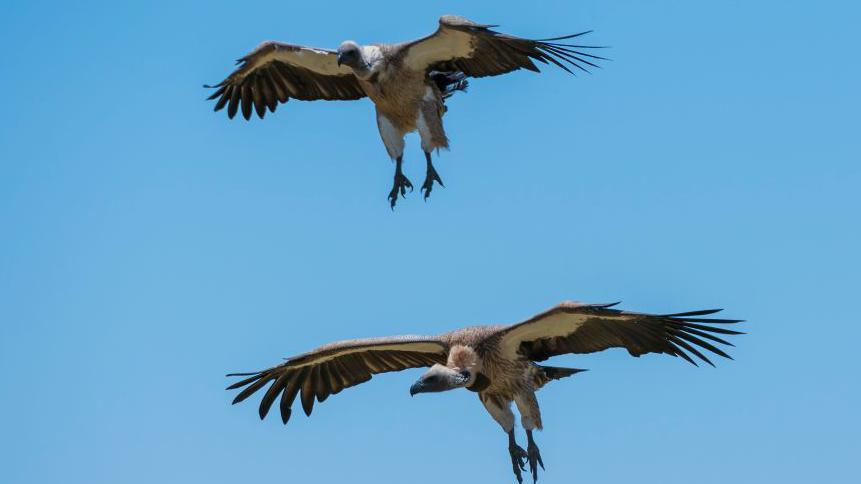
A Sacred Forest Saves Nigeria’s Vultures from Extinction
Constantvpn.com – In the heart of south-eastern Nigeria, a remarkable conservation story unfolds within the boundaries of a sacred forest. While vultures vanish from skies across West Africa, residents of Awka-Etiti continue to coexist with these misunderstood birds, protected by centuries-old traditions that have transformed their community into a sanctuary for one of nature’s most vital scavengers.
The Vulture King and His Sacred Grove
Chukwuemeka Igwe, now in his fifties, has earned the title “King of Vulture” through decades of dedicated volunteer work with the Nigeria Conservation Foundation. His nickname reflects both his personal commitment and the deep reverence his community holds for these birds. Within the sacred forest surrounding the shrine dedicated to the deity Nguma, vultures walk freely among humans, scavenging for food and nesting in ancient trees that have sheltered the community for generations.
People fear the environment where the shrine is. No evil will ever happen here. So, nobody fights vultures that perch here.
This local belief system has created an unexpected refuge. While hunting and poisoning decimate vulture populations elsewhere, the indigenous people of Awka-Etiti do not hunt these birds. Instead, they sometimes offer fresh animal sacrifices at the shrine, which attract the scavengers. The community maintains an ancient adage: “When you put down a sacrifice and you do not see vulture[s], know that something happened in the spirit world.” This belief reinforces the birds’ sacred status, as their presence signals that the deity has accepted offerings and heard the community’s prayers.
Nature’s Essential Clean-Up Crew
Despite being perceived as ugly or sinister by many, vultures perform one of the most critical ecological services on the planet. These birds consume dead animals within hours of death, preventing carcasses from becoming breeding grounds for dangerous bacteria and disease. Their remarkably powerful stomach acids enable them to safely digest infected animals, effectively stopping the spread of deadly illnesses such as anthrax and rabies.
The consequences of vulture disappearance extend far beyond the loss of a single bird species. Stella Egbe, a conservation biologist with the Nigeria Conservation Foundation, emphasizes the severity of the situation: “In places where the total collapse of vultures has happened, there has been impact of rising zoonotic diseases.” Without these natural cleaners, ecosystems lose a fundamental defense mechanism against disease transmission.
Multiple Threats Converge
Vultures face a perfect storm of threats across the African continent. Rapid urban expansion has transformed landscapes and destroyed the tall trees essential for nesting. However, habitat loss represents only part of the crisis. According to BirdLife International, poisoning accounts for an estimated sixty percent of vulture deaths throughout Africa, making it the single largest cause of mortality for these birds.
The commercial value of vultures has skyrocketed in recent years, driven largely by demand in traditional medicine and Vodun practices. Dead adult vultures in Nigeria once sold for approximately twenty-five thousand to thirty thousand naira—roughly eighteen to twenty-two dollars—but now command prices as high as two hundred thousand naira, or one hundred forty-five dollars per bird. This economic incentive has intensified hunting pressure, particularly in West and southern Africa where traditional medicine use has emerged as one of the most significant drivers of vulture decline.
Adding to the crisis, vulture eggs and nests are increasingly targeted. For such a slow-breeding species, this represents a catastrophic development. Adult vultures typically reach sexual maturity between five and seven years of age and produce only one chick every one to two years. Many young vultures fail to survive their first year of life. When nests are removed and eggs harvested, recovery becomes nearly impossible.
Conservation on the Horizon
Cape Vultures represent one of seven vulture species facing extinction across the continent. Recognizing the urgency of the situation, researchers from across the region will convene in Abuja later this year to review the West African Vulture Conservation Action Plan, originally drafted in twenty twenty-two. The meeting aims to strengthen regional cooperation and implement more effective protection measures.
The success of Awka-Etiti demonstrates that cultural traditions, when properly understood and supported, can serve as powerful conservation tools. As communities across Africa grapple with balancing modern development and traditional practices, the Vulture King and his community offer a model for coexistence—one where ancient beliefs and modern science work together to protect nature’s essential scavengers from the brink of extinction.
Related Reading
Frequently Asked Questions
What is Vultures are disappearing in Nigeria?
Vultures are disappearing in Nigeria is the main topic of this guide. The article explains the context, practical details, and next steps readers should understand.
Why does Vultures are disappearing in Nigeria matter?
Vultures are disappearing in Nigeria matters because readers are looking for a useful answer, not just a short summary. Good content should match search intent and help them decide what to do next.
