
European Newspapers Celebrate Rare Solar Eclipse with Playful Headlines
Constantvpn.com – Across the United Kingdom and much of Europe, Thursday’s front pages were dominated by a celestial event that occurs only once every few decades. The solar eclipse captured public imagination as millions watched the Moon gradually pass in front of the Sun, casting shadows across continents and prompting newspapers to showcase the phenomenon with creative headlines and striking photography.
Headlines Capture the Moment
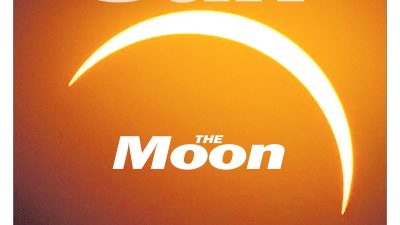
The Sun newspaper took particular delight in the occasion, featuring a partial eclipse image with a crescent of sunlight peeking through. Their headline “The Sun, the Moon” cleverly incorporated the publication’s own masthead into the celestial display, creating a visual pun that readers found charming.
“The Sun, the Moon”
Meanwhile, the i Paper emphasized the rarity of the event with “Once in a generation” as its main headline, accompanied by an image showing the Moon entirely covering the Sun—a view visible in parts of Greenland, Iceland, and Spain during the eclipse.
The Metro offered a more poetic approach with “Hello darkness my old friend,” illustrating the Moon’s slow journey across the Sun’s face as observed above south London, where residents witnessed a 97 percent eclipse.
“Hello darkness my old friend”
Several publications focused on the eclipse’s timing during an ongoing heatwave. The Independent noted that the celestial event brought “a moment of shade” to regions experiencing high temperatures, while the Daily Mail similarly reported that Britain “finally gets a break from the sun,” though this respite lasted only a few minutes.
Visual Spectacle Across the Continent
The Daily Telegraph described the eclipse as “the greatest show on Earth,” featuring photographs of crowds in Birmingham and elsewhere gazing upward at the phenomenon. Dramatic images of the eclipse appeared on nearly every front page, with the Telegraph’s description capturing the widespread enthusiasm.
“The greatest show on Earth”
The Times highlighted that this represented the most significant eclipse in over twenty-five years, with photographs taken from Spain showing the Moon’s impressive coverage of the Sun. The Daily Express called it “heavenly wonder,” reflecting the sense of awe that accompanied the event.
Commercial impact was also noted, with John Lewis reporting a forty percent increase in colander sales as people sought alternative methods to safely observe the eclipse. A store spokesperson explained the practical advantage: “Unlike eclipse glasses, you can use it to strain your spaghetti for dinner afterwards.”
“Unlike eclipse glasses, you can use it to strain your spaghetti for dinner afterwards”
Broader News Coverage
Beyond the eclipse, newspapers covered various developing stories. The Daily Telegraph reported that Vladimir Putin had threatened to seize British ships in response to European measures targeting Russia’s shadow fleet. A UK government spokesperson confirmed that armed forces were disrupting harmful activities by these vessels while operating within international maritime law.
Political developments included the Prime Minister’s proposals to restrict zero hours contracts, which The Times and Daily Telegraph both noted could impose costs of up to three billion pounds annually on businesses. The government defended its approach to housing asylum seekers in wealthier regions, stating it sought to distribute them fairly across the country.
Climate concerns featured prominently in multiple publications. The Daily Mail highlighted criticism of government environmental policies following more than one thousand wildfires this year. The Guardian reported that the Prime Minister promised to address “the bigger questions” of climate adaptation, while nurses unions warned that staff were collapsing during shifts due to extreme heat conditions.
“The bigger questions”
The Royal College of Nursing’s general secretary, Professor Nicola Ranger, described working conditions as “inhumane” and called for the government to “fully acknowledge” the need for climate adaptation. The Guardian noted that Prime Minister Andy Burnham was being pressed to respond to these concerns.
International news included Ukraine halting drone strikes on oil tankers using a critical Russian Black Sea port, following a request from US Vice-President JD Vance. Meanwhile, the Daily Express covered research showing that taking stairs instead of elevators could reduce the risk of early death by nearly a quarter, with regular stair climbers experiencing lower rates of cardiovascular events such as heart attacks and strokes.
In Greenwich Park, hundreds gathered to watch the eclipse, with one observer telling the Daily Mirror that “there were Champagne corks popping” at the peak of the celestial event. The combination of scientific wonder, commercial opportunity, and social gathering demonstrated how the eclipse resonated across different segments of society.
As the eclipse passed, newspapers reflected on both the temporary nature of the celestial break from sunshine and the longer-term implications for climate policy and public health. The event served as a reminder of humanity’s relationship with natural phenomena and the challenges of adapting to changing environmental conditions.
Related Reading
Frequently Asked Questions
What is The Sun the Moon and The greatest?
The Sun the Moon and The greatest is the main topic of this guide. The article explains the context, practical details, and next steps readers should understand.
Why does The Sun the Moon and The greatest matter?
The Sun the Moon and The greatest matters because readers are looking for a useful answer, not just a short summary. Good content should match search intent and help them decide what to do next.