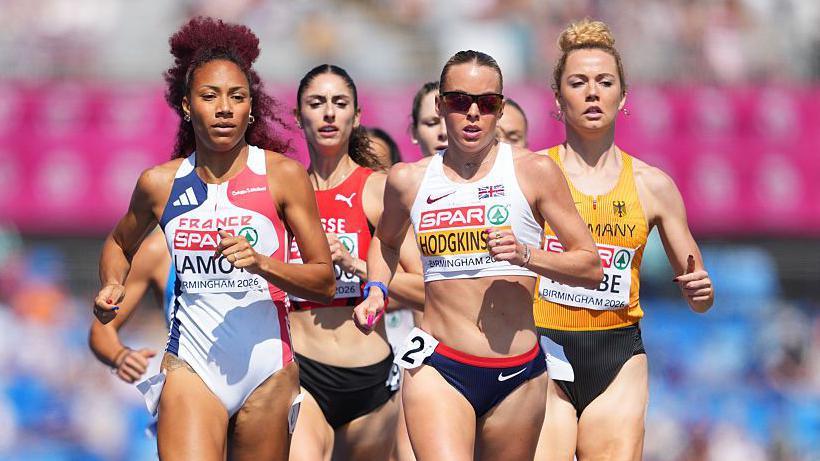
The Enduring Enigma of the Women’s 800m World Record
Constantvpn.com – More than four decades have passed since Jarmila Kratochvilova set a mark that still stands as the most resilient benchmark in track and field. The Czech athlete’s extraordinary performance of one minute 53.28 seconds in Munich during 1983 has withstood every challenge, even as athletic capabilities have evolved dramatically across multiple dimensions. With Keely Hodgkinson currently ranking among the top three female middle-distance competitors globally, questions are mounting about whether this historic barrier might finally be breached at the European Athletics Championships taking place in Birmingham.
A Record Born in the Doping Era
When Kratochvilova crossed the finish line in 1983, she finished more than seven seconds ahead of Poland’s Jolanta Januchta. No competitor would come within a single second of her achievement for a quarter of a century. The longevity of this record has naturally invited scrutiny, particularly given the historical context of systematic doping programs that operated in Eastern European nations during that period. Kratochvilova has consistently and firmly rejected suggestions that her performance benefited from these practices.
Similar debates surround other records from the same era. East Germany’s Marita Koch established the women’s 400m world record in 1985, two years after Kratochvilova’s feat. Despite widespread knowledge of East Germany’s doping infrastructure, Koch never tested positive and maintained throughout her career that she competed cleanly. These discussions gained renewed momentum in 2017 when European Athletics floated proposals to eliminate records established before 2005, the year when World Athletics began systematically collecting blood and urine samples. Although those proposals ultimately stalled, they highlighted ongoing questions about pre-2005 achievements.
The Modern Challengers
Audrey Werro of Switzerland currently holds the distinction of being the closest competitor to Kratochvilova’s legendary time, recording 1:53.80 in June of this year. While impressive, that mark still leaves Werro more than half a second short of the record. The field has grown increasingly competitive, with multiple athletes demonstrating sustained improvement.
Keely Hodgkinson recently shattered the indoor 800m record in February, achieving 1:54.87 and ending a streak that dated back to 2002. Meanwhile, Femke Broeders-Bol from the Netherlands has emerged as an unexpected contender. Despite limited experience in the 800m after transitioning from the 400m hurdles, Broeders-Bol clocked 1:55.60 at the Paris Diamond League meeting in June.
“Believe you me, that time of 1:53.28 is astonishing,” Jenny Meadows, a former British runner who now coaches Hodgkinson, explained to BBC Sport. “I won medals on a global level and I could not even comprehend that a female could run that sort of time.”
Science and Technology Converge
Advancements in sports science have created conditions favorable for record-breaking performances. Andrew Jones, a professor of applied physiology at the University of Exeter, has worked extensively with middle and long-distance runners. He notes that footwear innovations have fundamentally altered running mechanics and efficiency.
“Everyone is going faster than they used to be because the shoe technology is so much better,” Jones observed. “We know more about various supplements, things like creatine, nitrate, but in particular bicarbonate. And we know more about what limits performance.”
The understanding of carbohydrate metabolism and nutritional timing has also improved significantly. Jones compared modern athletes to Formula One vehicles, emphasizing the importance of optimal fuel management. “You want the car to cross the line almost empty of fuel. If you’ve got half a tank left, you’ve been weighing yourself down.”
A Pivotal Moment in Birmingham
The European Championships in Birmingham present a unique opportunity for the women’s 800m. The competition features what appears to be the strongest field in recent memory, with Hodgkinson and her rivals poised for a potentially historic final. Whether the race unfolds as a tactical battle or a pure speed contest remains uncertain, but the potential for a record-breaking performance has never been greater.
“They’re all dragging each other to these incredible times. The level of the 800m has risen significantly in the past two years,” Jessica Ennis-Hill, who captured heptathlon gold at the London 2012 Olympics, remarked.
“All it takes is one person to raise the bar and you think more things are possible,” Hodgkinson told BBC Sport. “Everyone knows that to keep up you have to keep getting better. It’s a really exciting time for the women’s 800m.”
The convergence of athletic talent, scientific advancement, and technological innovation suggests that Kratochvilova’s 43-year reign may finally be coming to an end. As the Birmingham championships unfold, spectators and analysts alike are watching closely to see whether the women’s 800m record will join the ranks of other historic marks that have been surpassed in recent years.
Related Reading
Frequently Asked Questions
What is Why is the women s 800m?
Why is the women s 800m is the main topic of this guide. The article explains the context, practical details, and next steps readers should understand.
Why does Why is the women s 800m matter?
Why is the women s 800m matters because readers are looking for a useful answer, not just a short summary. Good content should match search intent and help them decide what to do next.
