
When the Heat Turns Vegetables Upside Down: A Season of Wonky Produce
Constantvpn.com – Walk down any supermarket aisle this summer and you might notice something unexpected. The vegetables aren’t just smaller or oddly shaped—they’re changing color, curling into spirals, and developing bumps that would normally earn them a trip to the compost bin. Across the United Kingdom, farmers are navigating one of the most challenging growing seasons in recent memory, as prolonged heatwaves following an unusually warm spring have reshaped not only crop yields but also the very appearance of what ends up on our dinner plates.
Yellow Cauliflowers and the Race Against Empty Shelves
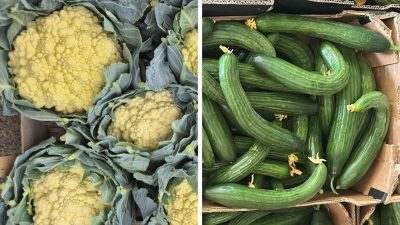
Cauliflower heads that should be pristine white are emerging with a golden, sun-tanned hue. This transformation occurs because the vegetable requires substantial water and typically keeps its developing head shaded beneath its own leaves. This year, however, intense sunlight penetrates more readily, bleaching the florets to a yellowish tone. Emilie Vanpoperinghe, who co-founded the subscription service Oddbox that purchases surplus produce rejected by major retailers, emphasized that this is purely a visual issue. The flavor remains unchanged despite the altered appearance.
It is purely a cosmetic defect and the plants taste exactly the same.
Oddbox recently purchased 6,000 cauliflower heads that supermarkets deemed too dark for their strict aesthetic standards. Beyond color changes, growers report depleted water reserves, which slows the growth of brassicas including broccoli and cauliflower, ultimately reducing supply. Retailers, facing their worst harvest predictions since records began, are prioritizing availability over perfection. Empty shelves represent a far greater concern than slightly discolored vegetables.
Spiraling Cucumbers and the Greenhouse Effect
Greenhouse-grown cucumbers are responding to extreme temperatures by curling back into tight spirals. The enclosed growing environments trap heat during outdoor temperature spikes, creating stress conditions that disrupt normal growth patterns. Even with adequate irrigation, the thermal intensity prevents the plants from developing their characteristic straight form. This phenomenon illustrates how indoor cultivation, while offering protection from rain and wind, cannot fully shield crops from atmospheric extremes.
Pest Pressure on Leafy Greens
John Harper, a Worcestershire farmer supplying pak choi to Sainsbury’s, Aldi, and Co-op, has been discarding more produce than usual this season. Tiny holes puncture the leaves, created by flea beetles that flourish in hot, dry conditions. With pesticide usage restricted compared to previous decades, net covers serve as Harper’s primary defense against these insects. Supermarket cosmetic standards traditionally consider even a single small hole sufficient to reject an entire plant, though some retailers have temporarily relaxed these requirements during the current heatwave.
One tiny little hole can render the plant useless, but we’ve been working with them through this hot period and in general they sort of get it.
Harper noted that the vast majority of affected pak choi remains perfectly edible, observing with humor that the beetles seem to find the leaves particularly tasty.
Knobbly Potatoes and the Waste Problem
Lucy Munns, a Cambridgeshire potato farmer, describes how extreme heat disrupts tuber development. When temperatures eventually moderate following a prolonged hot spell, instead of the main potato growing uniformly, it produces additional knobs and irregularities at the ends. These misshapen tubers fall outside the specifications of supermarkets and chip shops that Munns supplies, creating significant waste.
It’s criminal, to be honest, to be chucking that much food away.
Munns explained that these knobbly potatoes are entirely suitable for consumption. The only practical challenge involves peeling—simply cutting away the irregular sections and peeling them separately resolves the issue. This represents a broader concern about food waste in the UK, where millions of tonnes of edible produce are discarded annually due to cosmetic standards rather than quality issues.
Retailers Adapt to Changing Conditions
Major supermarkets including Sainsbury’s, Tesco, Morrisons, and Waitrose have established dedicated product lines for imperfect vegetables in recent years, providing an outlet for produce that would otherwise be wasted. Calum Kelly, Waitrose’s produce technical manager, explained that demanding weather conditions prompt the relaxation of size and shape guidelines for essential vegetables. This approach serves dual purposes: reducing waste while generating additional income for growers and farmers who might otherwise lose their crop.
We relax size and shape guidelines for key veg to avoid waste and provide more income to our growers and farmers.
Baking potatoes may emerge smaller than usual if drought conditions persist, but Kelly assured consumers that these vegetables retain their flavor despite their altered appearance. Like many people experiencing a heatwave, the vegetables simply look less than perfect while remaining entirely suitable for consumption.
What This Means for Consumers
The current season offers an opportunity to reconsider cosmetic standards in food purchasing. Vegetables that appear sunburnt, curled, or knobbly are not damaged or spoiled—they are simply responding to environmental conditions that affect their physical development. For consumers willing to look beyond appearance, these vegetables offer the same nutritional value and taste as their more conventionally shaped counterparts. The temporary relaxation of retail standards represents a practical response to climate variability, demonstrating how the food system can adapt when faced with unprecedented growing conditions.
Related Reading
Frequently Asked Questions
What is Sun tanned cauliflowers and knobbly spuds?
Sun tanned cauliflowers and knobbly spuds is the main topic of this guide. The article explains the context, practical details, and next steps readers should understand.
Why does Sun tanned cauliflowers and knobbly spuds matter?
Sun tanned cauliflowers and knobbly spuds matters because readers are looking for a useful answer, not just a short summary. Good content should match search intent and help them decide what to do next.