Eight of the 10 most populous countries are not in the World Cup
Eight of the Ten Most Populous Countries Are Not in the World Cup
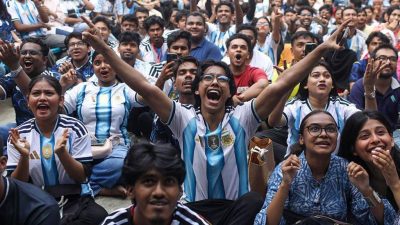
Eight of the 10 most populous – In the absence of a national team at the World Cup, Bangladeshi fans have turned to supporting other nations like Argentina. The scene on 17 June was one of chaotic celebration in Dhaka, where locals gathered in open-air venues to watch Argentina’s Lionel Messi score his first goal in the 2026 tournament. Yet, not a single Argentine was present in the crowd. The jubilant group, adorned in the iconic albiceleste jerseys, was made up of Bangladeshi spectators who have embraced the South American team as their own. Similar fervor can be seen in Indian and Indonesian cities, where passionate street gatherings mirror the enthusiasm of global football powerhouses.
Despite their massive populations, many of the world’s most populous nations remain absent from the World Cup. Only two—Brazil and the United States—have secured spots in the current tournament. Russia and Nigeria, while not in the current lineup, have participated in multiple previous editions. China and Indonesia, for instance, have made appearances but only once. India, the largest country by population, technically qualified for the 1950 World Cup in Brazil but withdrew less than a month before the event began. This leaves nations such as Bangladesh, Ethiopia, and Pakistan as yet to break into the competition.
“It is simply unacceptable that a country with millions of football fans should lag so far behind in football,” says Audite Karim, a prominent Bangladeshi actor and football enthusiast. His sentiment reflects a growing frustration among fans in countries where the sport has not yet gained the same traction as in wealthier nations. While population size might suggest a greater pool of talent, it appears to be a poor predictor of footballing success. This paradox raises questions about the factors that truly shape a nation’s performance on the global stage.
The Role of Wealth and Infrastructure
Stefan Szymanski, a British economist and author of *Soccernomics*, explains that football success is not solely determined by population. “Football is very similar to how national economies work. For them to thrive, you need people. But then you also need capital and infrastructure,” he tells the BBC. In *Soccernomics*, Szymanski and co-author Simon Kuper argue that countries typically require a minimum annual income per capita of $15,000 to compete effectively. Yet, nations like Brazil and Argentina, whose average incomes fall below this threshold, have combined to win eight World Cup titles. This suggests that economic wealth, while important, is not the only determinant of footballing prowess.
Training facilities and the ability to identify talent play a critical role. Szymanski emphasizes that successful footballing nations often share a common denominator: wealth. However, this does not fully explain why smaller countries like Uruguay have achieved global dominance. The economist points out that historical context and experience also shape a nation’s footballing trajectory. For example, Uruguay, a nation of just 3.5 million people, won two World Cups (1930 and 1950) long before the modern era of international competition. Its first international match, a 6-0 loss to Argentina, occurred in 1902—decades before Brazil made its debut in 1919.
The Influence of Historical Experience
The legacy of colonialism has left an indelible mark on football development. Szymanski notes that nations which have consistently dominated the sport have a long history of playing it. “The ones that have ever won the World Cup are the ones that were dominant in playing the game 100 years ago,” he says. This pattern is evident in regions like South America and Europe, where football has been a cultural cornerstone for generations. In contrast, African and South Asian nations, which gained independence more recently, have had to overcome challenges in establishing their own football traditions.
Consider Morocco, which became independent from European powers in 1956. The North African nation made history in the 2022 World Cup by reaching the semi-finals, the first African team to do so. Similarly, South Korea’s 2002 World Cup appearance as co-hosts marked a breakthrough for Asian football. These examples highlight the progress possible when nations invest in infrastructure and develop a strong football culture. Yet, countries like Indonesia, India, and Bangladesh continue to lag, despite their large populations and growing fanbases.
“But then we see other countries like Indonesia, India, and Bangladesh, which are not catching up,” Szymanski observes. He attributes this to a combination of resource constraints and a lack of long-term strategic planning. While increased investment could help, the economist believes that know-how—the accumulated expertise and experience—remains a key barrier. This explains why some nations, even with modern facilities, struggle to produce consistent success in international competitions.
Population size, while a useful starting point, fails to account for the complexities of football development. Nations with smaller populations, such as Uruguay, have leveraged their historical experience to become footballing giants. Conversely, countries with vast populations have yet to translate that into competitive success. The challenge lies in creating the right conditions for talent to flourish, including access to quality coaching, facilities, and exposure to high-level competition. Without these elements, even the most populous nations may find themselves on the sidelines of the global football arena.
India, for instance, has a population of over 1.4 billion, yet its national team has not qualified for a World Cup since 1950. Bangladesh, with a population of around 170 million, has similarly struggled to secure a spot. Ethiopia, despite its rich cultural heritage, has only reached the World Cup once, in 1996. These nations, though geographically and demographically significant, face unique obstacles in building footballing systems. Their limited access to professional leagues, coaching staff, and financial support for grassroots development contributes to this disparity.
Szymanski’s analysis suggests that footballing success is a product of multiple interrelated factors. While population provides a potential pool of players, wealth and infrastructure create the environment in which talent can thrive. Historical experience, meanwhile, ensures that a nation has the institutional knowledge to sustain progress. Without these elements, even the most populous countries may find it difficult to compete. The case of Bangladesh, where fans have adopted Argentina as their own, underscores the emotional and cultural significance of football—and the frustrations that arise when a nation’s own team falls short.
As the 2026 World Cup approaches, the story of Bangladesh’s enthusiasm for Argentina serves as a reminder of the global reach of football. It also highlights the broader issue of how population size alone cannot guarantee participation or success in the sport. For nations like India and Indonesia, the path to international recognition may require not just investment, but a deep reimagining of how football is nurtured and promoted within their societies.
