Zuma showing South Africa ‘middle finger’ by meeting Gupta brother – minister
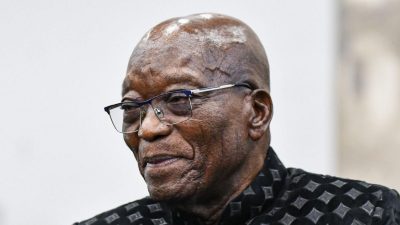
Former President Jacob Zuma’s Meeting with Gupta Brother Sparks Outcry Over Corruption
South African minister calls Zuma’s actions a ‘disgrace’ in wake of state capture scandal
Zuma showing South Africa middle finger – South Africa’s political landscape has been rocked by renewed controversy after Jacob Zuma, the former president, met with Ajay Gupta, one of the Indian businessmen central to a sprawling corruption investigation. The encounter, captured in a photograph shared by Indian media, has drawn sharp criticism from a senior cabinet minister, who accused Zuma of “showing the middle finger” to the country’s citizens. The meeting occurred just weeks after Zuma, who now leads the uMkhonto weSizwe (MK) party, hinted at running for office again in the upcoming elections.
The Gupta brothers—Atul, Rajesh, and Ajay—have long been embroiled in allegations of manipulating South African politics for their financial gain. A decade ago, they were accused of profiting from their close ties with Zuma and steering policies to benefit their business interests. Despite denying wrongdoing, the family left South Africa in 2018 as a judicial commission launched an inquiry into claims of “state capture.” This investigation revealed how the Guptas had effectively controlled key institutions, including the national electricity provider Eskom, through a network of bribes and influence.
Khumbudzo Ntshavheni, a cabinet minister, expressed dismay over Zuma’s recent actions. “It is very disturbing that a former state president openly and unapologetically shows the middle finger to South Africans who have lost a lot of money through the Gupta brothers’ shenanigans,” she stated in a press briefing. Ntshavheni emphasized that Zuma’s decision to meet Ajay Gupta, despite the ongoing scrutiny of the family’s role in the corruption scandal, signals a lack of accountability. She also criticized the presence of Anil Sooklal, the South African high commissioner to India, who accompanied Zuma to the meeting, calling it a “disgrace” that diplomatic ties were being used to support Zuma’s political ambitions.
“Jacob Zuma continues to show a middle finger and claim that he wants to run this country again,” Ntshavheni said, underscoring the public’s frustration with the former leader’s stance. Her comments came amid growing calls for transparency, as South Africa prepares to investigate the meeting between Zuma and Gupta. The inquiry, led by international relations minister Ronald Lamola, suggests Zuma may be pursuing a “parallel foreign policy” to shield his allies from scrutiny.
Zuma, who served as president from 2009 to 2018, was ousted after a series of corruption allegations tied to the Guptas. The commission of inquiry, established in 2022, concluded that Zuma had played a pivotal role in appointing ministers aligned with the Gupta family’s interests. This included the 2015 dismissal of Finance Minister Nhlanhla Nene, who resisted the Guptas’ demands, and the subsequent elevation of Des van Rooyen and Malusi Gigaba—both of whom were known for their pro-Gupta positions. The report detailed how the family orchestrated a web of corruption at Eskom, securing control over critical decision-making processes that enriched their business empire.
South African authorities initially issued an arrest warrant for Ajay Gupta in 2018, but it was later revoked in 2019. Meanwhile, Atul and Rajesh Gupta fled to the United Arab Emirates, where a court in 2023 rejected a request to extradite them. This development has left many questioning whether the Guptas’ influence still lingers in South African politics. The recent meeting with Ajay Gupta, during which Zuma reportedly declared his intention to run for re-election, has reignited debates about the legacy of the “state capture” era.
Under Zuma’s leadership, the MK party gained approximately 15% of the vote in the 2024 elections, marking a significant shift as the African National Congress (ANC) lost its majority for the first time since the end of apartheid in 1994. Analysts argue that Zuma’s continued alignment with the Gupta family has bolstered his political base, even as public trust in the ANC wavers. The minister’s criticism highlights the tension between Zuma’s personal interests and the broader welfare of the nation, with critics suggesting his actions could undermine efforts to restore integrity to the government.
Supporters of Zuma, however, maintain that his political career remains vital for South Africa’s future. They point to his deep roots in the ANC and his experience as a leader, arguing that his re-entry into politics could provide stability. Nevertheless, the meeting with Ajay Gupta has been seen as a symbolic gesture, reinforcing the perception that Zuma is prioritizing his own agenda over the country’s financial recovery. The upcoming investigation aims to determine whether this interaction constitutes an attempt to circumvent the judicial process or if it is merely a personal gesture with no political intent.
As the country navigates the aftermath of the Gupta scandal, the question of Zuma’s influence remains contentious. His re-election bid could either signal a return to old alliances or represent a new chapter in South African politics. For now, the minister’s accusations and the public’s outrage suggest that the nation is not ready to forgive or forget the controversies of the past.
The BBCAfrica.com website provides further insights into South Africa’s political developments, including coverage of the Zuma-Gupta relationship and its impact on the nation’s economy. Readers can follow the latest updates on South African affairs through the BBC’s social media channels: Twitter @BBCAfrica, Facebook at BBC Africa, and Instagram at bbcafrica.
Focus on Africa: This Is Africa
