Iran names slain supreme leader’s son as successor, in a defiant message to Trump
Iran names slain supreme leader’s son as successor, in a defiant message to Trump
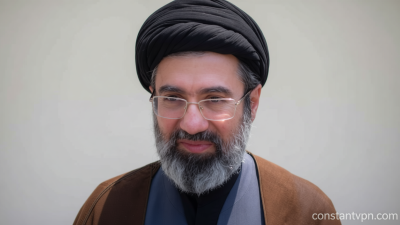
In a move that has sparked debate, Iran’s 88-member Assembly of Experts has chosen Mojtaba Khamenei, the son of the late Supreme Leader Ali Khamenei, as his successor. The decision marks a continuation of the family dynasty that the 1979 revolution was supposed to dismantle. Mojtaba, now leading the Islamic Republic, will assume the role his father held for nearly four decades until his death in a US-Israeli airstrike. This appointment, some analysts argue, is a clear signal of hardline consolidation, as Iran’s leadership rejects American pressure and asserts its dominance.
The choice of Mojtaba Khamenei has been framed as a deliberate act of resistance. US President Donald Trump had previously labeled him “unacceptable,” yet the Islamic regime has embraced him without hesitation. The Assembly of Experts’ endorsement, coupled with swift pledges of loyalty from the president, parliament, and the Revolutionary Guards, aims to reinforce the stability of the system, or “nezam,” amid international scrutiny.
“Mojtaba may you die so you don’t assume the leadership role,” protesters chanted during the 2009 upheaval, highlighting his political influence despite his low public profile.
State media quickly began crafting Mojtaba’s narrative, releasing a four-minute documentary that underscored his humble beginnings, seminary education, and frontline service during the Iran-Iraq war as a teenager. The film was designed to counter claims that he lacks the scholarly expertise traditionally required for the position of “vali-faqih,” or supreme jurisprudent. It portrays him as a natural heir to his father’s legacy, blending religious devotion with military valor to solidify his credentials.
Mojtaba’s path to power has been carefully orchestrated. Born in 1969, he received religious training alongside his brothers but never attained the rank of Mujtahid, a critical theological qualification. His marriage to Zahra, daughter of former parliament speaker Gholam Haddad Adel—a loyalist and Khamenei confidant—further ties him to the regime’s inner circle. While he remained relatively unseen in public, Mojtaba operated behind the scenes, building alliances with the Revolutionary Guards and economic networks that sustain the system.
His strategic role became evident in the 2005 presidential election, where he played a key part in backing Mahmoud Ahmadinejad, a hardliner, over Akbar Hashemi Rafsanjani, a rival of his father. The 2009 protests, which followed Ahmadinejad’s re-election, revealed Mojtaba’s growing prominence. Despite his father’s influence, Mojtaba was positioned as a figure of authority, with supporters promoting him openly in Tehran. His ability to navigate both political and religious spheres has made him a central player in maintaining the regime’s grip.
In 2019, Mojtaba faced US sanctions for his role in advancing his father’s “destabilizing regional ambitions and oppressive domestic objectives,” as the Treasury accused him of working closely with the Revolutionary Guards. The recent appointment, however, has intensified his position within the leadership structure, with state media resorting to AI-generated footage to fill gaps in his public presence. Analysts note that his influence has been unmistakable, even without a formal senior title.
As the regime solidifies its hold, Mojtaba’s leadership is seen as a testament to the enduring power of the Khamenei dynasty. With the Assembly of Experts’ approval and the backing of key institutions, Iran’s hardliners signal their resolve to continue their vision, regardless of external challenges.
