Maggie Gyllenhaal and Jessie Buckley reimagine Frankenstein’s bride
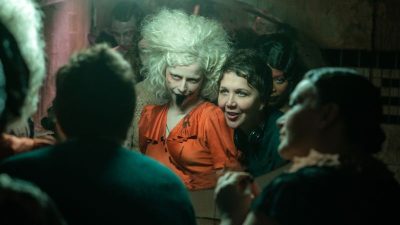
Maggie Gyllenhaal and Jessie Buckley reimagine Frankenstein’s bride
The advent of motion pictures has long captivated directors with Mary Shelley’s 19th-century gothic masterpiece, “Frankenstein.” In 1931, James Whale’s version introduced Boris Karloff’s iconic portrayal of the creature, blending a flat-topped skull with a gruff, rhythmic delivery. This film not only became a box office success but also cemented Universal Pictures as a leader in horror cinema. Over the decades, the story has been reimagined through the lens of other filmmakers, including Terence Fisher in 1957, Mel Brooks in 1974, and Kenneth Branagh in 1994. The most recent take, by Mexican director Guillermo del Toro, arrived just months ago, featuring Jacob Elordi’s character with striking, long dark lashes.
Despite the evolving tone and artistic choices of these adaptations, one constant has persisted: the dominance of male directors. Now, Maggie Gyllenhaal, an actor-turned-director, introduces a fresh perspective with her 2026 film, “The Bride!” The project draws from James Whale’s 1935 sequel, “The Bride of Frankenstein,” where Elsa Lanchester embodied the female monster with a dramatic, electrified bouffant and sharp, angular eyebrows. In Shelley’s novel, the solitary creature yearns for companionship after being shunned by society. Victor Frankenstein, his creator, reluctantly agrees to build a female counterpart but abandons the effort at the last moment, leaving the creature in despair.
Gyllenhaal’s vision explores what might have transpired if Frankenstein had completed the female monster. This new interpretation, however, raises broader questions about the scarcity of female voices in adapting Shelley’s work. Dr. Jo Botting, a fiction curator at the BFI National Archive in London, noted, “In film, there are far more male directors. And I think horror is a genre that appeals possibly to more men.” Yet, some analysts suggest deeper motivations for this trend. Daniel Cook, a professor at Dundee University and literature expert, proposed that male directors often connect with the novel’s themes of ambition and arrogance. “Victor Frankenstein’s core problem is he overestimates his own power. It’s the idea of a man who has hubris and then fails. That’s epic. That’s like our oldest story paradigm in the Western canon,” he explained.
“It’s a very director-sexy topic,” Cook added, highlighting the creative parallels between the scientist and the filmmaker. Eleanor B. Johnson, an English professor at Columbia University and author of “Scream with Me: Horror Films and the Rise of American Feminism,” pointed out that male directors have traditionally emphasized the novel’s masculine struggles. “There’s a feminist temptation to resist the impulse to read Mary Shelley’s novel as a novel written by a woman,” she observed. “But the fact is that she was a teenage girl who imagined a world of monstrous creation and human abandonment.” The enduring legacy of Shelley’s tale, written by a woman, remains a subject of intrigue and reinterpretation in the 21st century.
