World Cup hydration breaks – who are the winners and losers?
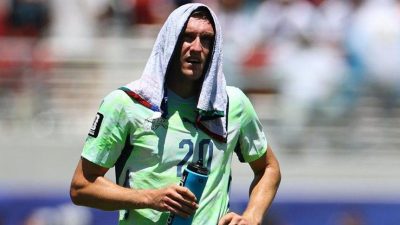
World Cup Hydration Breaks – Who Are the Winners and Losers?
Constantvpn.com – The 2026 World Cup, held across the United States, Canada, and Mexico, has introduced a new feature that has sparked both praise and criticism: mandatory three-minute hydration breaks in every match. These pauses, inserted 22 minutes into each half, have become a defining element of the tournament, with their purpose being to ensure player health amid the extreme heat and humidity conditions. Yet, as the opening games unfold, questions are arising about whether these breaks are beneficial or simply a concession to commercial interests.
The Rationale Behind the Breaks
Organizers have cited the need to combat the harsh environmental conditions as the primary reason for implementing the hydration breaks. Mexico, Canada, and the United States, with their diverse climates, will host matches in regions where temperatures can soar, making it essential to give players time to replenish fluids. Even stadiums with retractable roofs and climate-controlled interiors are not exempt from this rule, underscoring the tournament’s commitment to player welfare. The breaks are designed to mitigate the risks of heat exhaustion and dehydration, which can significantly impact performance in high-stakes games.
Coaches’ Divergent Views
While the breaks aim to support players, not all coaches are convinced of their effectiveness. Mauricio Pochettino, head coach of the United States, voiced his concerns during a press conference. “I don’t like it,” he said. “I only like it when the conditions are extreme.” This sentiment reflects a broader debate among football strategists about the balance between player health and game flow. For Pochettino, the breaks seem more like a commercial pause than a necessary tactical tool. However, others, like Carlo Ancelotti, have welcomed the opportunity to recalibrate strategies mid-game.
“You can explain a problem to the players,” Ancelotti said after Brazil’s match against Morocco. “[You can] make a tactical adjustment that can be very good.”
Ancelotti’s comments highlight how these breaks can serve as a strategic asset. During Brazil’s encounter with Morocco, the hydration pause allowed him to reorganize his team’s approach, leading to a crucial equalizer just six minutes after play resumed. This example illustrates the potential for breaks to disrupt momentum and provide fresh direction. Yet, the same cannot be said for all teams. Emma Hayes, coach of the U.S. women’s team, argued that the breaks often benefit the team in a losing position. “It’s advantageous for the team losing momentum— that’s why I call them momentum breaks,” she explained. “When you’re on top, you don’t want it; when you’re losing, you do.”
Momentum Shifts and Tactical Adjustments
The impact of hydration breaks is evident in several matches. In the opening game, Brazil’s players took a water break at the New Jersey New York Stadium, which coincided with a lackluster start. By the time play resumed, the team had managed to equalize, thanks in part to a moment of individual brilliance by Vinicius Jr. “It was down to a moment of individual brilliance,” Ancelotti admitted afterward. “But the hydration break enabled us to deliver fresh instructions and tweak the system.” This acknowledgment suggests that while the break may not directly cause the goal, it plays a pivotal role in facilitating tactical changes that can turn the tide of a match.
Similarly, Canada’s equalizer against Bosnia-Herzegovina occurred shortly after a second-half hydration break, with substitute Cyle Larin scoring the goal. This pattern of momentum shifts has also been observed in Scotland’s 1-0 victory over Haiti and Australia’s 2-0 win against Turkey. The breaks appear to offer a strategic window for managers to reassess and adapt, particularly when teams are struggling to maintain their form. However, the same cannot be said for all scenarios. In matches where a team is dominating, the break may be seen as a disruption.
Losers in the Heat of the Moment
While some teams have benefited from hydration breaks, others have struggled to recover once play resumes. The case of Curacao against Germany exemplifies this. The Caribbean nation was in a strong position after equalizing in the first half, but when the break allowed the Germans to regroup, they quickly regained control and went on to win 7-1. This outcome raises questions about the fairness of the breaks, especially for underdog teams that may not have the resources to exploit them effectively.
The Czech Republic’s match against South Korea also showcased the breaks’ potential to disrupt momentum. Despite taking an early lead, the team’s pressure was broken during a hydration pause, leading to a loss of form and a 2-1 defeat. The Netherlands vs Japan game in Arlington, Texas, saw a similar scenario: the Dutch led 2-1 going into the second-half break but failed to hold on, resulting in a 2-2 draw. These examples underscore the challenges faced by teams that are not able to capitalize on the breaks as swiftly as their opponents.
Player Perspectives and Future Implications
Player reactions have also been mixed. Juan Mata, a 2010 World Cup veteran with Spain, expressed his frustration with the three-minute pauses. “As a player, I don’t think it’s great,” he told ITV Sport. “When you’re losing, you want to score, and when you’re winning, you want to keep the ball. I think they break the momentum.” Mata’s perspective aligns with the concerns of many athletes who feel that these breaks disrupt the natural rhythm of the game. For fans, the issue is even more pronounced, as high-priced tickets may be used to watch dynamic football, only for the action to be interrupted repeatedly.
The debate over hydration breaks is far from settled. While they provide a necessary pause for rehydration and strategy, their impact on the flow of the game remains contentious. For teams like Brazil, the breaks have acted as a catalyst for recovery and tactical evolution, but for others, such as Curacao, they have been a double-edged sword. The question now is whether these breaks will be a permanent fixture or a temporary measure. As the tournament progresses, the true test of their effectiveness will become clearer. For now, the 2026 World Cup has introduced an intriguing dynamic that challenges both coaches and fans to rethink the traditional structure of football matches. With the stakes high and the climate unforgiving, these pauses may shape the outcome of games in unexpected ways. The winners and losers of this innovation are still being written in real time, as the world watches the world’s greatest players navigate a new era of competition.
