White House wants DHS to reopen for World Cup
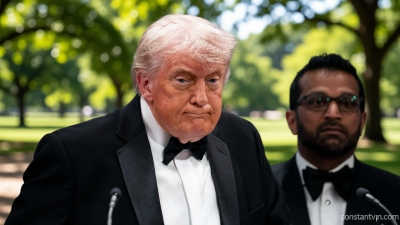
White House Wants DHS to Reopen for World Cup
Constantvpn.com – A man accused of attempting to assassinate U.S. President Donald Trump during a gala event in Washington, D.C., has prompted the White House to initiate a comprehensive security evaluation. This comes as officials tasked with organizing the 2026 World Cup express urgency in reinstating the Department of Homeland Security (DHS), which has been partially shut down for nine weeks due to a legislative stalemate between Congress members. The incident has underscored the critical need for the agency’s full operation, especially as the global football event approaches.
Shooting Incident Sparks Security Review
Cole Tomas Allen, 31, was arrested after storming the White House Correspondents’ Association dinner with a semi-automatic handgun, a pump-action shotgun, and three knives. His actions, which bypassed a security checkpoint, have led to heightened concerns about threats to the president and national security. Allen did not enter a plea during his court appearance on Monday, leaving the charges pending. The White House has since announced a review of its protective measures, citing the event as a “sobering reminder” of the unpredictable dangers facing the country.
“The swift response by law enforcement and Secret Service agents saved lives, but the chaos underscored the critical need for a fully operational Department of Homeland Security (DHS).”
Andrew Giuliani, executive director of the White House World Cup task force, emphasized the importance of DHS’s role in securing the tournament. In a statement to BBC Sport, he highlighted the agency’s responsibility for coordinating security across the United States, Canada, and Mexico, where the 2026 World Cup will be co-hosted. Giuliani added: “Under President Trump’s leadership, we are committed to ensuring America’s security is ready to meet any challenge. As we prepare for the unprecedented scale of the FIFA World Cup, with millions of visitors and dozens of major events across the country, reopening DHS is essential. We cannot afford complacency — the stakes are simply too high.”
Legislative Dispute Halts DHS Operations
The partial shutdown of the DHS stems from a disagreement over funding within Congress. Democrats have withheld support for the agency’s budget unless reforms are implemented, following two fatal shootings by federal agents in Minneapolis in January. These incidents sparked debates about the efficiency and accountability of Immigration and Customs Enforcement (ICE), a key component of the DHS. The dispute has created a backlog in preparations for the World Cup, with officials warning that the shutdown has disrupted coordination between local and federal security teams.
Earlier this month, White House officials raised alarms about the impact of the shutdown. They noted that the agency’s absence has hindered logistical planning and delayed critical security protocols. The situation has also drawn attention from U.S. rights groups, which have urged caution for international visitors during the event. “The security measures must be robust, yet flexible enough to adapt to emerging threats,” one advocate stated, emphasizing the need for a unified approach.
Pressure Mounts on Congress to Resolve Funding Crisis
President Trump has called on Republicans to reach a consensus on legislation to end the shutdown by June 1. In a recent address, he criticized the delay, stating: “We are in a situation where the department responsible for coordinating the security of this international event has been shut down for over 110 days. At a time we’re at war, by the way.” Republican Congressman Mike Lawler of New York echoed this sentiment, describing the shutdown as “insane” given the high-profile nature of the World Cup. “This event is in the area most targeted for terrorism,” Lawler said. “How can we risk the safety of millions of visitors when the security backbone of our nation is paralyzed?”
The World Cup, featuring 48 teams, is set to take place from June 11 to July 19, spanning the three host countries. The tournament will showcase over 100 matches, with key venues in Los Angeles, Mexico City, and Miami. Organizers have stressed that the absence of DHS poses a significant risk, particularly for managing large crowds and ensuring smooth operations. “The World Cup is not just a sporting event — it’s a test of our national preparedness,” said a spokesperson for the U.S. Soccer Federation.
Broader Implications for National Security
While the immediate focus is on the World Cup, the incident has reignited broader discussions about the effectiveness of federal security agencies. Critics argue that the partial shutdown reflects a deeper divide in Congress over immigration policy and resource allocation. Meanwhile, supporters of the funding dispute claim it has forced much-needed scrutiny of ICE’s practices. “This is an opportunity to strengthen security without compromising our values,” said a Democratic lawmaker. However, opponents counter that the delay has compromised readiness for the largest sporting event in U.S. history.
As the World Cup draws closer, the debate over DHS funding has become more urgent. With millions of international visitors expected, the agency’s role in preventing threats and managing emergencies cannot be overstated. The White House has vowed to prioritize security, but the success of the event may depend on whether Congress can resolve its differences in time. “The World Cup is a symbol of unity, but our security infrastructure must reflect that same resolve,” Giuliani reiterated, urging swift action to avert further complications.
In the coming weeks, the situation will be closely watched. If the DHS remains closed, alternative measures will need to be implemented to ensure the safety of participants and spectators. The incident at the White House dinner has not only highlighted vulnerabilities in current security protocols but also served as a catalyst for a renewed commitment to operational efficiency. As the global spotlight turns to the United States, the stakes for a timely resolution have never been higher.
