The Bronze Final – the unwanted tie or a match with a ‘golden layer’?
England and France Face Unpopular Third-Place Showdown in Miami
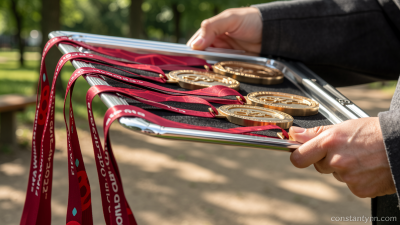
The Bronze Final – The upcoming encounter between England and France carries the weight of 72 years of World Cup tradition. Known officially as the Bronze Final by FIFA, this third-place play-off has become a fixture at every tournament since its inception. On Saturday, both nations will step onto the pitch in Miami, despite many players and coaches expressing a strong desire to avoid the contest altogether.
Didier Deschamps, who leads the French national team, captured the prevailing sentiment within his squad. He remarked that the ideal scenario for both France and England would be if this particular match simply did not exist. Thomas Tuchel, England’s manager, echoed these feelings following his team’s Wednesday night loss to Argentina in Atlanta. He noted that neither the English nor French players are eager to participate in this fixture.
“If we win the game tomorrow, we have the best results of a World Cup in 60 years. It’s a perspective to it,” Tuchel told reporters on Friday, showing a more optimistic outlook about securing bronze.
A Second Chance for Players and Fans
Beyond the medal ceremony implications, the third-place play-off offers valuable opportunities. Players who have struggled for playing time or have yet to feature at the tournament can finally showcase their abilities. For supporters who have invested in tickets and travel arrangements, the match promises entertainment and drama.
England might utilize this occasion to introduce goalkeeper James Trafford to World Cup action or provide Kobbie Mainoo with his debut minutes wearing the England shirt. Meanwhile, French defender Ibrahima Konate has appeared for just 14 minutes during the tournament, coming on against a rotated Norwegian side in the third group match. Despite his limited involvement, Konate admitted he is not looking forward to adding more minutes in Miami.
“Not one of us want to play this game for third place,” Konate stated. “But we don’t have the choice.”
Historical Context and Previous Encounters
The third-place play-off made its debut in 1934 and established itself as a regular tournament component starting in 1954. England has participated in this fixture twice since 1966, suffering defeats to host nation Italy in 1990 and to Belgium in 2018 during the Russian tournament.
Croatia demonstrated a different attitude toward the match in 2022, even though they had previously finished as runners-up to France in 2018. Moroccan head coach Walid Regragui referred to third place as a “booby prize,” yet Croatia manager Zlatko Dalic celebrated their 2-1 victory over Morocco with enthusiasm. He described the bronze medal as having “a golden layer,” comparing it to winning gold.
“We won the bronze medal and it has a golden layer,” Dalic explained. “It is like we have won the gold medal tonight.”
Statistical Significance and Golden Boot Connections
After a record-breaking tournament featuring 103 matches out of 104 scheduled games, questions arise about the necessity of the third-place play-off. FIFA does not provide extensive justification for the fixture, but several factors support its continued existence.
The match determines which team receives bronze medals and officially claims third place over fourth. It influences final standings, historical records, and individual player statistics. Financial considerations also play a role, with a prize money difference of approximately $2 million (nearly £1.5 million) between third and fourth place. Additionally, the fixture provides extra content for spectators, broadcasters, and commercial partners, even as the tournament has expanded from 64 to 104 matches this summer.
The third-place play-off has also produced several Golden Boot winners. Among seven players who scored in this match, four required their goals to secure the award. Germany’s Thomas Muller in 2010, Croatia’s Davor Suker in 1998, Italy’s Salvatore Schillaci in 1990, and Brazil’s Leonidas in 1938 all benefited from their third-place play-off goals. Poland’s Grzegorz Lato in 1974, Portugal’s Eusebio in 1966, and France’s Just Fontaine in 1958 similarly won the Golden Boot after scoring in the play-off. Harry Kane, England’s 2018 Golden Boot recipient, started against Belgium but failed to score in that particular match.
The fixture also tends to be high-scoring. The last match to produce fewer than two goals occurred 52 years ago, and 11 of the 12 matches since 1974 have seen more than three goals scored.
Voices of Dissent
Not everyone supports the third-place play-off. Before the Netherlands defeated Brazil 3-0 in 2014, head coach Louis van Gaal labeled the match unfair. He had been advocating against the fixture for a decade, calling it unjust. The game took place shortly after the Netherlands lost to Argentina in a penalty shootout during the semi-finals and after Brazil suffered a humiliating 7-1 defeat to Germany on home soil.
“This match should never be played. I’ve been saying that for 10 years; it’s unfair,” van Gaal declared.
Despite such criticism, the Bronze Final continues to hold significance for players, fans, and the tournament’s overall narrative. Whether viewed as an unwanted tie or a match with a “golden layer,” the third-place play-off remains an integral part of World Cup tradition, offering one final opportunity for glory before the tournament concludes.
