New York mayor wears Arsenal kurta during Eid prayers
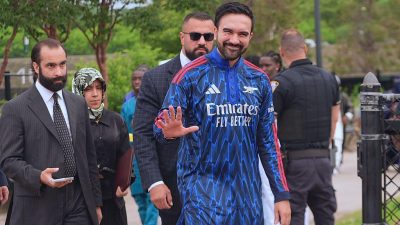
New York mayor wears Arsenal kurta during Eid prayers
Constantvpn.com – Zohran Mamdani, the youngest mayor of New York City since 1892, made headlines for an unusual gesture during Eid al-Adha celebrations. On Wednesday, he attended prayers at a Bronx mosque dressed in a kurta, a traditional loose-fitting tunic, that bore the unmistakable design of Arsenal’s 2025-26 navy and red away shirt. The sight of the mayor in his Arsenal-inspired attire sparked widespread attention online, with images of the garment quickly trending across social media platforms. This moment underscored how deeply his passion for the Gunners has become intertwined with his public persona.
From Ugandan Roots to New York Leadership
Mamdani, who was born and raised in Uganda, has become New York’s first Muslim and Asian-American mayor, a distinction that highlights his cultural identity. While his role as a city leader has brought him into the spotlight for policy decisions and community initiatives, his personal devotion to Arsenal has remained a constant thread. His fandom began in childhood, when his uncle gifted him fridge magnets featuring iconic Gunners players such as Sylvain Wiltord, David Seaman, Sol Campbell, and Thierry Henry. These early memories of the team shaped his lifelong loyalty, which now transcends the boundaries of geography and tradition.
Despite his high-profile position, Mamdani’s enthusiasm for Arsenal mirrors that of fans in Highbury and Islington. He celebrated the club’s Premier League title win with the same fervor as its supporters, often sharing his excitement on social media. His followers have praised his ability to recall obscure 90s footballers and his keen interest in the broader football world, including his ownership stake in Real Oviedo, a Spanish side facing financial challenges. This dual commitment to both local governance and global football culture has made him a unique figure in the city’s political landscape.
A Political Fandom with Global Reach
Mamdani’s deep connection to football extends beyond personal nostalgia. In 2012, he joined a global effort to save Real Oviedo from bankruptcy, participating in an international share-buying campaign that saw 20,000 fans rally behind the club. His involvement demonstrated not only his financial support but also his dedication to preserving the sport’s grassroots foundations. This experience has likely influenced his approach to public policy, particularly when addressing issues like ticket pricing for major events.
Recently, Mamdani has taken a stand on FIFA’s dynamic pricing strategy for the 2026 World Cup tickets. As a newly elected mayor, he introduced a lottery system to distribute 1,000 free entries among New York residents, granting them the chance to purchase $50 tickets. The initiative was an immediate success, with the daily limit of 50,000 entries reaching its cap within three minutes of the lottery’s launch. This move resonated with fans who criticized the high costs of attending global football events, positioning Mamdani as a bridge between political leadership and the needs of the sports community.
Eid al-Adha and the Intersection of Tradition and Sport
The mayor’s kurta, a symbol of both religious tradition and football allegiance, became a talking point during the Eid al-Adha prayers. The garment’s design, inspired by Arsenal’s 2025-26 away kit, blended the cultural significance of the event with his personal identity as a fan. This fusion of heritage and fandom has sparked discussions about how sports can serve as a unifying force in diverse communities. Mamdani’s choice to wear the kurta during a religious ceremony also reflects the growing integration of global sports culture into everyday life for many Americans, particularly those with immigrant backgrounds.
While the event in the Bronx was a moment of local pride, it also highlighted the broader reach of Arsenal’s influence. The club’s iconic lightning bolt design has become a global emblem, and Mamdani’s participation in its celebration demonstrated how far its reach extends. For someone who grew up in Uganda, the kurta was more than a fashion statement—it was a nod to his roots and a declaration of his ongoing connection to the team. The viral nature of the images further amplified this message, with social media users celebrating the mayor’s ability to merge personal passion with public service.
The World Cup and a Vision for Accessibility
Mamdani’s efforts to make sports accessible to all have not gone unnoticed. His advocacy for affordable World Cup tickets aligns with his broader commitment to community engagement. The 2026 World Cup, which will be hosted across the United States, Mexico, and Canada, represents a historic opportunity to bring global attention to the region. MetLife Stadium in New Jersey, the home of NFL franchises the New York Jets and New York Giants, will host the tournament’s final, a moment that Mamdani’s policies have helped to prepare for.
The mayor’s actions have also drawn comparisons to the collaborative spirit of football. Just as fans worldwide unite to support their teams, Mamdani’s initiatives reflect a desire to create inclusive spaces for all New Yorkers. His work on the World Cup ticket lottery, for example, echoes the way football clubs mobilize supporters to achieve common goals. Whether it’s fundraising for a struggling team or ensuring that residents can afford to attend major sporting events, his approach has been both innovative and deeply personal.
The kurta worn during the Eid prayers was not just a costume but a statement. It showcased how tradition and modernity can coexist in the life of a public figure. For Mamdani, the garment was a way to honor his cultural heritage while celebrating his love for Arsenal. This duality has made him a subject of interest beyond the sports world, with analysts noting the significance of his choice in a city known for its multiculturalism. His ability to seamlessly integrate personal interests into public life has also raised questions about the role of celebrities and enthusiasts in shaping city policies.
A Future of Football Fervor
As Arsenal prepares for its upcoming Champions League final against Paris St-Germain on May 30, Mamdani’s celebration of the team’s achievements has left many wondering what his next move might be. If the Gunners secure victory, the mayor could be seen sporting another custom design, perhaps incorporating elements of the club’s home kit or its historic jersey. The question is not just about fashion but about the evolving relationship between sports and politics in the modern era.
Mamdani’s story is a testament to the power of shared passions. His journey from a young fan in Uganda to a leader in New York illustrates how personal interests can influence professional decisions. The kurta, a simple piece of clothing, became a symbol of this journey, blending faith, culture, and football into a single, memorable moment. As the 2026 World Cup approaches, his continued support for the sport and his ability to connect with fans across different backgrounds will be critical in ensuring the event’s success.
In a city where diversity is a defining feature, Mamdani’s actions have highlighted the importance of cultural representation in public life. His kurta, a tribute to Arsenal, is a reminder that even in the most bustling urban centers, personal stories and traditions can find a place in the spotlight. Whether it’s through policies that promote accessibility or events that celebrate global heritage, Mamdani’s leadership continues to reflect the values of inclusivity and passion that define both his personal life and his political career.
The viral attention surrounding his kurta also underscores the growing influence of social media in shaping public perception of politicians. In an age where online presence is as important as traditional media, Mamdani’s ability to engage with his audience through shared interests has set him apart. His story, while unique, is part of a larger trend where personal fandoms can become a key aspect of political identity. As the Gunners face their Champions League showdown, the world will be watching not just for a sporting triumph but also for what Mamdani might do next to celebrate his favorite team.
