
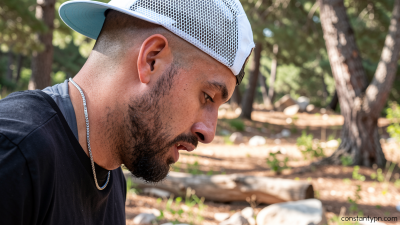
Kyrgios Cleared to Compete After Cocaine-Related Suspension Ends
Constantvpn.com – The Australian tennis world watches closely as Nick Kyrgios regains his eligibility to compete following the conclusion of a one-month suspension tied to a positive drug test. The 31-year-old former world number 13 was cleared to return to court on Thursday, 3 September, after serving out a penalty imposed by the International Tennis Integrity Agency (ITIA) over a cocaine metabolite detected in a sample collected during the Mallorca Open in June.
The episode traces back to the early hours of 20 June, when Kyrgios told ITIA investigators that he had used cocaine at a nightclub in Magaluf, Mallorca. Two days later he stepped onto the court for his first-round singles match at that same tournament, where he was defeated in straight sets by fellow Australian Adam Walton. Because the singles draw had been published on 21 June, the governing body treated the period from that date onward as “in competition,” meaning the substance use fell just outside the competitive window. An independent expert consulted by the ITIA confirmed the timing, and the agency accepted that the use occurred outside competition.
How the Ban Was Calculated
The sample, submitted during the Mallorca event, tested positive for benzoylecgonine — the primary metabolite produced when the body breaks down cocaine. Under the World Anti-Doping Agency’s prohibited list, cocaine is categorised as both a stimulant and a substance of abuse, making any detectable trace a reportable violation.
Kyrgios faced a potential maximum sanction of three months. That ceiling was reduced to one month because he entered a structured treatment programme, with an invoice confirming payment for the programme beginning on 28 August. The provisional suspension was announced on 4 August, and the full one-month period ran through to 3 September.
The reduced penalty places Kyrgios on the same one-month timeline as Iga Swiatek received for her own anti-doping case, and two months shorter than the three-month sanction handed to Jannik Sinner. Kyrgios has publicly criticised both of those rulings, calling them “disgusting” for tennis and describing the sport’s integrity system as “awful.”
Financial and Ranking Consequences
Beyond the time away from competition, Kyrgios forfeits the 6,570 euros (approximately £5,650) in prize money he would have earned at the Mallorca Open. His ATP singles ranking has slipped to 918, a stark contrast to his peak position of world number 13 reached earlier in his career.
A Career Under Strain
The cocaine episode lands against a backdrop of prolonged physical and psychological difficulty. Kyrgios has played only four singles matches this season, winning one and losing three. Since the start of 2023, he has managed just two victories across eight matches, hampered by recurring knee problems and reconstructive wrist surgery. His most recent competitive appearance before the Mallorca incident came in the men’s doubles at Wimbledon, where he and partner Alexander Bublik were eliminated in the first round.
When the positive test was first made public, Kyrgios announced he would withdraw from social media and public life for 28 days to concentrate on his recovery. In a lengthy Instagram statement he reflected on the cumulative damage of years of injury:
“My body hasn’t been able to do what my mind expects it to do. Coming to terms with being near the end of my career has been harder than I ever imagined. None of that excuses what I did.”
He added that the past several years of physical setbacks had taken “a huge toll on me, both mentally and physically.”
Mental Health and a Long Road Back
Kyrgios has spoken openly about mental-health struggles that extend well beyond the court. After his Wimbledon defeat in 2019, he spent time in a psychiatric hospital in London and has said he “genuinely contemplated” suicide during that period. Those disclosures made him one of the more candid voices in a sport where psychological pressure is rarely discussed in public terms.
A Controversial Legacy
Long before the cocaine test, Kyrgios had built a reputation as one of tennis’s most polarising personalities. He has accumulated substantial fines for smashing racquets, audible obscenities directed at opponents or officials, and heated exchanges with chair umpires. In 2023 he admitted to having assaulted an ex-girlfriend two years earlier, though he avoided a criminal conviction. A series of comments widely characterised as misogynistic drew further criticism, and in 2024 he shared a social-media post by influencer Andrew Tate — a figure Kyrgios later said he had gone “to all lengths” to distance himself from.
What Comes Next
With the ban now served, Kyrgios is free to enter any tournament immediately. Yet the practical question for players, promoters, and fans alike is whether a body that has endured repeated knee and wrist operations, combined with the psychological weight of a career in decline, can translate eligibility back into competitive form. His seven ATP Tour singles titles and his run to the 2022 Wimbledon final — where he fell in four sets to Novak Djokovic — remain the benchmark against which any return will be measured. He and compatriot Thanasi Kokkinakis also captured the Australian Open men’s doubles title that same year, a reminder of the partnership and tactical range that once defined his game.
For now, the administrative chapter is closed. The next chapter will be written on court, if and when Kyrgios chooses to step back onto it.
Related Reading
Frequently Asked Questions
What is Kyrgios given one month ban for positive?
Kyrgios given one month ban for positive is the main topic of this guide. The article explains the context, practical details, and next steps readers should understand.
Why does Kyrgios given one month ban for positive matter?
Kyrgios given one month ban for positive matters because readers are looking for a useful answer, not just a short summary. Good content should match search intent and help them decide what to do next.