Iran win four staff visa appeals but 11 banned
Iran’s World Cup Delegation Faces Visa Challenges
Constantvpn.com – Iran’s football team, which has shifted its operational base to Mexico ahead of the tournament, is navigating a complex visa situation with the United States. Four members of the delegation have successfully contested the rejection of their U.S. visa applications, but 11 others remain barred from entering the country. This decision follows Iran’s recent accusations that the U.S. has denied visas to “integral” staff of the national team, despite allowing players to participate in matches there. The conflict has raised questions about the political dimensions of the World Cup, as the U.S. and Iran continue their diplomatic standoff.
Visa Appeals and Delegation Decisions
Iran had initially faced visa rejections for 15 members of its World Cup delegation, prompting some to submit new applications after relocating to Mexico. Of these, four appeals have been approved, granting entry to key figures such as a technical analyst and two officials from the federation’s international department. The remaining six were denied again, including the FFIRI president Mehdi Taj, a vice-president, two administrators, a media officer, and a security officer. One media officer opted out of reapplying after the first rejection, highlighting the frustration within the team’s support structure.
Strategic Shift and Political Context
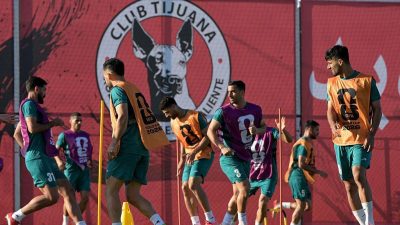
The decision to move the team’s base to Mexico came after concerns about the U.S. denying access to essential personnel. This relocation underscores the broader geopolitical tensions between Iran and the United States, which have spilled into the realm of international sports. Iran’s move to Mexico was strategic, ensuring that staff could attend matches without facing entry restrictions. The U.S. has allowed players to travel for the tournament, but its stance on staff members remains firm, linking their access to the team’s political ties.
As the co-host of the World Cup alongside Canada and the United States, the U.S. has been pivotal in facilitating matches. However, its selective visa policies have created a divide. Iran’s team is set to face New Zealand in Los Angeles on June 15, followed by Belgium in the same city on June 21 and Egypt in Seattle on June 26. These games, which will take place in U.S. cities, are critical for the team’s campaign, yet the visa restrictions have complicated their preparations.
Supporter Access and Financial Constraints
The visa issues extend beyond staff members to supporters. U.S. officials revoked Iran’s group-stage ticket allocation earlier this week, limiting the number of fans who can attend matches. While FIFA has vowed to “maximise opportunities” for Iranian supporters, it only covers costs for up to 50 individuals. This restriction has raised concerns about the accessibility of the tournament for fans, adding a layer of logistical difficulty to an already politicised event.
Historical Tensions and FIFA’s Role
The dispute with the U.S. is not new. Iran was excluded from a meeting of FIFA’s annual congress in Vancouver in April when Canadian officials barred its delegation due to their links with the Islamic Revolutionary Guard Corps (IRGC). This exclusion was part of a broader effort to isolate Iran, as its delegation members were accused of having ties to the military organization. FIFA, however, has maintained that it supports the team’s participation, emphasizing the importance of neutrality in international competitions.
Iran’s delegation has outlined 10 conditions for their involvement in the World Cup, including the allowance of players, coaches, and officials who have served in the IRGC. U.S. Secretary of State Marco Rubio acknowledged that players are welcome but noted that individuals with connections to the IRGC might face entry restrictions. This dichotomy has left the team in a precarious position, balancing their need to compete with the constraints imposed by their host nation.
Politicised Visa Policies and Global Impact
The visa issues affecting Iran’s delegation are part of a larger pattern of politicisation in the World Cup. Fans from other nations have also encountered entry barriers, with the Somali referee Omar Artan being denied access to the U.S. to officiate matches. This has sparked criticism from former FIFA president Sepp Blatter, who took to social media to address the situation. “A FIFA World Cup host country must guarantee two fundamental principles: the safety of the country—and the unrestricted entry of all qualified teams, officials, and referees,” he stated. “The case of referee Omar Artan from Somalia is against one of these obligations. FIFA must never compromise the universality of football.”
Blatter’s remarks reflect growing dissatisfaction with how the U.S. is handling visa applications for international participants. His own tenure as FIFA president ended in 2015 due to corruption allegations, though he was later cleared of charges. The incident with Artan and the visa rejections for Iran’s staff highlight the challenges of maintaining a level playing field in a tournament that is increasingly influenced by political considerations.
Broader Implications for the World Cup
The situation has sparked debates about the role of politics in football. While the U.S. aims to restrict entry for those with ties to the IRGC, critics argue that this undermines the spirit of global competition. The World Cup, which is meant to bring nations together, now faces scrutiny over its ability to remain neutral. For Iran, the challenge is to navigate these restrictions while maintaining their performance on the field.
Despite the visa hurdles, the Iranian team remains focused on their matches. Their journey in the U.S. begins in Los Angeles, where they will open the tournament against New Zealand. The subsequent encounters with Belgium and Egypt will test their resilience. Meanwhile, the team’s staff, both those who have been granted access and those still blocked, are working to adapt to the new circumstances. The controversy surrounding their participation serves as a reminder of how sports can become a battleground for political ideologies.
FIFA’s Commitment and Future Concerns
FIFA has defended its role, asserting that it is committed to ensuring fair access for all participants. The organisation’s stance is that the U.S. must provide the same opportunities to Iranian officials and referees as it does to players. This principle of universality is central to FIFA’s mission, yet the current visa disputes challenge its implementation. The organisation’s ability to mediate these conflicts will be crucial in maintaining the integrity of the World Cup.
As the tournament progresses, the impact of these visa issues will likely be felt in various ways. For instance, the absence of key staff may affect the team’s preparation and performance, while the limited fan access could dampen the atmosphere at matches. The political angle adds an extra layer of complexity, with each decision potentially influencing the perception of the event. Whether the World Cup can fully separate itself from these tensions remains to be seen, but the efforts of FIFA and its partners will be tested in the coming weeks.
In the end, the Iran-U.S. visa dispute is a microcosm of the broader geopolitical landscape. While the team’s players are allowed to compete, their support network faces restrictions, raising questions about the fairness of the process. The World Cup, a platform for unity and celebration, now grapples with the reality of being shaped by political decisions. As Iran takes to the field, the outcome of these matches will be watched not just for their sporting significance, but also as a reflection of the challenges faced by nations in the global arena.
Conclusion and Looking Ahead
The World Cup’s co-host status has brought Iran closer to the U.S., yet it has also placed them under scrutiny. The visa appeals and rejections highlight the delicate balance between national security and international collaboration. For Iran, the focus is on proving that their team can succeed despite these obstacles. For the U.S., the challenge is to demonstrate that its policies do not hinder the global nature of the event. As the tournament unfolds, the interplay between politics and football will remain a key narrative, one that could redefine the World Cup’s legacy in the years to come.
