False nines or firing forwards – England’s potential life after Kane
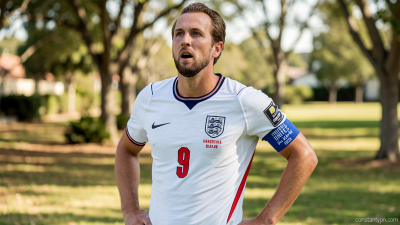
England’s Forward Future: Charting a Course Beyond Harry Kane
False nines or firing forwards – When the 2030 World Cup arrives, Harry Kane will be nearing his thirty-seventh birthday. Asked whether he might still feature on the global stage at that point, the England skipper offered a measured response: “It’s too early to talk about that.” The striker posed this answer merely minutes after his nation endured a heartbreak 2-1 semi-final loss to Argentina in Atlanta, a result that prevented them from reaching their first men’s World Cup final since 1966.
While avoiding a firm commitment was understandable, the question carried weight. Throughout the tournament, England’s offensive machine depended heavily on Kane, who finished with six goals alongside Jude Bellingham. As their all-time leading scorer eventually hangs up his boots, the national team faces a critical transitional period.
A Captain’s Legacy and the Clock Ticking
Kane has worn the captain’s armband for nine years, ever since Gareth Southgate first entrusted him with the role. During that span, he has netted 85 goals across 124 international appearances, consistently leading by example. The Bayern Munich forward, however, cannot escape the passage of time indefinitely.
Fortunately for England, succession planning has time to unfold. Unless injury intervenes, Kane will remain available for the upcoming home European Championship in two years. He turns thirty-three in just ten days and will celebrate his thirty-fifth birthday shortly after that competition concludes. Realistically, Saturday’s bronze medal play-off against France in Miami could mark his final World Cup appearance for England. By 2030, he will be nearly thirty-seven.
Tuchel’s Reliance on Kane Raises Questions
During England’s seven matches across North America, Thomas Tuchel deployed Kane for nearly every minute of play. The striker was substituted only twice: with six minutes remaining against Panama and just one minute left in the last-16 encounter with Mexico. This heavy workload potentially took its toll as the tournament advanced. Following his two-goal performance against DR Congo in the round of thirty-two, Kane failed to score from open play in three subsequent matches.
Meanwhile, other attacking options received limited opportunities. Ollie Watkins accumulated merely six minutes of playing time throughout the entire tournament, entering against Panama. Ivan Toney saw a few brief moments at the end of stoppage time during the Argentina defeat. These patterns might suggest Tuchel lacked complete faith in his bench options, or perhaps in alternative tactical approaches.
The Growing Need for Depth
England’s requirement for quality alternatives to provide Kane with rest will only intensify. Both Toney and Watkins are already thirty years old. The remaining strikers utilized by England within the past twelve months include Tottenham’s Dominic Solanke, aged twenty-eight, and Leeds United’s Dominic Calvert-Lewin, twenty-nine.
The statistics reveal a concerning trend. During the 2024-25 campaign, a new Premier League record low emerged: only three English forwards managed ten or more goals. Those players were Watkins, West Ham’s Jarrod Bowen, and Liam Delap, who was still at Ipswich Town at the time. Last season saw this pattern repeat, with Watkins scoring sixteen goals, Calvert-Lewin netting fourteen, and Brighton’s thirty-five-year-old Danny Welbeck contributing thirteen.
Delap’s Development Crucial for Future
There remains optimism that twenty-three-year-old Delap can fulfill his potential. Numerous clubs pursued his signature after Ipswich’s relegation in 2025, but he ultimately joined Chelsea in a £30 million transfer. His Stamford Bridge journey has been challenging so far, with just one league goal in his debut season. Should Delap fail to develop, England must anticipate a new generation of strikers emerging within the next few years.
England experienced fortunate timing during Wayne Rooney’s international twilight. As Rooney gradually reduced his involvement, Kane entered the national setup, scoring eighty seconds into his debut as a substitute for the Manchester United forward against Lithuania in 2015. This represented an ideal handover from current record holder to future record holder.
Unlike Rooney at Everton or Michael Owen at Liverpool, Kane did not announce himself as a teenage sensation with his parent club. Instead, he honed his abilities through loan spells at Leyton Orient, Millwall, Norwich City, and Leicester City. It was not until the 2014-15 season, when Kane was twenty-one, that Mauricio Pochettino gave him a sustained opportunity at Tottenham. He appeared to emerge from nowhere, scoring twenty-one Premier League goals and thirty-two in all competitions that campaign.
The football world contains numerous stories of prolific academy strikers who never reach the pinnacle of senior football. Charlie McNeill stands as one such example, recording one hundred and ten goals alongside thirty-eight assists in seventy-two matches for his club before his career trajectory diverged from expectations.
