
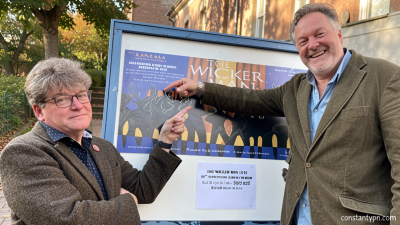
A Decades-Long Cinematic Dream Finds Its Final Chapter at FrightFest
Constantvpn.com – On a Friday evening in London, the FrightFest horror festival hosted the world premiere of Wrath of the Gods, a film that completes a trilogy its creator never lived to see finished. The project traces its origins to 1973, when Robin Hardy shot The Wicker Man, a folk-horror landmark that has haunted British cinema for over half a century. Hardy always conceived that first film as the opening instalment of a three-part saga. Two decades later, The Wicker Tree arrived in 2011, nudging the ambition forward. But Hardy’s death in 2016, at age 86, froze the project mid-arc — until now.
His sons, Justin and Dominic, have spent years piecing together what their father left unfinished. The catalyst was an unexpected windfall: a cache of original material that had been sitting in an attic, gathering dust, for years unknown.
Six Sacks in an Attic
The chain of events began when the family home where Justin had grown up changed hands. The new owner, clearing out the property, stumbled upon six sacks stuffed with correspondence, screenplays, and production documents tied to Robin Hardy and the Wicker Man franchise.
“The person who bought Justin’s old family home said they’d discovered six sacks of letters, scripts and other material pertaining to Robin Hardy and The Wicker Man in the attic,” Dominic recalls. “Justin’s first instinct was to burn them, but we couldn’t ignore this original source material. Although we left it unopened for six months or more.”
Dominic, who holds a position as an art historian at the University of Quebec in Montreal, describes the hesitation as understandable. The archive was not merely a collection of paperwork; it was a window into a relationship complicated by grief, debt, and creative obsession. Once the brothers finally opened the sacks, they found storyboards, treatment documents, and — most critically — a completed screenplay for the trilogy’s intended finale.
The Shadow of the Original Production
Understanding why the archive carried such emotional weight requires looking back at how The Wicker Man itself was made. The film was shot during a period of acute crisis in the British film industry. Its financiers were stretched thin, and the cast — headlined by horror icon Christopher Lee — ultimately worked without pay to see the picture through to completion. The script called for a Hebridean island setting in spring, yet the actual shooting took place in Galloway, Scotland, through autumn into early winter.
On release, the picture was largely buried as a second feature, overshadowed by the lead title. Competing edits circulated, and rumours persisted that chunks of footage had been literally buried inside the concrete support columns of a nearby motorway. Over time, however, the film’s reputation swelled. Lee himself ranked it among his finest screen work and one of his most powerful performances. Its lopsided tonality and a genuinely unsettling climax turned it into a touchstone for horror devotees. By the time the BBC launched its cult-cinema showcase Moviedrome in 1988, the only viable choice for opening night was a previously unseen edit of The Wicker Man.
The Human Cost Behind the Camera
The production’s financial chaos did not end at the wrap. The film bankrupted Hardy. He walked away from Justin’s mother, Caroline, leaving her to shoulder the debts. Over the following decades he married four additional times and fathered eight children in total, including Justin, Dominic, and their sister Arabella.
The brothers have explored that tangled family history in a 2024 book and accompanying documentary titled Children Of The Wicker Man, examining how a single film shaped — and scarred — a household across generations.
From an Icelandic Volcano to Shetland’s Skerries
The newly surfaced archive also revealed how Hardy originally conceived the third film. Dominic recounts the origin:
“He had had been in an airplane and had a turn because his heart medication wasn’t working. He had to land in Reykjavik and spend a week recuperating, and he came back with this idea of a theme park around an extinct volcano in Iceland where the Norse gods get upset and mayhem ensues.”
Hardy subsequently decided the setting should shift from Iceland to Shetland, aligning the geography with the other two entries in the trilogy. Justin, an Emmy- and BAFTA-nominated director in his own right, took the seed idea and, together with Dominic, developed an entirely original narrative.
The Story of Wrath of the Gods
The new screenplay follows a young widow who returns to the island of Hel to lay her late husband to rest after his suicide. The community, steeped in old superstition, treats her as a living emblem of misfortune and drives her out. When children begin vanishing one by one, the islanders are compelled to reckon with their own layered, often suppressed history. Viking and Shetland mythology thread through the plot, giving the picture a mythic architecture distinct from the 1973 original while remaining faithful to the trilogy’s thematic DNA.
Shooting on the Islands
Principal photography commenced in Shetland in the spring of 2025. The two principal roles are carried by Francis Magee, known for work on Game of Thrones and Rose of Nevada, and Norwegian actress Christiane Schaldemose. Beyond those two leads, the remainder of the cast was drawn from local Shetland performers.
Lynsey Rendall, who plays Magee’s on-screen wife Maeve, described the experience as a profound privilege:
“It feels like a huge honour. The Wicker Man is such a famous film and has such an impact on popular culture so it was amazing to be part of that world.”
John Haswell, a veteran of the theatre stage, called his role as the Reverend Knox a career highlight, underscoring how the project’s association with one of British horror’s most enduring titles lends it a gravity that extends well beyond genre fandom.
For Justin and Dominic, the premiere at FrightFest marks more than a festival slot. It represents the closing of a loop their father opened fifty-two years ago on a windswept Scottish shore — a loop that survived bankruptcy, abandonment, death, and six sacks of forgotten paperwork in an attic. The trilogy, at last, is whole.
Related Reading
Frequently Asked Questions
What is Wicker Man director s sons complete?
Wicker Man director s sons complete is the main topic of this guide. The article explains the context, practical details, and next steps readers should understand.
Why does Wicker Man director s sons complete matter?
Wicker Man director s sons complete matters because readers are looking for a useful answer, not just a short summary. Good content should match search intent and help them decide what to do next.