Why ceasefire deal with US has unsettled Iran’s hardliners
Why ceasefire deal with US has unsettled Iran’s hardliners
In recent days, a prominent sign was displayed in Tehran’s central district, near a major traffic hub. The message, “The Strait of Hormuz will stay closed,” was intended to convey the stance of Iran’s new Supreme Leader, Mojtaba Khamenei, who has not appeared publicly since assuming the role. However, the message may soon be altered following Iran’s agreement to a two-week pause in hostilities, as proposed by Pakistan. This move coincides with the reopening of the strategic waterway, which Pakistan has been facilitating between the United States and Iran.
Despite Iran’s earlier insistence on a permanent resolution to the conflict with the US and Israel, the decision to accept a temporary truce was made by the Supreme National Security Council (SNSC). This body, Iran’s highest authority under the supreme leader, is led by President Masoud Pezeshkian, a more centrist figure compared to his predecessor. The SNSC stated that the two-week window for uninterrupted passage through the Strait of Hormuz would be exchanged for a ceasefire from the US and Israel, while diplomatic discussions continue.
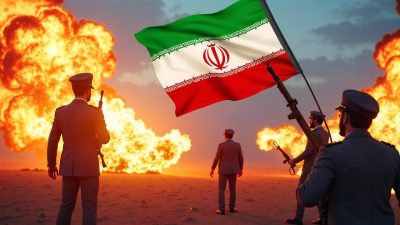
The hardliners, however, have expressed dissatisfaction. They believed that Iran’s capacity to disrupt Gulf nations through missile and drone strikes gave it the advantage, and they argue that the war should have persisted. Following the announcement of the ceasefire, reports indicate that members of the Basij militia, under the control of the Islamic Revolutionary Guard Corps (IRGC), vandalized US and Israeli flags. Meanwhile, the editor of the hardline newspaper Kayhan criticized the agreement, calling it “a gift to the enemy” that allows the US to replenish its forces and continue the conflict.
China reportedly played a crucial role in persuading Iran to accept Pakistan’s proposal. The 40-day war has caused significant damage, with over 3,000 casualties, according to human rights groups. US President Donald Trump had previously warned of escalating destruction. Even among the hardliners, there is recognition that the situation demands a resolution to prevent further harm to Iran’s vital systems.
Just before the ceasefire agreement was announced, the hardline Chief Justice, Gholamhossein Mohseni Ejei, stated on state television that Iran aimed to end the war while preserving its strategic position. This echoed sentiments previously expressed by Mohammad Javad Zarif, Iran’s former foreign minister, in an article published in the US journal Foreign Affairs. The SNSC framed the truce as a success, urging supporters to remain cohesive as negotiations proceed.
Iran’s delegation in talks with the US will be led by the Speaker of Parliament, Mohammad Bagher Ghalibaf, who will meet directly with US Vice President JD Vance in Islamabad. This marks a shift from the previous policy of avoiding direct US engagement, which was enforced by the late Supreme Leader, Ayatollah Ali Khamenei. Now, under his son, the new leader has permitted such interactions.
Although the ceasefire has been reached, the relationship between Iran and the US remains tense. Should the ongoing talks fail, the conflict could reignite. Some Iranians who supported the war view it as a means to dismantle what they see as an oppressive regime, and they may welcome a return to hostilities. For others, the ceasefire provides a necessary reprieve from the ongoing devastation.
